This blog is both a kind of scribbling on the “back of a napkin”, on my part, as well as my Hansel & Gretel attempt to drop some pebbles, on my “street” 🦒 path, as I go along (in lieu of breadcrumbs, that might otherwise evaporate without a trace; in other words, a log memorializing a long & winding road, for ongoing reference sake, as a two-steps-forward-one-step-back practitioner).
I hope it might be fruitful, or at least thought-provoking (given NVC’s counter cultural ethos), for some others as well.
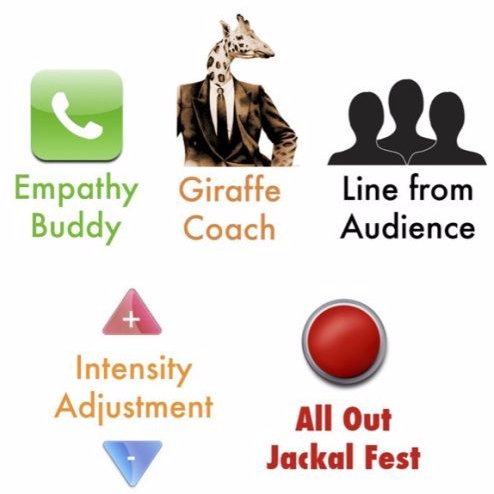
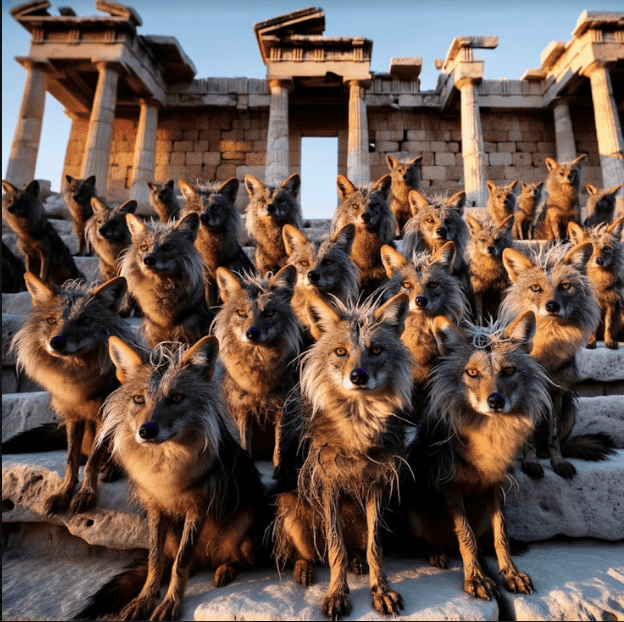
An analogy to #NVC & the coexistence of the long-necked "giraffe" (w/ its self-like energy), who can see the bigger picture & more long-term view, verses the more short-sighted "jackal" (akin to protector parts &/or exiles).A Critical Mass Of Self Energy — Max Littman maxlittman.com/critical-mass
"Thich Nhat Hanh said before he died a few years ago that the next Buddha will be the Sangha. The Sangha, in Buddhist terminology, is the community of practitioners. It’s this idea that we don’t have to look for an individual…" — Rebecca Solnit🎁🔗⤵️www.nytimes.com/2026/03/07/m…
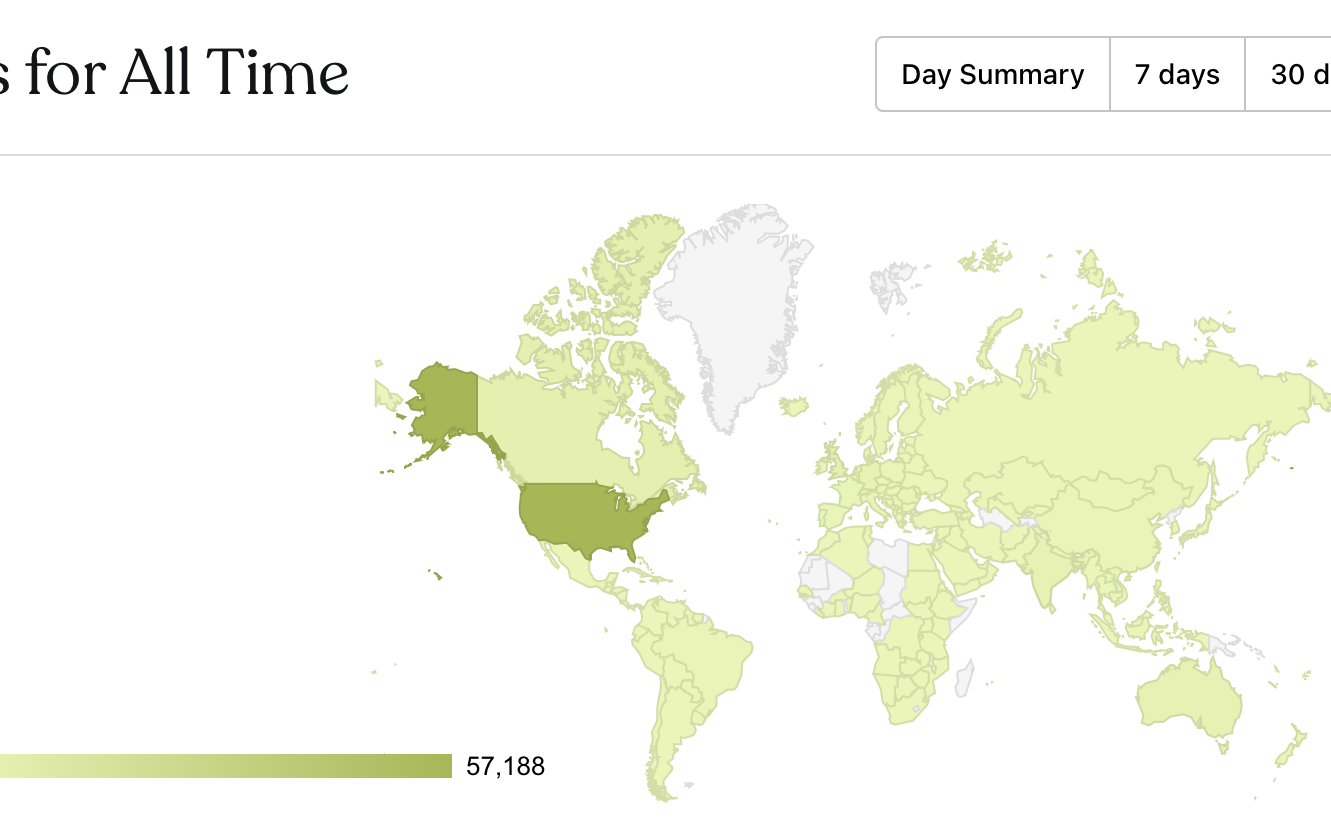
One of my favorite things, when I first began blogging, was visiting the stats page to view all the differing countries visiting this site on any given day (a veritable geography lesson!).
Please see map beneath & all of the countries, worldwide, with their “giraffe” inhabitants, frequenting this website:
Caveat emptor… If this blog seems chaotic, reminiscent of the aforementioned scribbling-on-the-back-of-a-napkin, that’s how it’s occurred from my end as well.
(Taking a break from facilitating the telepractice-group for the time being.)
“Street Giraffes” is a term meant to connote a sangha, or community, dedicated to exploring Experiments with Truth — inspired by the discipline of approaching our relationships as a spiritual practice, rooted in the art of intermingling Nonviolent Communication (NVC) with the influences of several other modalities.
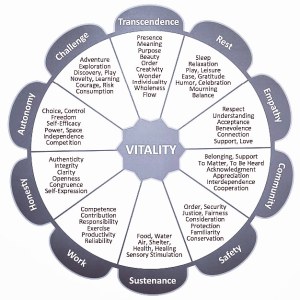
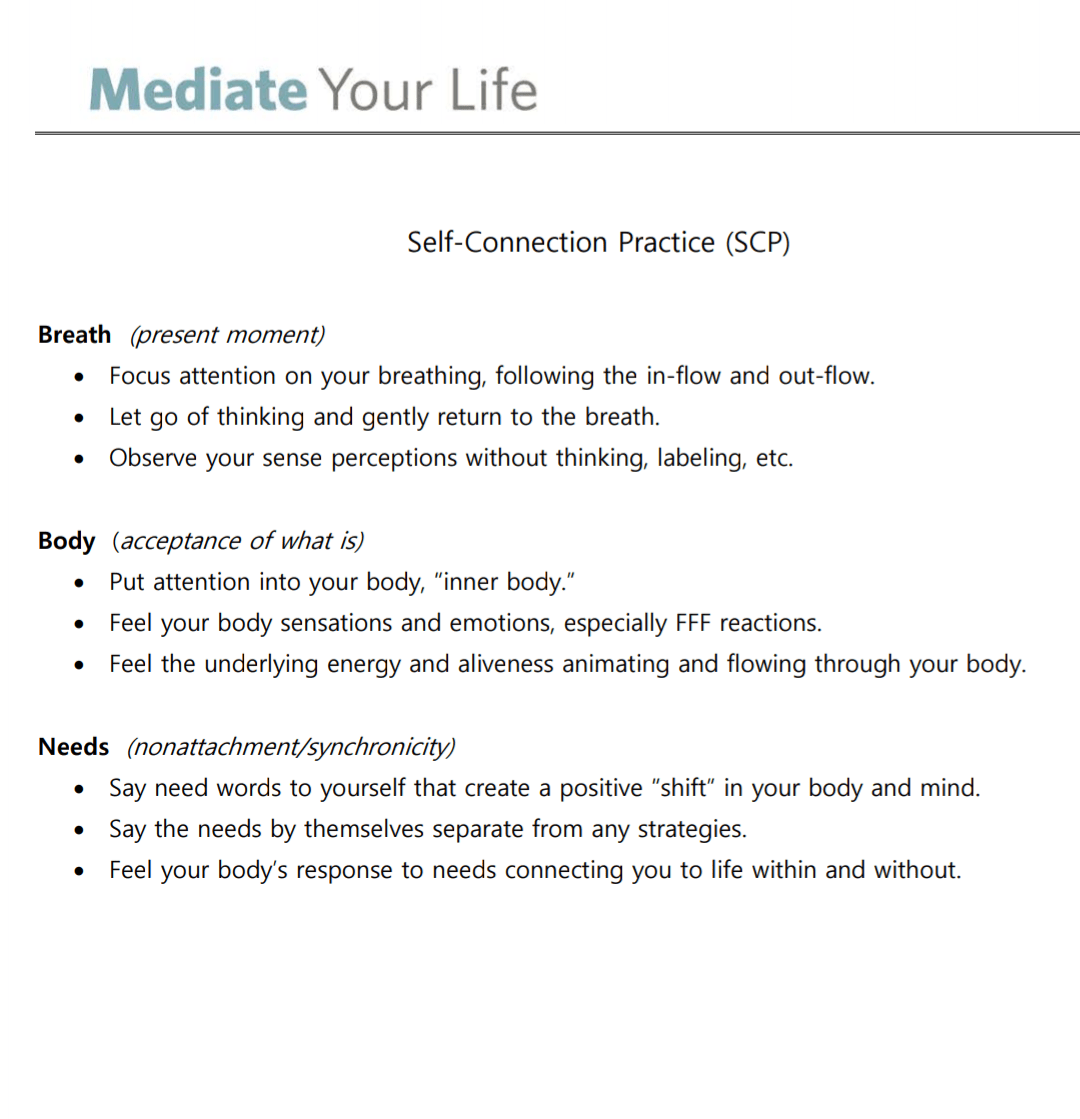
“I have a sense that 90% of Nonviolent Communication is about ‘Self-Connection.’ When using this expression, I’m referring to the practice or process that lives at the root of Inbal Kashtan’s Tree of Lifediagram…”
Excerpt: One of the reasons why the conditioning to be inauthentic is in place is because of the widespread perception that truth and care are incompatible. I challenge that assumption deeply, and have come to believe that any truth can be combined with sufficient care to maintain connection while delivering it. Even a painful truth can be connected… (continues)
Free Resource(s):
NVC & NVC Mediation skills as applied to conversations in daily life.
Why Giraffe and Jackal work as teaching tools (not just cute mascots)
Marshall Rosenberg’s use of Giraffe and Jackal wasn’t whimsical. They are deliberate pedagogical metaphors—designed to make complex inner processes learnable, memorable, and emotionally safe to explore.
They function in several important ways…
Concrete metaphors for inner experience:
Giraffe and Jackal give form to what usually stays invisible. Jackal names reactive, judgment-laden, fear-driven communication. Giraffe names empathic, needs-aware, compassionate communication.
By externalizing these states, learners don’t have to hold everything abstractly in their heads. The metaphors lower cognitive load, make patterns easier to recognize, and turn “be more compassionate” into something observable and practicable. They provide scaffolding—handles people can actually grab.
Non-shaming language for difficult moments:
These metaphors offer emotionally safe labels. Instead of “You’re being aggressive” or “That response is unhealthy,” people can say, “My jackal just showed up,” or “I want to try giraffe language here.”
This separates identity from behavior, reduces defensiveness, and invites curiosity instead of self-judgment. It aligns naturally with trauma-informed and restorative approaches to learning.
Play-based learning for adults:
Rosenberg intentionally bypassed adult resistance to moral instruction. Animal imagery engages imagination rather than debate. Humor lowers threat. Playfulness increases retention and willingness to experiment.
For adults especially, play creates a low-stakes sandbox—room to try, fail, and adjust without ego injury.
A shared language for groups and systems:
Giraffe and Jackal create common vocabulary.
Groups can name conflict quickly, interrupt harmful patterns without escalation, and offer feedback without accusation.
This supports metacognition (“How am I communicating right now?”), peer correction without hierarchy, and shared norms for compassionate interaction.
A bridge between thinking and feeling:
The metaphors engage both cognition and empathy: – the thinking side (needs, feelings, requests, clarity) – the relational side (care, vulnerability, connection)
The giraffe—chosen for its large heart and long neck—embodies emotional capacity and perspective-taking. Compassion becomes teachable, not just aspirational.
A developmental model, not a moral hierarchy:
Rosenberg never framed Jackal as “bad” or Giraffe as “good.”
Jackal is a protective survival strategy.
Giraffe is a learned relational capacity.
This framing supports growth rather than perfectionism—essential for sustainable practice and real learning.
In sum:
Giraffe and Jackal are sophisticated teaching devices disguised as simple ones. They externalize internal communication patterns, reduce shame, support emotional safety, and give learners a shared, playful language for practicing empathy and self-awareness. Far from childish, they are quietly radical tools for learning how to be human together. 🦒
Marshall Rosenberg mentions Focusing:
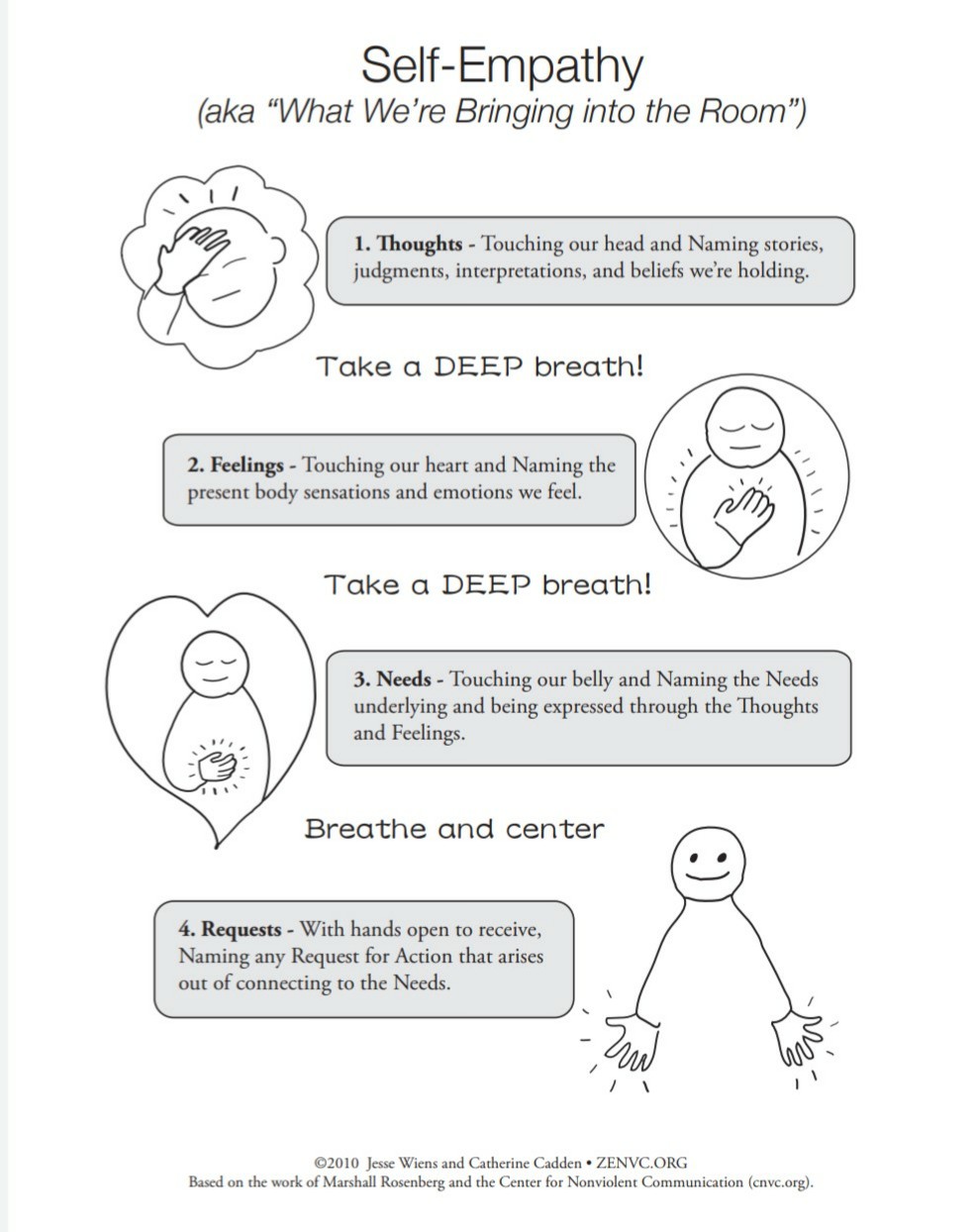
At the seven minute mark (of the YouTube below) Marshall — seated beside Ann Weiser Cornell — says, “Deep breath. You see… Now this giraffe is glad that it has practiced Focusingbecause it’s spent a lot of time learning how to get in touch with its feelings and needs and it can give itself some emergency first aid empathy right now to deal with what’s going on so that it can then focus its attention on the other person again.”
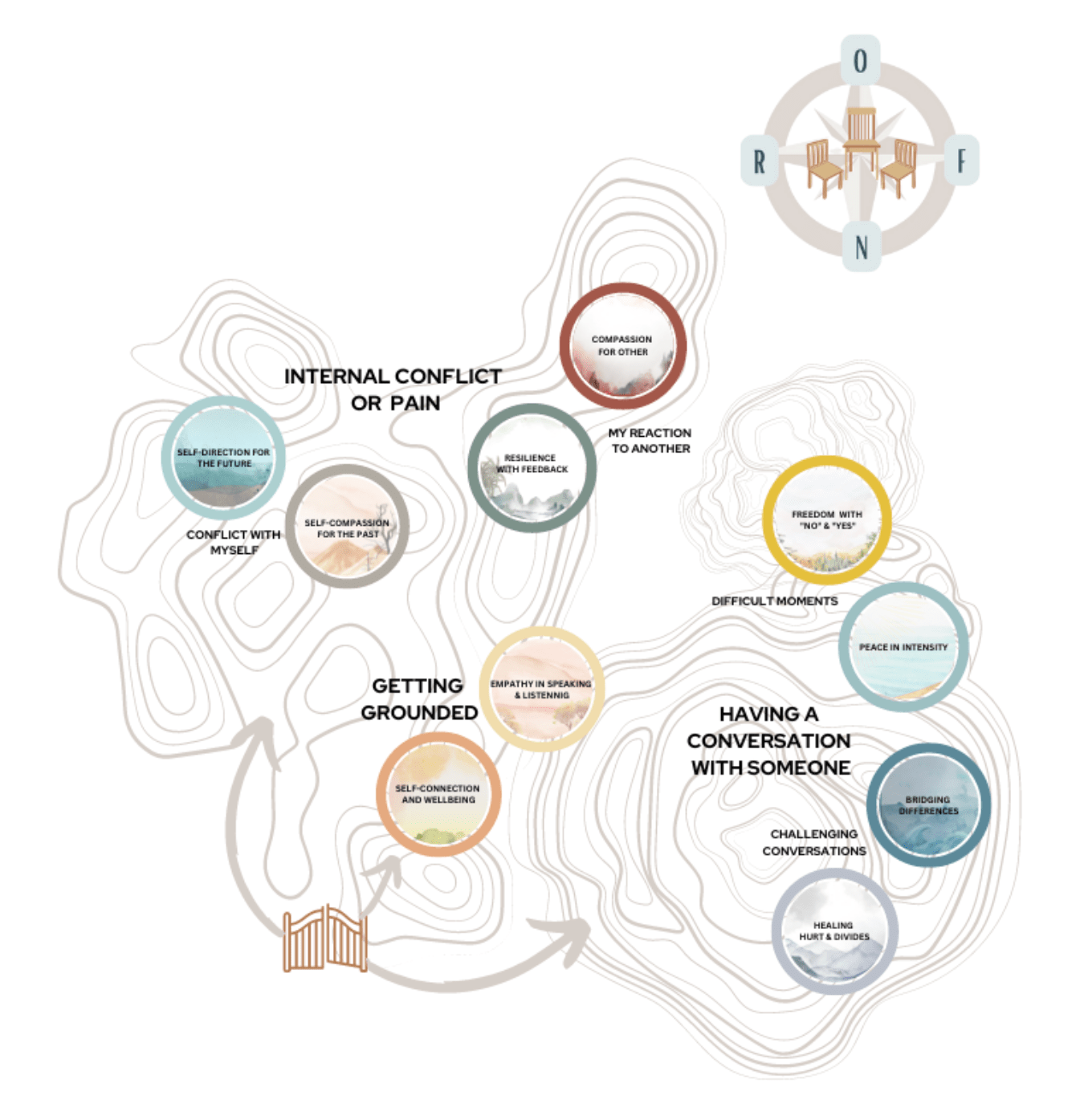
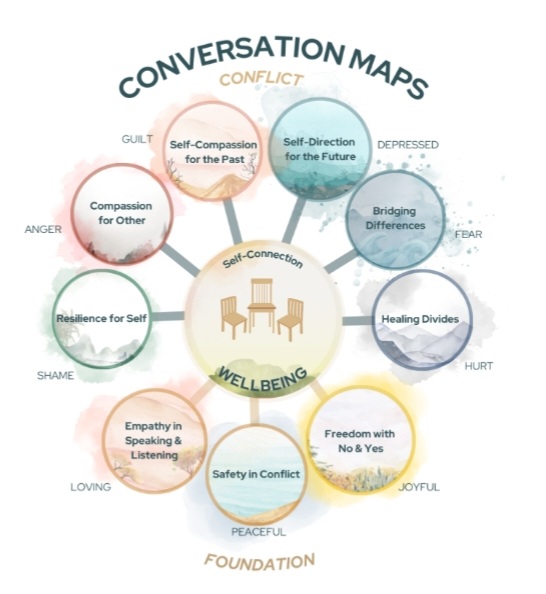
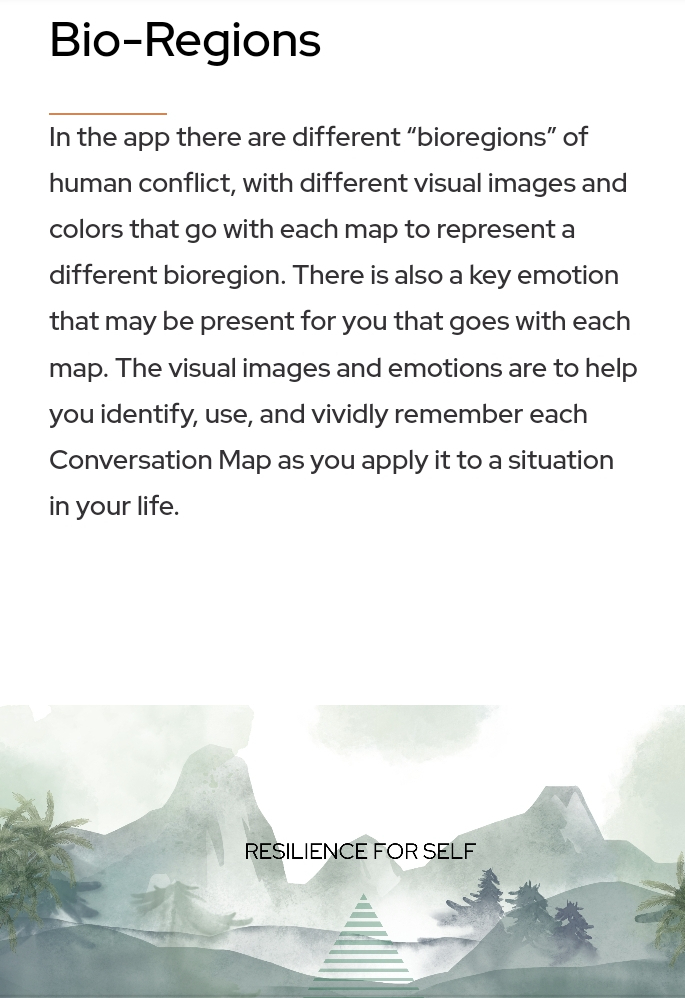
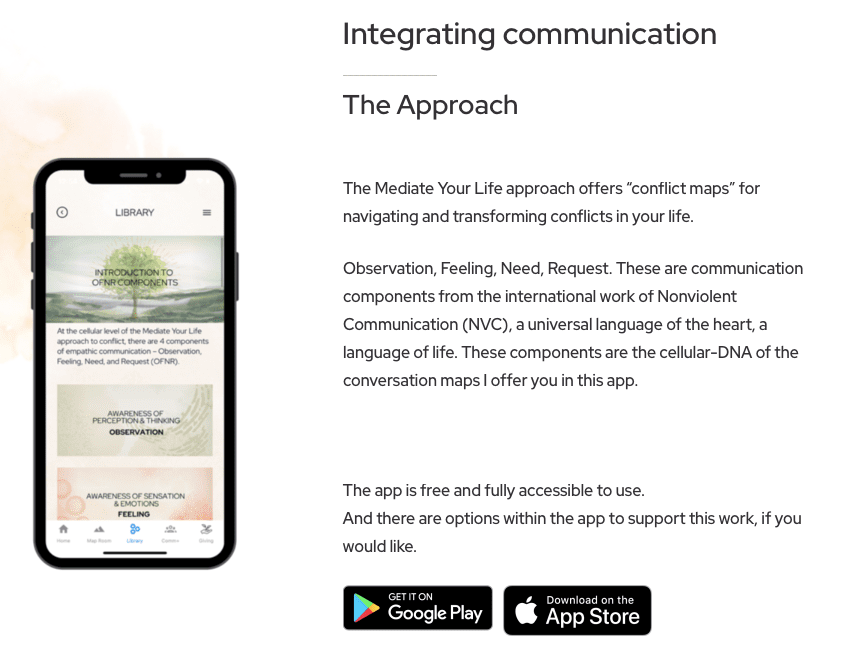
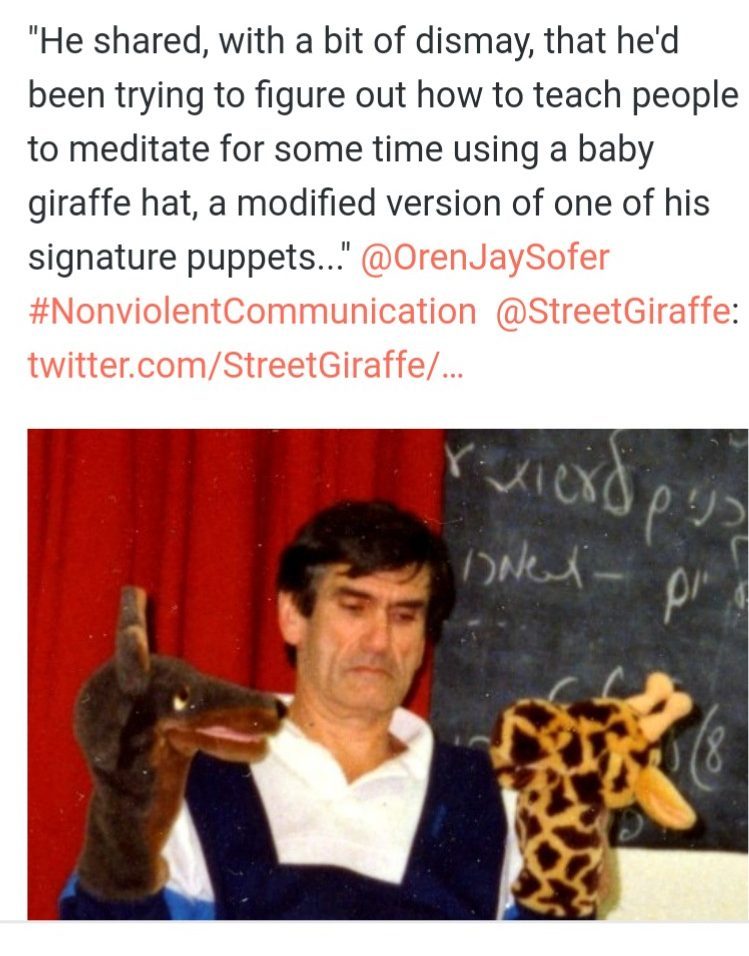
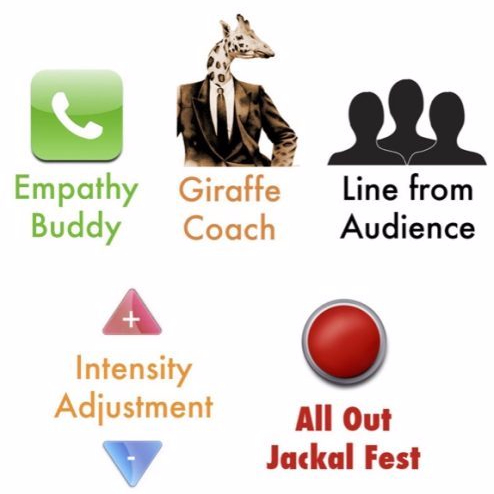
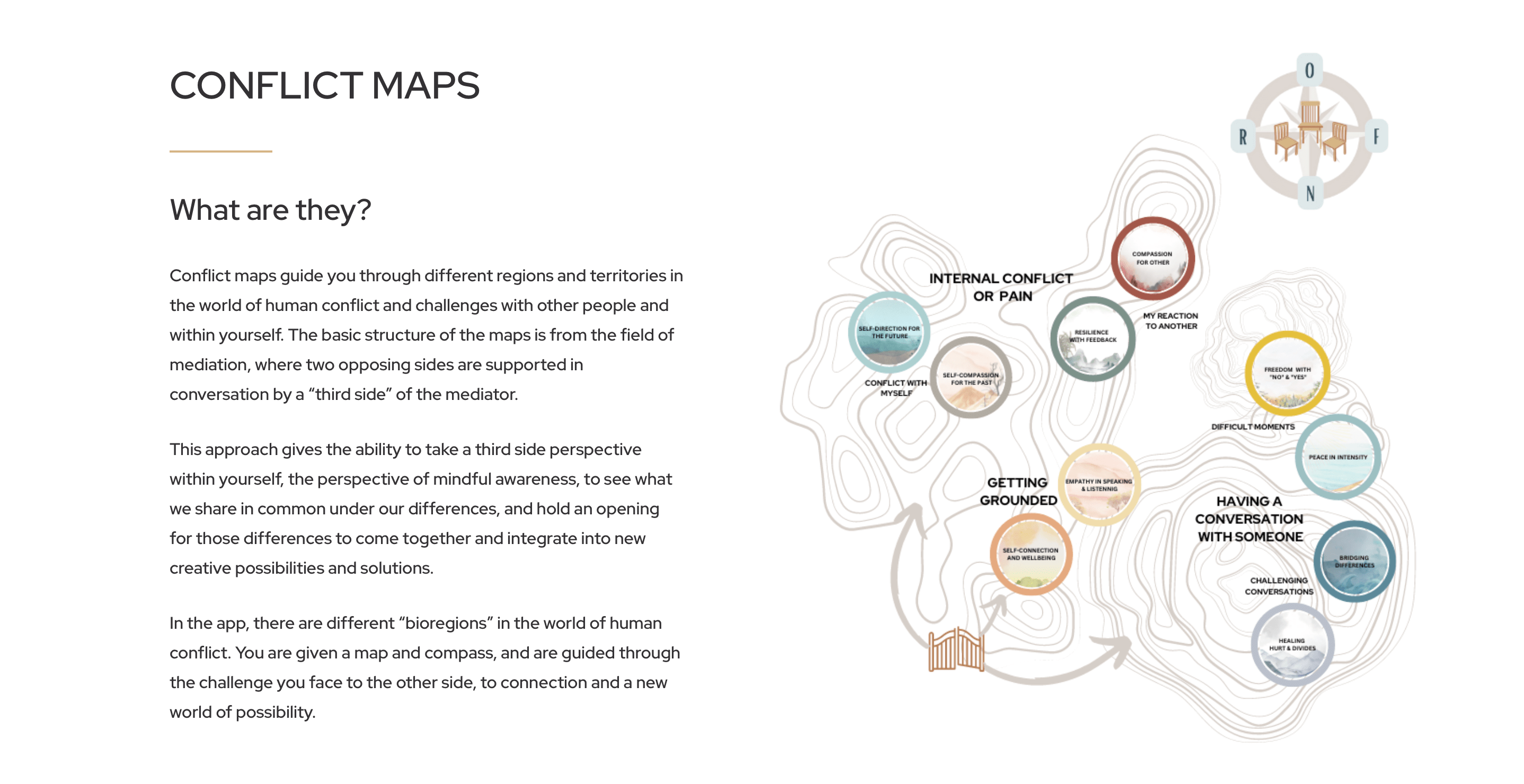
Along with the use of the giraffe and jackal to depict interpersonal dialogue, it can also be useful to symbolize and delineate intrapersonal dynamics as well, e.g. a) giraffe as 3rd/mediator-chair with jackals as conflictants amidst an inner conflict (see maps #2 & 3 of Kinyon‘s free MYL app – bottom left hand corner of triangle below) &/or b) giraffe as representative of Self/self-in-presence while jackals as parts in IFS & focusing/IRF.
In Marshall Rosenberg’s model of Nonviolent Communication, assuming is one of the quiet signatures of Jackal communication. It’s the moment we stop being curious and start being certain—about what someone else feels, needs, or intends—without checking.
Jackal doesn’t usually announce itself as aggression. More often, it shows up as certainty.
Jackal language and the leap to conclusions:
When Jackal is active, we fill in the blanks ourselves. We decide what the other person meant, why they did what they did, or what kind of person they are—without asking.
These assumptions can feel efficient or protective, but they often create misunderstanding, distance, and unnecessary conflict. Once we’re sure we already “know,” listening tends to shut down.
Giraffe language and staying with what’s real
Giraffe communication moves in the opposite direction. Instead of guessing at the other person’s inner world, we stay rooted in our own experience. We name what we’re feeling, identify the needs underneath, and make requests without assigning motives or meanings to the other person.
Giraffe also listens with curiosity —holding space for the possibility that we don’t yet understand.
Why assumptions matter in NVC
Assumptions are where judgment quietly replaces connection. Noticing them helps us catch Jackal early, before stories harden into conclusions.
When we slow down enough to ask, rather than assume, we reopen the possibility of contact—both with ourselves and with others.
In NVC practice, the work isn’t to eliminate assumptions altogether, but to recognize them as signals. When an assumption appears, it’s often an invitation: to return to feelings and needs, to choose curiosity over certainty, and to let Giraffe re-enter the conversation. 🦒
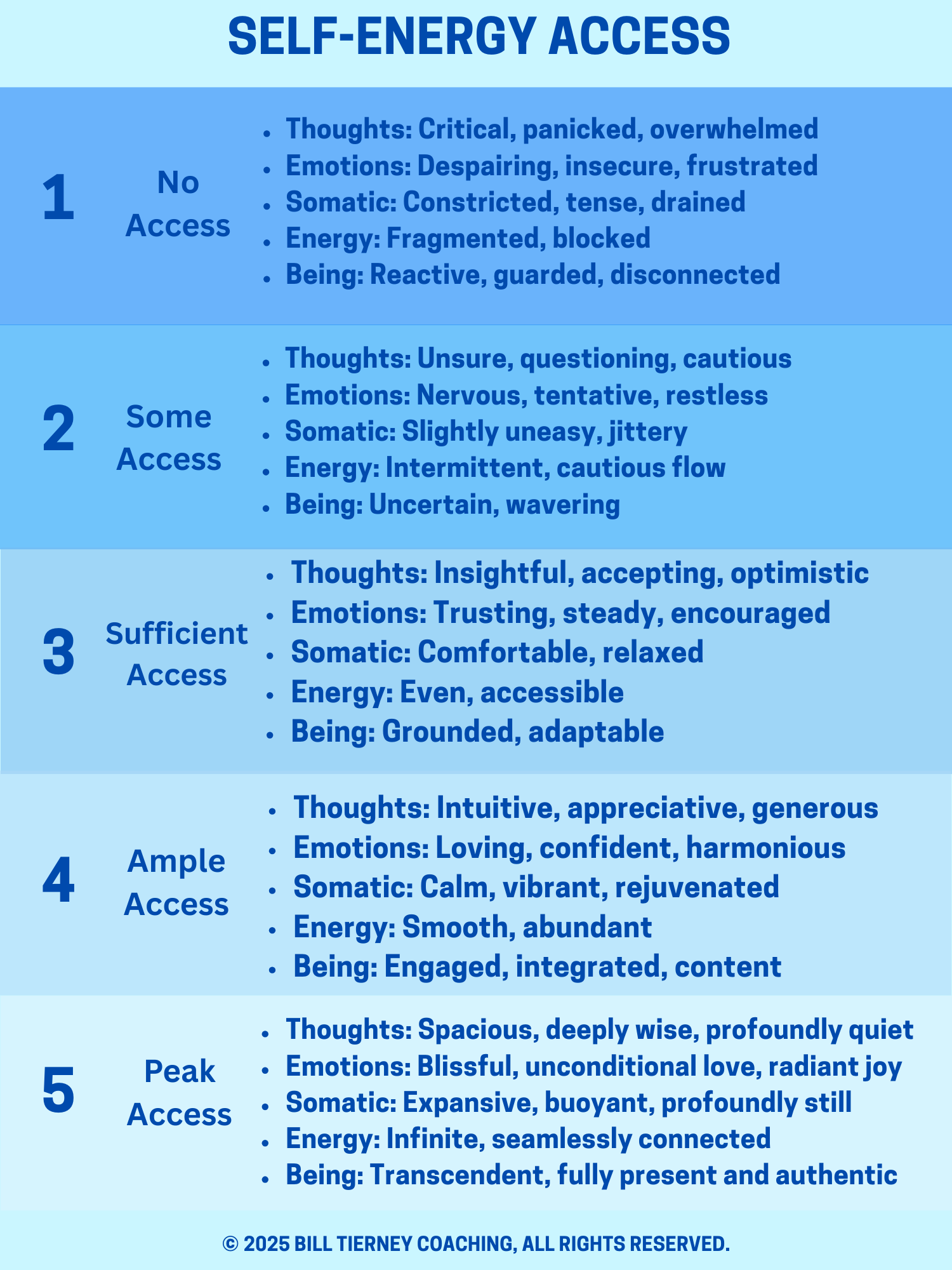
A Jackal/Giraffe continuum that could also be paralleled to parts work & “self-energy”
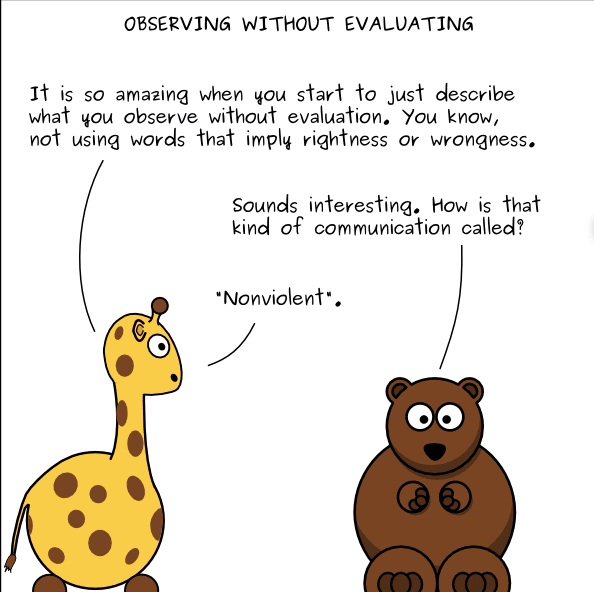
When tensions are high, one possibility is to perceive the judgmental communication coming towards one as a “jackal” (or, as Marshall Rosenberg once put it, a “giraffe with a language problem”).
Another modality, that of Internal Family Systems, can be useful in this regard as well.
As IFS practitioner/coach Bill Tierney once described the dynamics of “protector parts” (see my NVC infused imagery of the firefighter/manager parts as jackals, pictured further below) as a kind of medieval fortress with an alligator-laden moat surrounding it, all in the service of defending that which is most vulnerable within, otherwise known as an “exile”.
So the intensity of the jackal, or judgment, coming at us, or from us, is proportionate to that which is being protected — whether consciously or subconsciously, within.
In IFS, the terms of being “blended with a part” and then unblending (by way of self-energy) could share some venn diagram overlap with an awareness of the jackal/giraffe proclivities, we are caught up in (both within and without).
Jackals can be viewed through an Internal Family Systems lens as a part, or parts, that we are blended with, a kind of “cris de coeur” wanting to be known and then perhaps infused with self/giraffe energy. (Coming to a blog page near you: streetgiraffes.com/ifs)
Another parts-work modality, that of Eugene Gendlin’s Focusing and/or Ann Wieser Cornell’s Inner Relationship Focusing (IRF), is an alternate entry towards the furtherance of a self-connection process that can lend itself to greater imaginative freedom and creativity, by employing metaphors, imagery, by way of cultural allusions, etc. towards a more in depth awareness of what’s at stake for us within.
"We have yet to grasp that emotional liberation entails more than simply asserting our own needs. Emotional liberation involves clearly stating what we need in a way that communicates we are equally concerned that the needs of others are fulfilled." ~Marshall Rosenberg, Ph.D.👐 pic.twitter.com/lBesNIlolI
— Center for Nonviolent Communication (@NonviolentFor) August 28, 2025
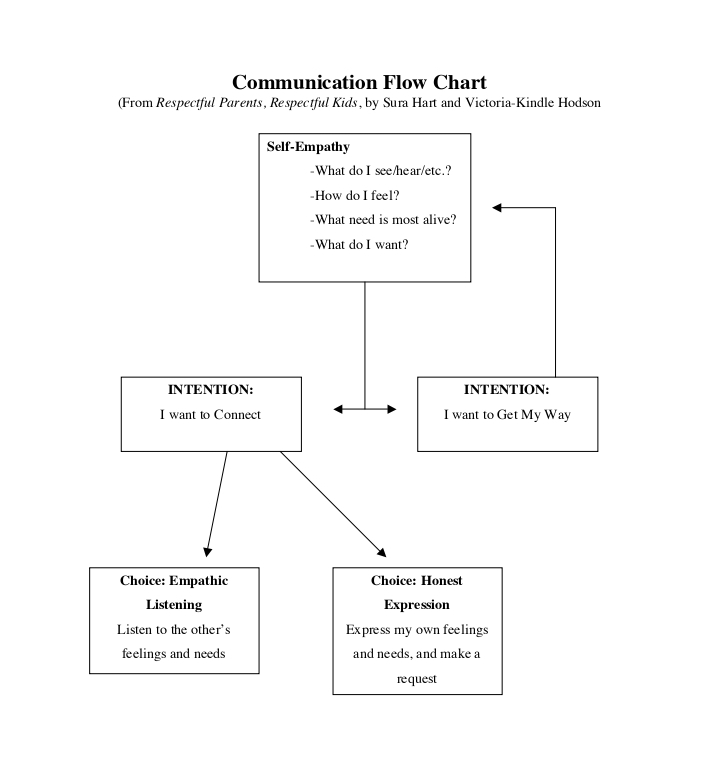
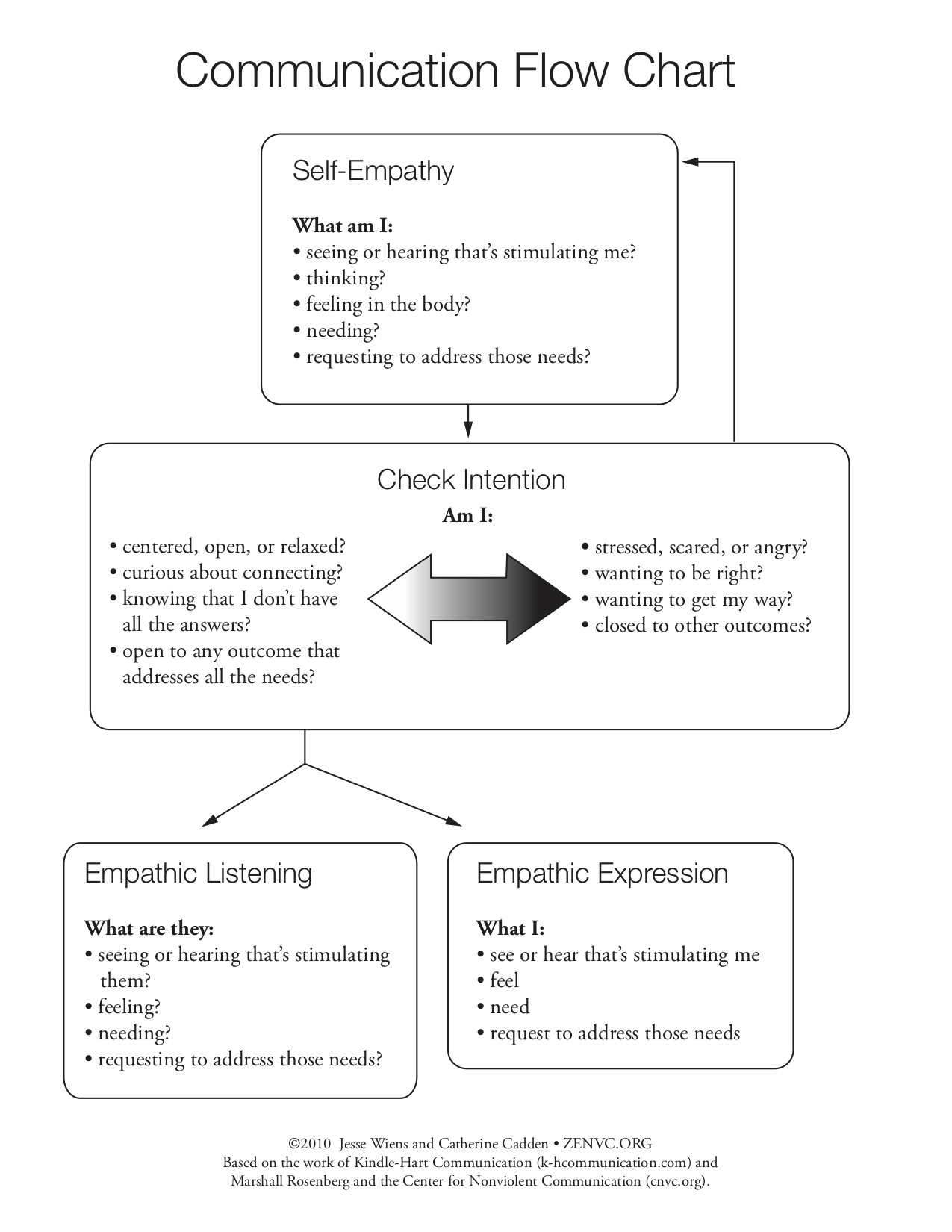
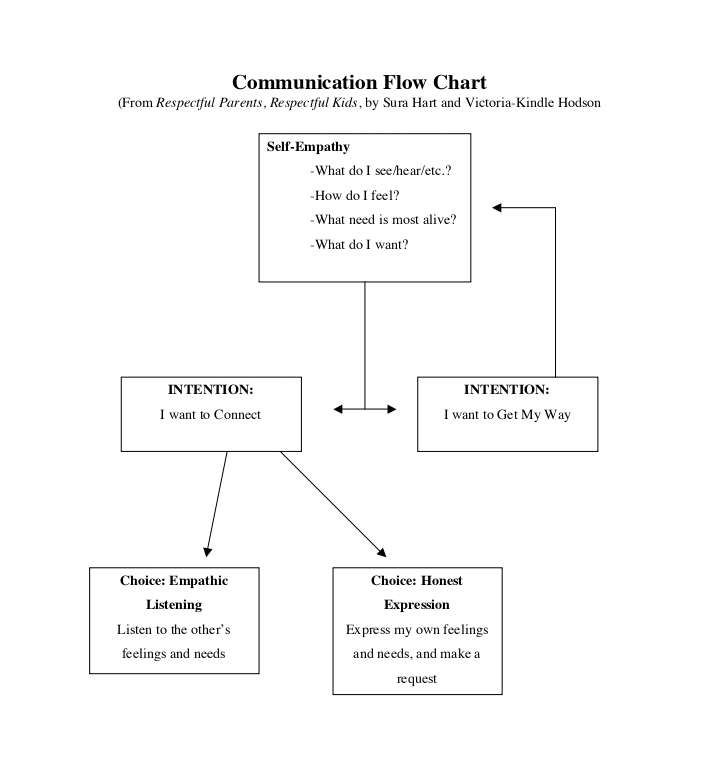
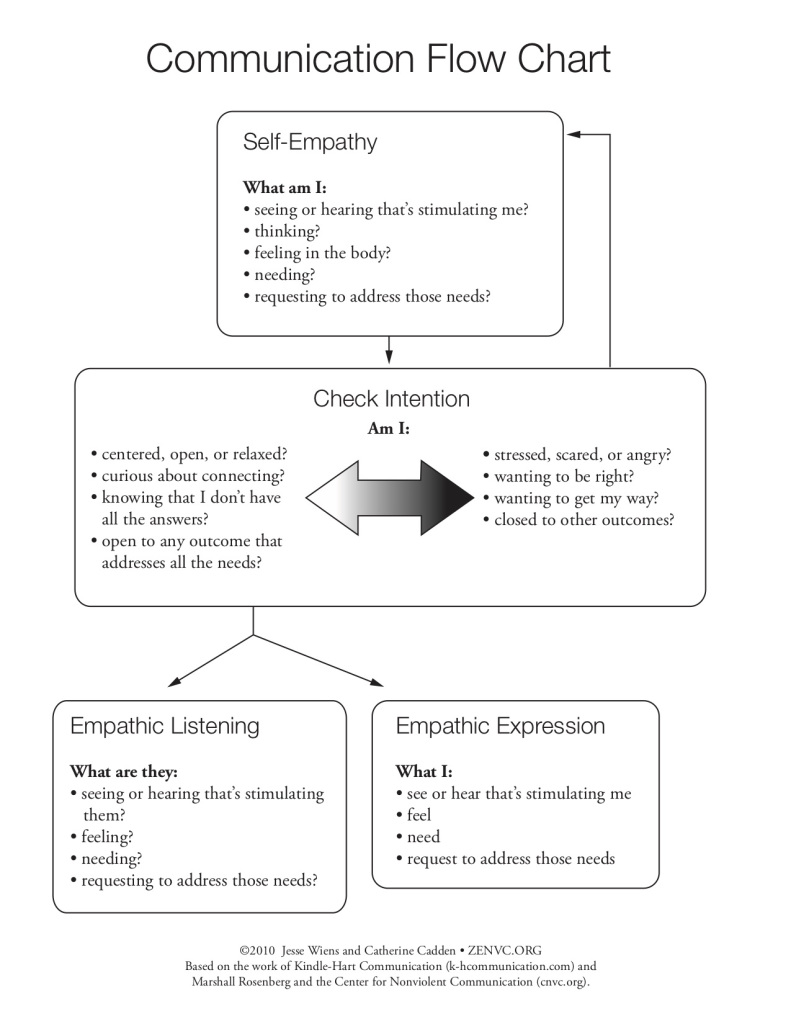
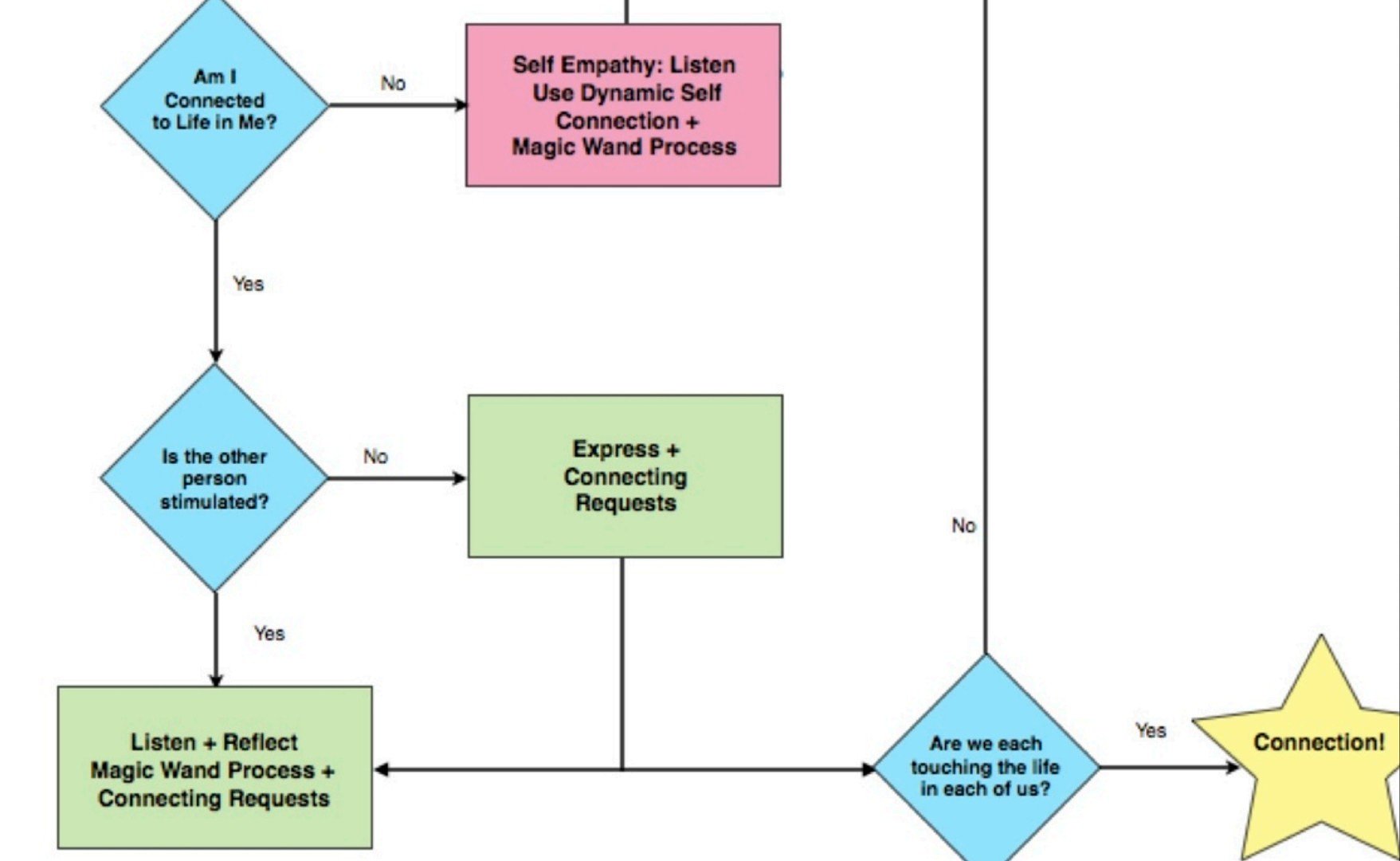
How “parts work” (e.g. Focusing/IRF/IFS) can be an influence vis-a-vis “choice-points” (and within the context of NVC’s three-modes: beginning with 1) self-connection & then opting for either 2) empathy or 3) honesty):
Here, we come together to deepen our understanding of conscious dialogue as a mindfulness practice, becoming aware of choice-points in compassionate listening and authentic self-expression.
Whether you’re new to NVC or a seasoned practitioner, this sangha offers a supportive space to grow, share, and experiment with the balance of the honest expression of our own truth with empathic attunement to another’s.
Practicing the Dharma Together
Join us as we walk the path of kindness, courage, and connection—one conversation at a time.
“Street Giraffes” is a free, monthly telepractice group that is rooted in NonviolentCommunication yet branches out towards other modalities as well: “parts work” (e.g. IRF/IFS), IPNB (a.k.a. resonance), & NVC-Mediation/MYL, etc. and most often meets on the second Sunday of each month at 7 pm/ET.
Ready to deepen your capacity for more mindful, meaningful dialogue?
Join us at the next gathering and experience the thrills & spills of striving towards more conscious communication.
Curious as to Nonviolence (e.g. Right Speech, ahimsa/non-harming, etc. in the Buddhist/yogic traditions*), more broadly, and Nonviolent Communication, in particular?
Come explore, share, and grow with us—your voice is welcome.
Step into a space where “experiments with truth” guide every cversation.
Consider playing in the street giraffes sandbox sometime soon (as a favorite teacher of mine ‐- Yvette Erasmus, PsyD, a.k.a. the Nonviolent Therapist — often says, mammals learn by play and we’re all mammals!)…
"The sangha is devoted to the practice of mindfulness, concentration & insight, & while everyone in the sangha profits from his or her own mindfulness, they can also take refuge in the collective energy of mindfulness, concentration & insight of the sangha"https://t.co/YZDSzPCNLm
— Street Giraffes 🦋 @streetgiraffes.bsky.social 🦋 (@streetgiraffes) August 7, 2023
I’d love to hear of — as Sarah Peyton‘s classes often conclude with — any “needs met” and/or “gifts received” as to this blog’s contribution to your NVC path, whether here or by emailing me directly via streetgiraffes@gmail.com
And also, additional NVC resources and teachings that you’ve come across that might be added to my list:
“Our actions may be impeded… but there can be no impeding our intentions or dispositions. Because we can accommodate and adapt. The minds adapts and converts to its own purposes the obstacles of our acting. The impediment to action advances action. What stands in the way becomes the way.” ~ Marcus Aurelius
From the preface to The Obstacle is the Way: The Timeless Art of Turning Trials Into Triumph by Ryan Holiday
Feel free to reach out if you have questions and would like to know more as to other complementary modalities, other teachers/learning-venues, mindfulness sanghas, etc.
More as to the philosophy of Nonviolence — what environmentalist Bill McKibben has called one of the two greatest inventions of the 20th century (along with renewable energy) — as traced through the historic lives of three of its most well known originators/practitioners: Gandhi, MLK & Mandela.
Praise for The Ongo Book (& NVC as a mindfulness practice):
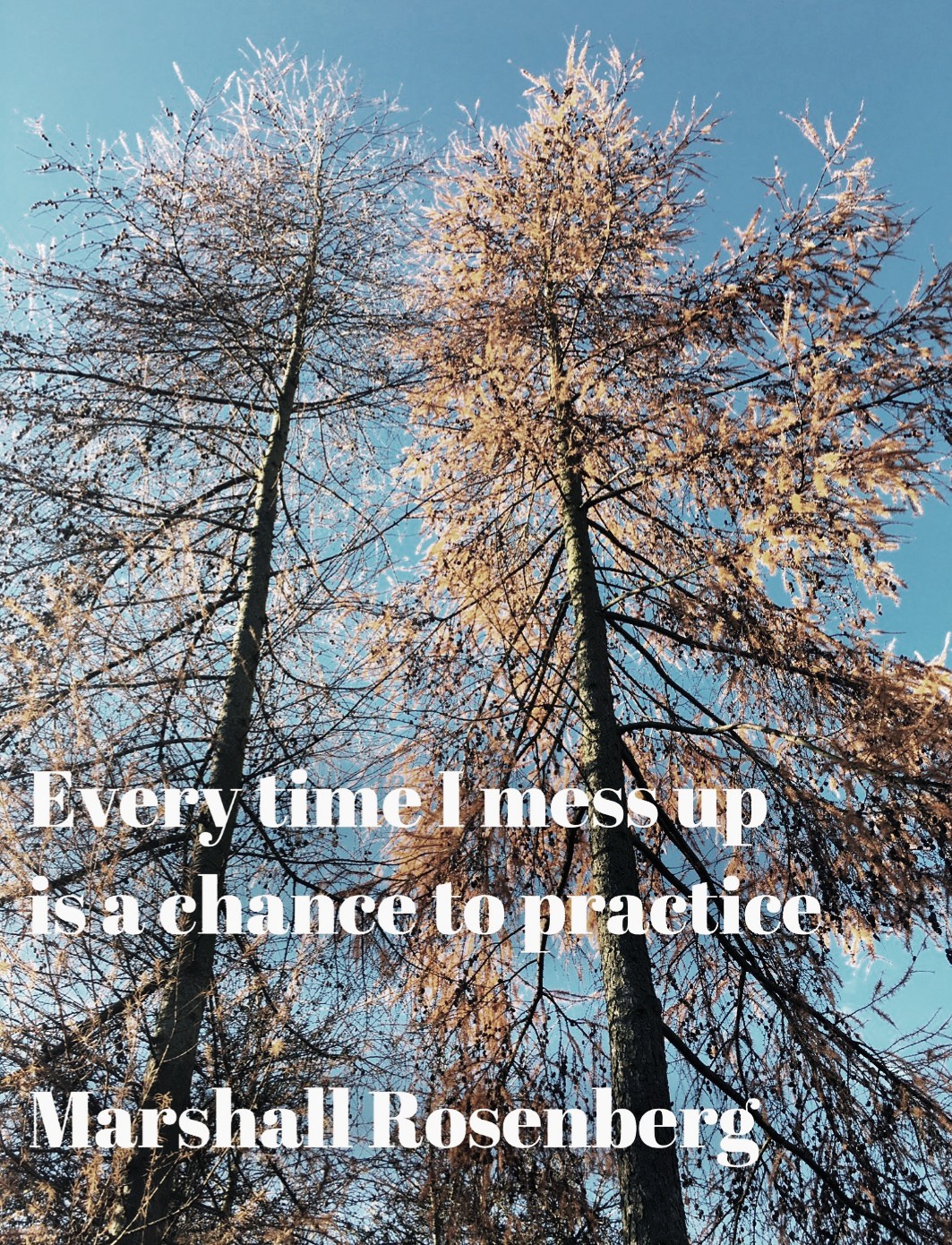
“I once asked Marshall Rosenberg, creator of Nonviolent Communication, what it would take for me to ‘really learn this stuff’. His answer: ‘Practice, practice, practice.’” (continues)
– Lucy Leu, author of Nonviolent Communication Companion Workbook
1) Become aware and let your jackal go for a run; 2) Practice translating judgments; 3) Empathize with the other person; 4) Arrive in shared humanity; & 5) Remember you have a choice.
“Anger is a signal that you’re distracted by judgmental or punitive thinking, and that some precious need of yours is being ignored.” ~ Marshall Rosenberg
Find out more about Nonviolent Communication’s underlying ethos (here), NVC consciousness (here), and additional approaches to NVC (here).
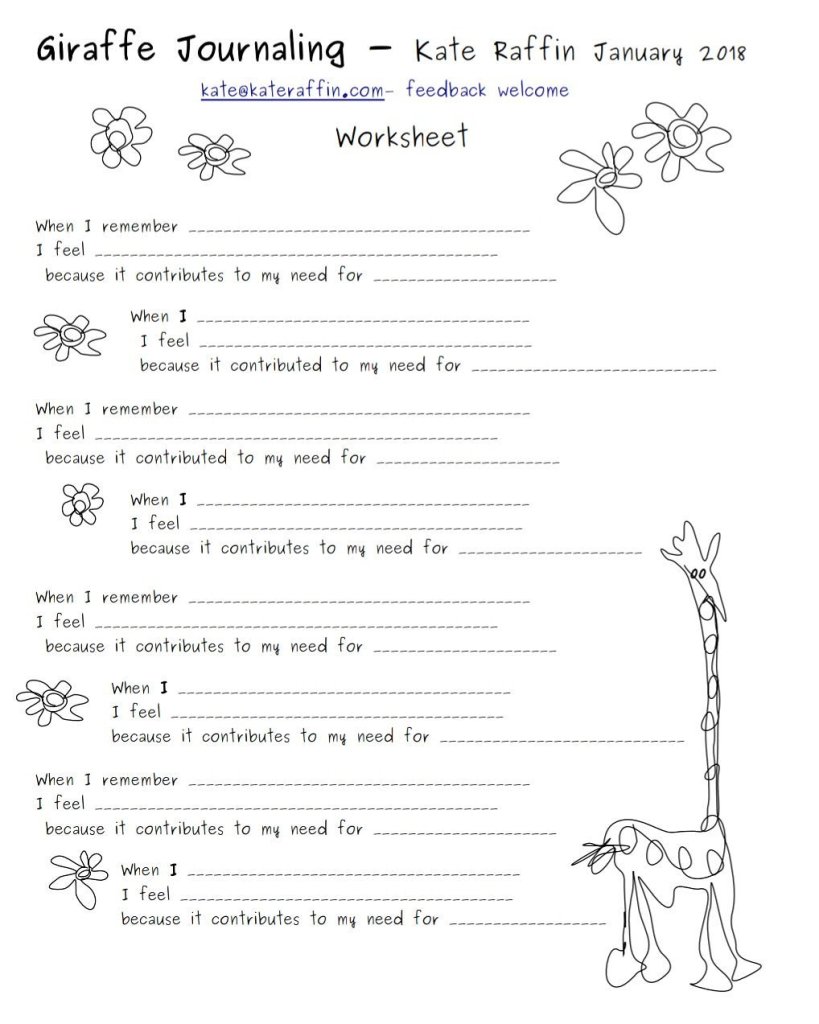
We experiment with a varied toolkit, including: self-connection exercises (e.g. journaling, guided meditations, etc.), dyad practices/role-plays and other group processes towards more skillfully navigating interpersonal conversations (by striking a dialogic balance between empathic understanding and authentic self-expression).
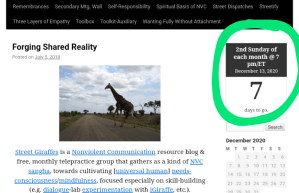
As mentioned above we most often meet on the second Sunday of each month at 7 pm/ET (a.k.a. NYC time or 4 pm/PT) however there is also a countdown clock on this blog’s home page which offers a reminder as to when the next scheduled telepractice will take place. You’re welcome to email us at streetgiraffes@gmail.com for more details.
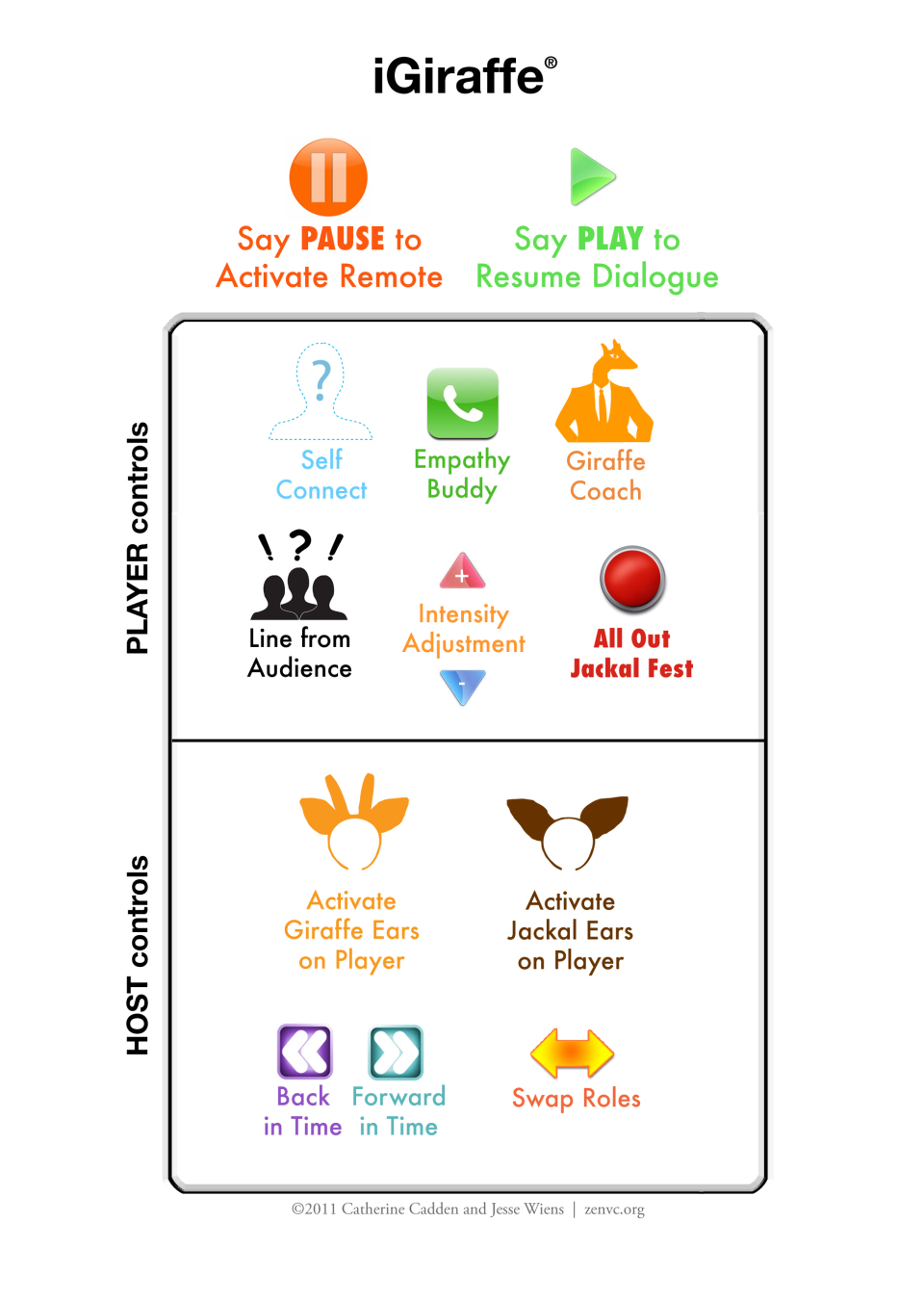
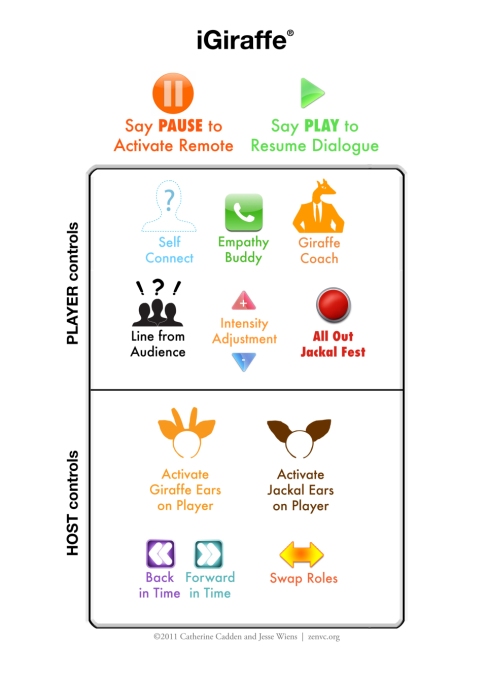
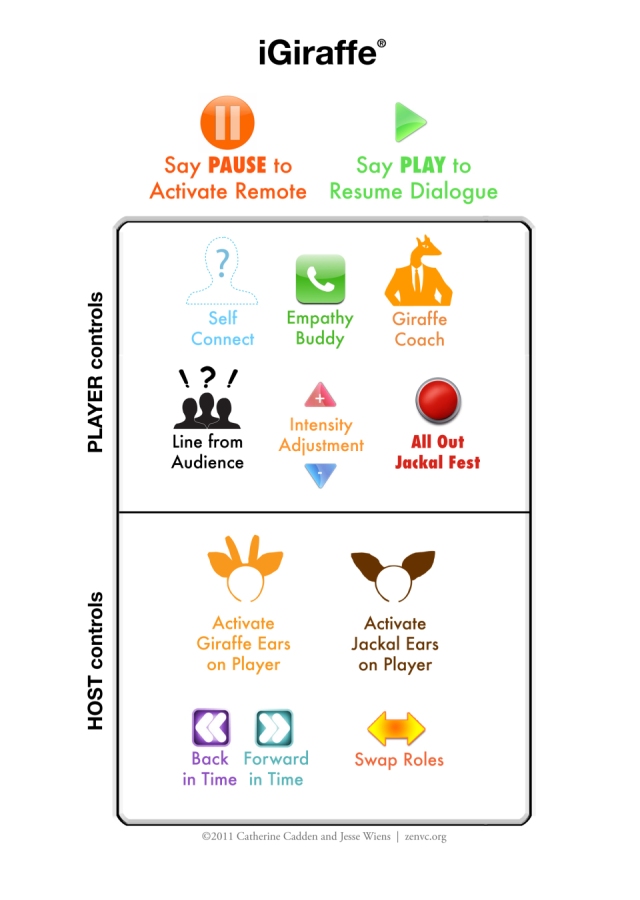
We come together — as a kind of NVC sangha — to collaboratively support one another’s communicative learning edges, utilizing conscious communication mindfulness practices in the spirit of NVC as a kind of working hypothesis in a “dialogue lab” (skill-building) experimentation, e.g. iGiraffe, etc.
While gathered at our watering hole, we’ll experiment with practical skills to:
Align your intention, words, and conduct with your deepest values.
Develop somatic awareness while strengthening your empathic presence, both towards inner conflicts (within oneself) and while navigating differences with others.
Nurture the capacity for a quality of intimate connection and cultivate community.
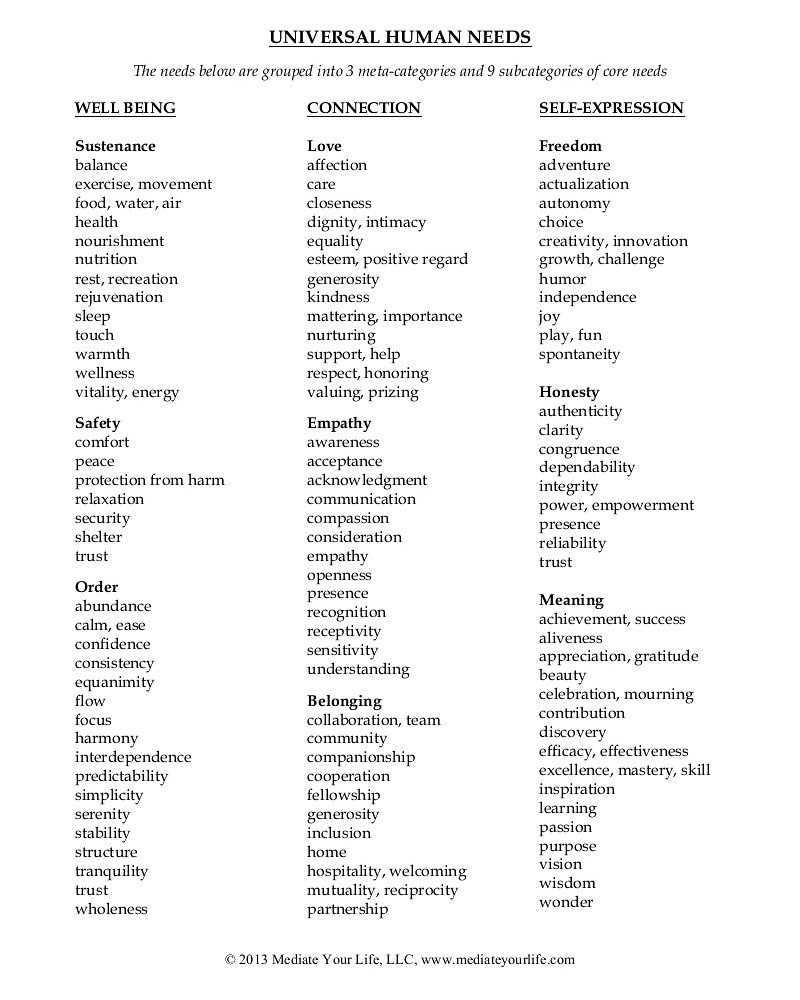
Identify universal human needs and balance them with those of others.
Calibrate your capacity for responding, instead of merely reacting, in stressful times in ways that support connection.
Overcomee fear of entering into and navigating challenging dialogues
Re-center and remain connected to the values at stake when in the midst of conflict
Trainer Tip: “When there is conflict, the chances are good that people are arguing over a particular strategy. When we focus on our needs, the opportunities for peaceful resolution that values everyone’s needs are much greater. This can also build trust.” (via NVC Resources on Conflict Resolution)
This call grew out of a Naturalizing NVC course, then being offered by NVC Academy, and taught by Miki Kashtan (in 2011). I invited my fellow classmates — a.k.a. ‘street giraffe’ practitioners — to first meet on the fourth of July as a kind of study group (for additional time to experiment with some of the exercises from our course) and then later that same year opted to more deliberately facilitate a telepractice-group, ongoingly (eventually incorporating this blog, as a kind of learning adjunct/annex).
It’s worth mentioning that while the content of the call/blog has morphed to include more than the original ‘naturalizing’ focus, the group has remained constant in its intent to experiment with dialogic skill-building.
“In any given moment, there will be some of your needs that are being met and there were always some needs that are not being met. The goal is not to be attached to them being met. The goal is to be in alignment with the wisdom that is moving through your system.” —Yvette Erasmus
“Dr. Marshall Rosenberg, founder of NVC, used to say that conflicts cannot happen at the level of needs (because we all have the same needs), and that they only happen at the level of strategies. This is why separating the needs from the strategies is so valuable. Once we can distinguish the two we might find multiple strategies that could meet the same set of needs.” (via NVC Mediation – PuddleDancer Press)
Content by PuddleDancer Press. Use of content okay with attribution. Please visit www.nonviolentcommunication.com to learn more about Nonviolent Communication.
To join our call please send us an email (for connection’s sake, include a bit about your NVC/giraffe path, if you’d please), and then you’ll receive the password to access our teleconference’s meeting wall — with subsequent options/instructions — and/or intermittent email reminders.
Praise for The Ongo Book (& NVC as a mindfulness practice):
“This book brims with useful advice. You will be encouraged to prioritize the values of meditative life, like compassion and clarity, in the midst of your ordinary situation.”
One of the most frequent questions I hear when I talk about Nonviolent Communication is “Why Nonviolent?” People feel uneasy. They hear the word nonviolent as a combination of two words, as a negation of violence. They don’t think of themselves as violent, and find it hard to embrace the name. For some time I felt similarly… Like others, I was unaware of the long-standing tradition of nonviolence to which Nonviolent Communication (NVC) traces its origins. Then I learned more about Gandhi. I became more acquainted with the story of the Civil Rights movement. Then I fell in love with the name Marshall Rosenberg gave to this practice, and more so over the years. Here’s why… (continues)
Matt O’Brien: In the first executive meeting after Nadella took over from his predecessor, Steve Ballmer, in 2014, Nadella brought a copy of a book about nonviolent communication for everyone in the room.
Ike Lasater, co-founder of Mediate Your Life (at about the 7 minute mark, beneath): “And, of course, you can use these skills in your day to day life…We use mediation as the metaphor, but this is really about mediatingyourlife: how to go from the conflicts within your head, to conflicts with other people, to supporting — by lending your skills — to people who are in conflict.”
“To be a human being is to regularly be in conflict with oneself and others. Since we are biological beings, we are not able to be inside another person’s experience, which means that each of us has our unique frame of reference on the world…” (continues)
Excerpt: One of Nadella’s first acts after becoming CEO, in February 2014, was to ask the company’s top executives to read Marshall Rosenberg’s Nonviolent Communication, a treatise on empathic collaboration…
“NVC is an awareness discipline masquerading as a communication process.”
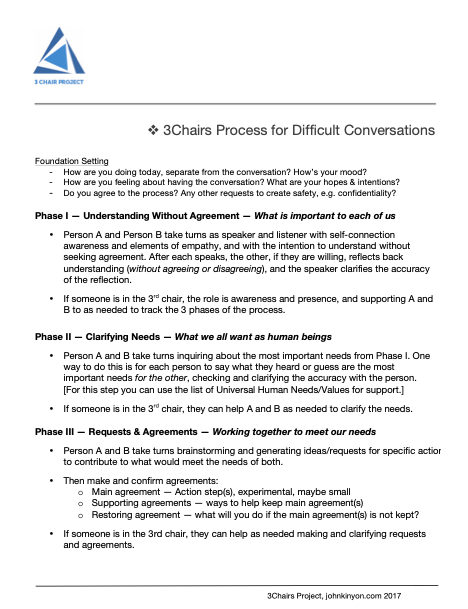
Excerpt (via John Kinyon, co-founder of Mediate Your Life): “Three chairs can change your life. In the world of professional dispute resolution, the three chairs represent two disputants and a mediator. In our Mediate Your Life training, you learn to ‘take the third chair.’ From this perspective, you perceive a different reality. You become more centered and effective in responding to life’s challenges and conflicts… Seeing the situation from the third chair can be very difficult. Although obvious and simple at one level, the shift in perspective is a radical one that goes deeper and deeper. I have at times found it quite challenging — and also extremely valuable — to live this out in my own life…” (continues)
The vision of the 3Chairs Project is a critical mass of people around the world working together to respond to the challenges we face, and creating a peaceful, healthy, and sustainable world.
The mission of the project is people having difficult and important conversations — personal, work, political — using a “3 chairs” structure and process that brings mindful awareness, compassion and collaboration to these conversations. It’s about hearing and understanding each other in our differences and our pain, without needing to agree, and connecting at the level of our shared humanity to contribute to one another’s well being. It’s about having conversations that change us, that create the life and relationships we want, and that move us toward the world we envision… (continues)
TIME 100: One of the first books Satya Nadella recommended to his staff after taking the top job at Microsoft was Nonviolent Communication, an unconventional choice for a company where aggressive communicators thrived. Bill Gates famously upbraided staff with the phrase, “That’s the stupidest idea I’ve ever heard,” plus one expletive unprintable in a family publication. His successor Steve Ballmer was one of the few executives who could give it right back to Microsoft’s formidable founder, according to co-founder Paul Allen, who offered a frank account of the pair’s nose-to-nose shouting matches in his autobiography… (continues)
Disclaimer: This blog is a type of back-of-napkin, “structuredprocrastination,” & free-associative scribbling; please forgive its hodgepodge, quasi-curated content — in advance — if its methodical madness befuddles or bemuses.
Thank you.
I believe that we learn by practice. Whether it means to learn to dance by practicing dancing or to learn to live by practicing living, the principles are the same. in each it is the performance of a dedicated set of acts, physical or intellectual, from which comes the shape of achievement, a sense of one’s being, a satisfaction of spirit. One becomes in some areas an athlete of God.~ Martha Graham
Credit: Wellcome Library, London. Wellcome Images images@wellcome.ac.uk http://wellcomeimages.org A zoo with giraffes, tigers, and a peacock. (CC:4.0)
By Andrew Nusca:Excerpt ~ “There are two types of conversations you’d have at Microsoft when you’d explain things,” Irving says. “One type of person waited for a break in the argument to argue back. The other listened to learn. That was Satya.” Well before he was named CEO, Nadella “could suspend his disbelief and opinion to listen to you thoughtfully. The slight difference between listening to argue and listening to learn is not subtle. It’s huge. Satya is soft-spoken but energetic, which is a weird combination.” … In his first month as CEO, Nadella gave each member of his management team a book called Nonviolent Communication.
“Yeah, first of all I think that empathy is everything. If you think about it, even in the business context for us, our job is to meet the unmet, unarticulated needs of customers. That’s where innovation comes from; there’s no way we could innovate without having the deeper sense of empathy.”
~ Microsoft CEO Satya Nadella
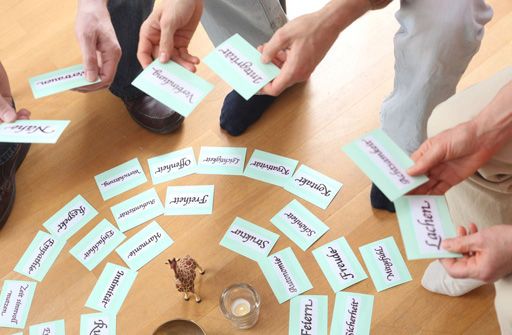
Cards with universal basic human needs. In the picture: A giraffe, that symbolic animal of Nonviolent Communication by Marshall Rosenberg
“…So, being kind to language is one of these—is one of these lessons that seems easy. It just means read, think and try to express your views, whether they’re for or against, in your own words, because my very strong sense is that if we have pluralism of expression, we’re going to be fostering pluralism of thought, and that if people can clarify why it is that they’re opposing this or that, they’re going to be more likely to be persuasive. And at a minimum, in the worst case, if you have your own way of expressing yourself, you at least clutter up the daily memes. You at least put a barrier in the way of the daily tropes. You at least form a force field around yourself and maybe the people who are closest to you, where it’s possible to think and have a little peace.”
Last but not least ~ If you’ve made it all the way down to the bottom of this page (whew!), then I’d also like to invite you to offer me, Pamela, any feedback on this site that might be helpful (whether it be broken links, content suggestions, etc.). I’d welcome having the alternate perspective!
A counter-argument/critique of the inner-conflict &/or parts work described on this blog page (entire tweet/link further down):
Excerpt: “The last thing we want to do in psychotherapy is reify or concretize inner conflict—for example, by treating desires and feelings and mental representations of self and others as if they were separate little people inside our heads, with their own names and personalities, like characters in a puppet show” – JS
Caveat emptor… I originally experimented with inner conflicts, in a quite concretized way, while learning NVC Mediation and putting an internal dilemma of mine own in the three chairs with two others role-playing (both another part of my intrapersonal perspective and a mediator). Then we would often do multiple rounds where I experienced the point-of-view from differing perspectives. I engaged in this practice weekly for more than a decade and for several years initially prior to taking courses on the four levels of IRF/focusing and then much later studying IFS. The insight of parts and Self as having some venn diagram overlap with the symbolism of giraffe/self and jackal/parts came, surprisingly, rather late during this unfolding, only after many years of experimentation with these three different modalities vis-a-vis inner conflicts and despite this blog’s existence — or some 1.0 iteration — throughout. Cannot explain why the modalities remained separate and intact for so long and certainly am cognizant that, for a variety of reasons (too much dualism, saccharin sweet, complicated, etc.), the puppets may alienate rather than serve as intended to be whimsically illustrative. If it’s of some utilitarian value to another, great, and if not, I invite you to trust your inner authority and so otherwise feel free to disregard what doesn’t align. I am not a therapist, although I have the vantage point as a client. So I have a complicated reaction to the tweeted out assessment beneath, which would take some time to flesh out, however for the purposes of this blog/sangha I’ll just note the obvious, that these practices are not therapy (even if they can sometimes seem therapeutic).
The earliest insight of psychoanalysis was recognizing we have contradictory feelings and desires; we are in conflict with ourselves
The goal of psychotherapy is becoming more whole—recognizing there’s just one “us,” and reconciling inner conflict so we don’t have to continually…
— Jonathan Shedler (@JonathanShedler) July 3, 2025
My not personally substantive nor revealing reply, referencing Eugene Gendlin (whose modality, focusing, stemmed from empirical research into what was the most efficacious variable in successful therapy – the key finding being, to vastly oversimplify the ChatGPT summmary attached at bottom – that it mattered more what transpired intrapersonally than interpersonally):
"One reason why research is so important is precisely that it can surprise you and tell you that your subjective convictions are wrong. If research always found what we expected, there wouldn’t be much point in doing research." — #EugeneGendlin
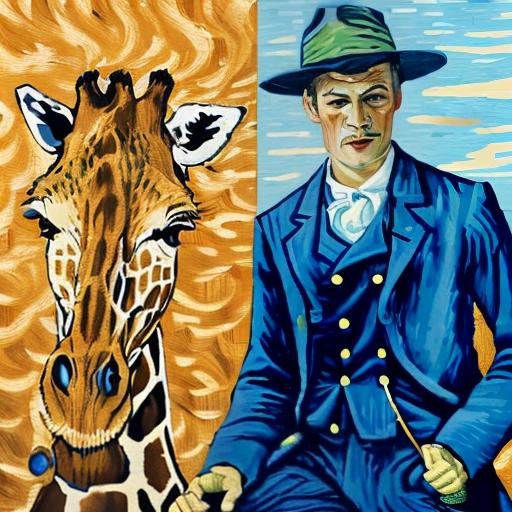
Thanks to a giraffe pal of mine, Hear the Need‘s Paul Johnston, for both showing me “how to” as well as offering many of the artificial intelligence [AI] generated images on this blog (such as the one above)!
FYI – ChatGPT regarding Gendlin’s research findings:
Eugene Gendlin is best known for his groundbreaking research on what makes psychotherapy effective. His most influential contribution was identifying “experiencing” as a key predictor of therapy success, which laid the foundation for his development of Focusing as a therapeutic method.
Here’s a summary of his major findings:
—
🔬 Key Research: “Experiencing and the Creation of Meaning” (1961–1967)
Gendlin led a series of studies at the University of Chicago alongside Carl Rogers, analyzing why some clients improved in therapy regardless of the therapist or method.
👉 Main Finding:
> The client’s ability to access and attend to their internal, bodily felt sense (i.e., “experiencing”) predicted therapy success more than the therapist’s skill or theoretical orientation.
In other words:
It wasn’t the therapist’s technique that mattered most…
It was how the client processed experience — especially when they paused and struggled to articulate something “on the edge” of awareness.
This concept became the core of Focusing — a teachable process that helps people tune in to that vague, bodily-felt sense of meaning and work through it.
—
📊 Study Highlights:
Gendlin, E.T., Beebe, J., Cassens, L., Klein, M., & Oberlander, M. (1968).
“Focusing ability in psychotherapy: A research-based experiential approach to emotional change.”
Clients who showed a higher degree of Focusing-like behavior (e.g., pausing, sensing into the body, struggling to find the right words) had significantly better therapeutic outcomes.
In follow-up studies, training clients in Focusing before therapy sessions also led to greater improvement, even with less experienced therapists.
—
🧠 Experiencing Scale (EXP):
Gendlin developed the Experiencing Scale, a tool to measure how deeply a client is engaging with their inner felt experience during therapy. It’s used in psychotherapy research to this day.
—
📚 Recommended Sources:
“Focusing” (1978) — Gendlin’s classic book teaching the method in self-help form.
“Experiencing and the Creation of Meaning” (1962) — His academic magnum opus on how meaning arises through bodily sensing and language.
—
📌 Summary
Key Insight Gendlin’s research showed that the client’s internal process (not the therapist’s method) predicts success in therapy.
Practical Tool He created Focusing to help people engage more effectively with their felt experience.
Lasting Impact His work has influenced client-centered therapy, somatic psychology, Internal Family Systems (IFS), and mindfulness-based approaches.
—
Would you like a quick guide to practicing Focusing or how it compares with IFS or somatic therapy?
Dr. Marshall Rosenberg, “I developed NVC as a way to train my attention—to shine the light of consciousness on places that have the potential to yield what I am seeking. What I want in my life is compassion, a flow between myself and others based on a mutual giving of the heart.”
"Never question the beauty of what you are saying because someone reacts with pain, judgment, criticism. It just means they have not heard you." ~ Marshall Rosenberg
NVC is a tool, in our toolbox (akin to a paintbrush); how it is expressed, on the canvas of our lived existence, may be as varied as the fruits of each painter's artistic choices & creative risks.
Toolbox – Tools for Call
e.g.
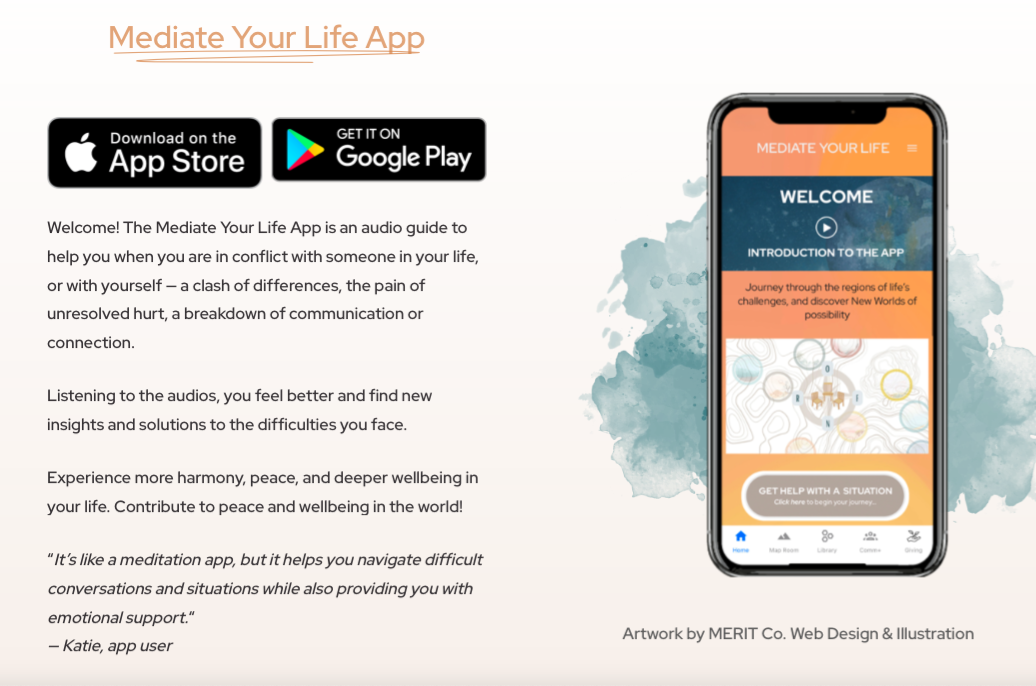
Recommended: Free NVC/MYLApp (as a composting/'posthersal' if/then)
NVC handout from 1980s (note "dreams" - perhaps inspired by MLK)
"Most of us live in a Jackal world where we take turns using the other person as a waste basket for our words." ~ Marshall B. Rosenberg
"From his work with civil rights activists in the '60s, Rosenberg came up with the precise language of Nonviolent Communication, designed to minimize defensive reactions and maximize cooperation." Katy Butler
When once asked about why he, Marshall Rosenberg, opted to shift from "dreams" (1.0) to "universal human needs" (2.0) he offered it was quicker, it simply took less time.
"It’s not about racing toward a resolution. The approach I offer holds empathy for both sides of a conflict. In my 3 Chair Model, being the mediator is to sit between the “two chairs” — the two sides of a conflict and the relationship between subconscious and conscious dimensions of our experience.
The third side perspective isn’t above or outside of the conflict— it’s a conduit for deeper connection within it that reconciles and heals.
Sitting in the third chair symbolizes the most evolved aspect of an individual's self-awareness... " (continues)
"...and for all his sweetness, he had the tiger and the jackal in his soul." ~ American feminist Voltairine de Cleyre via NYT (gift link)
“We don't rise to the level of our expectations, we fall to the level of our training.” ― Archilochos
Visiting "street giraffes" from around the globe (all the countries, in green, that have visited this blog!)
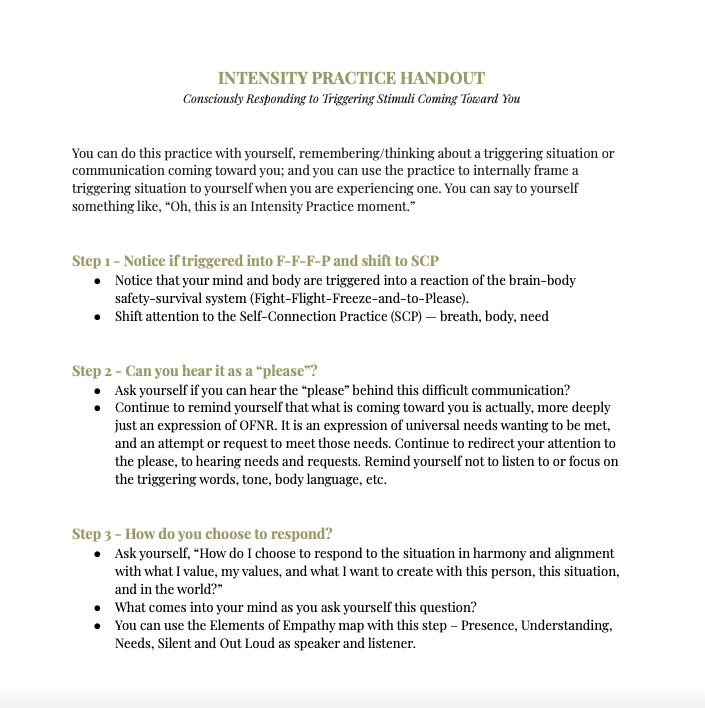
"I'm going to show you a technology today which takes insults and criticisms out of the airwaves. (Marshall puts on giraffe ears) With this technology, it will be impossible for you to hear criticisms, harsh remarks, or insults. All you can hear is what all people are ever saying, 'please' and 'thank you'. What used to sound like criticism, judgment, or blame, you will see, are really tragic, suicidal expressions of 'please'." ~ Marshall B. Rosenberg
Dialogue as a Mindfulness Practice
Marshall Rosenberg
"If you are a jackal, you will try to reassure. Jackals try to fix people in pain. They can't stand pain, but make matters worse by trying to get rid of it. Put on giraffe ears. Try to hear what they are feeling and needing." ~ Marshall B. Rosenberg, PhD
3 Dialogic Choice-Points
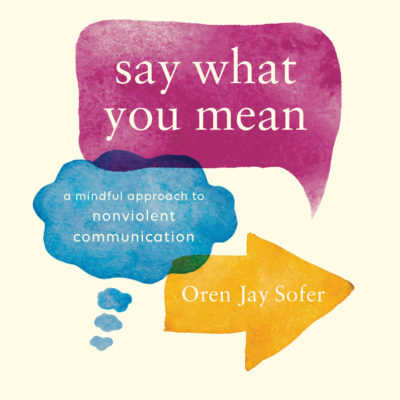
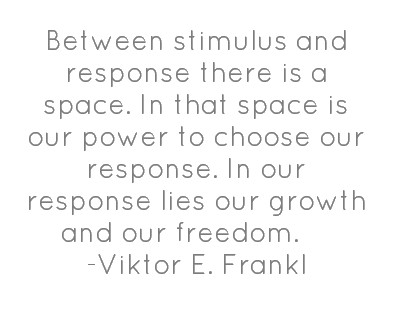
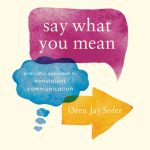
"If I could teach people only one tool for training in presence it would be to pause. The space of one pause can make a world of difference." p. 45 of Oren Jay Sofer's Say What You Mean
"When we are able to include our own needs in the equation fully, alongside, not instead of, others’ needs, we are more likely to experience the possibility of stepping beyond the either/or paradigm, and finding care for everyone." ~ Miki Kashtan
"There are two things that distinguish truly nonviolent actions from violent actions. First, there is no enemy in the nonviolent point of view. You don’t see an enemy. Your thinking is clearly focused on protecting your needs. Second, your intention is not to make the other side suffer." ~ Marshall Rosenberg
"The longer I live, the more deeply I learn that love — whether we call it friendship or family or romance — is the work of mirroring and magnifying each other’s light. Gentle work. Steadfast work. Life-saving work in those moments when life and shame and sorrow occlude our own light from our view, but there is still a clear-eyed loving person to beam it back. In our best moments, we are that person for another." ~ Maria Popova
On Listening
“A jest's prosperity lies in the ear
Of him that hears it, never in the tongue
Of him that makes it.” William Shakespeare, Love's Labour's Lost
"Nonviolent Communication is a way of keeping our consciousness tuned in moment by moment to that beauty within ourselves and others, and not saying anything that we think might in any way tarnish people's consciousness of their own beauty." ~ Marshall B. Rosenberg, PhD
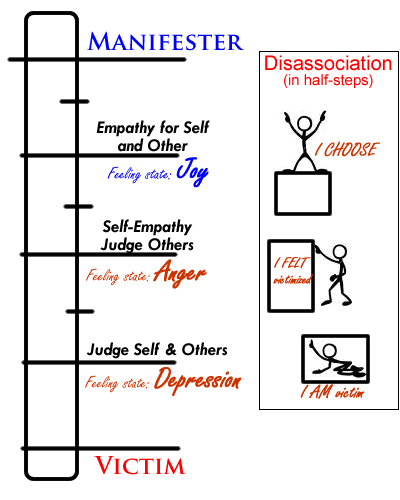
"Anger is a signal that you’re distracted by judgmental or punitive thinking, and that some precious need of yours is being ignored." ~ Marshall Rosenberg
"When we are depressed, our thinking blocks us from being aware of our needs, and then being able to take action to meet our needs." ~ Marshall Rosenberg
"I wouldn’t expect someone who’s been injured to hear my side until they felt that I had fully understood the depth of their pain." ~ Marshall Rosenberg
"True forgiveness is not about condoning or forgetting; it's about releasing ourselves from the burden of resentment and finding peace within." ~ Marshall Rosenberg
This blog/call grew out of a "Naturalizing NVC" class I took with Miki Kashtan through NVC Academy in 2011 during which I made a request of my fellow classmates that we might practice together outside of the call. It was mostly just about my wanting to gain "street giraffe" fluency by way of practice and then also cataloguing the seeds of my learning. As I say here, it's likely been sustained by way of "structured procrastination" and lots of tinkering while multi-tasking. As Peggy Smith once put it, NVC is but one fruit amidst a more plentiful fruit bowl offering of the healing powers of resonant language, which animates the arc of my life's journey and is something I hope to write about eventually. Bottom line, I'm merely a fellow practitioner/traveler yet invite any inquiries that this blog may have sparked for you.
What is Conscious Communication? (a.k.a. Nonviolent Communication or NVC)
The Chopra Center: Conscious Communication is the ability to clearly communicate what you want in life, which directly relates to your emotional well-being. The key principles of conscious communication can help you do just that… (continues)
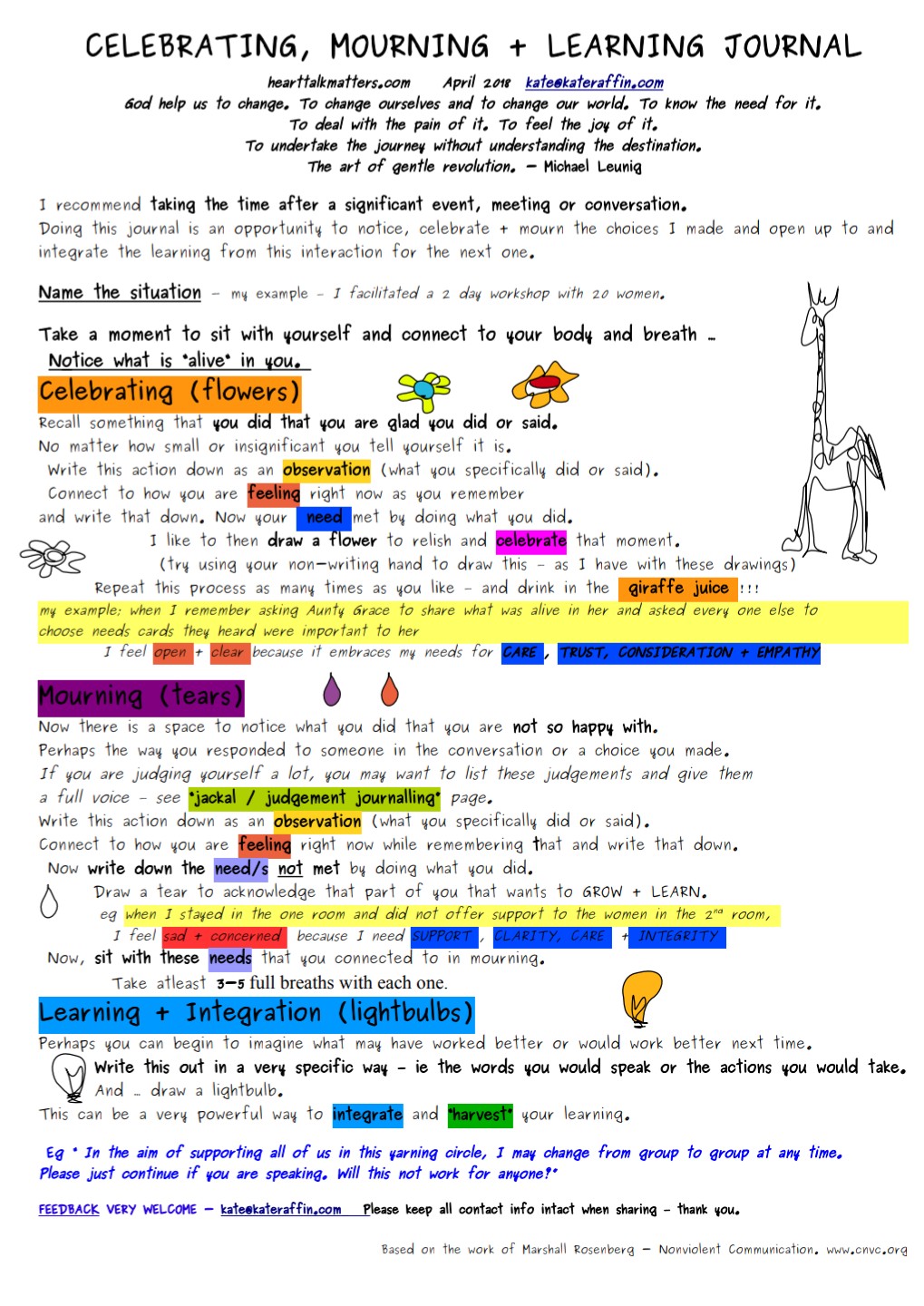
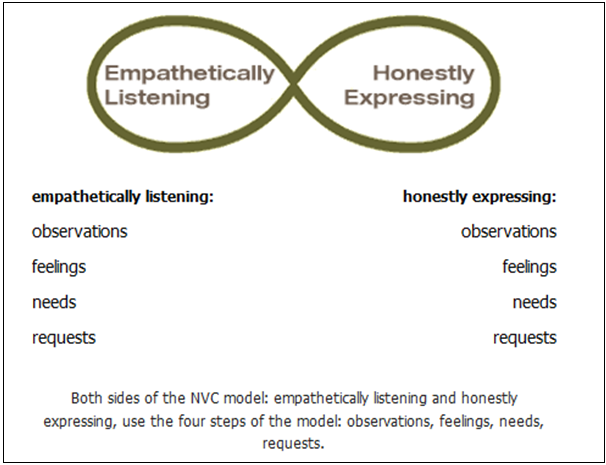
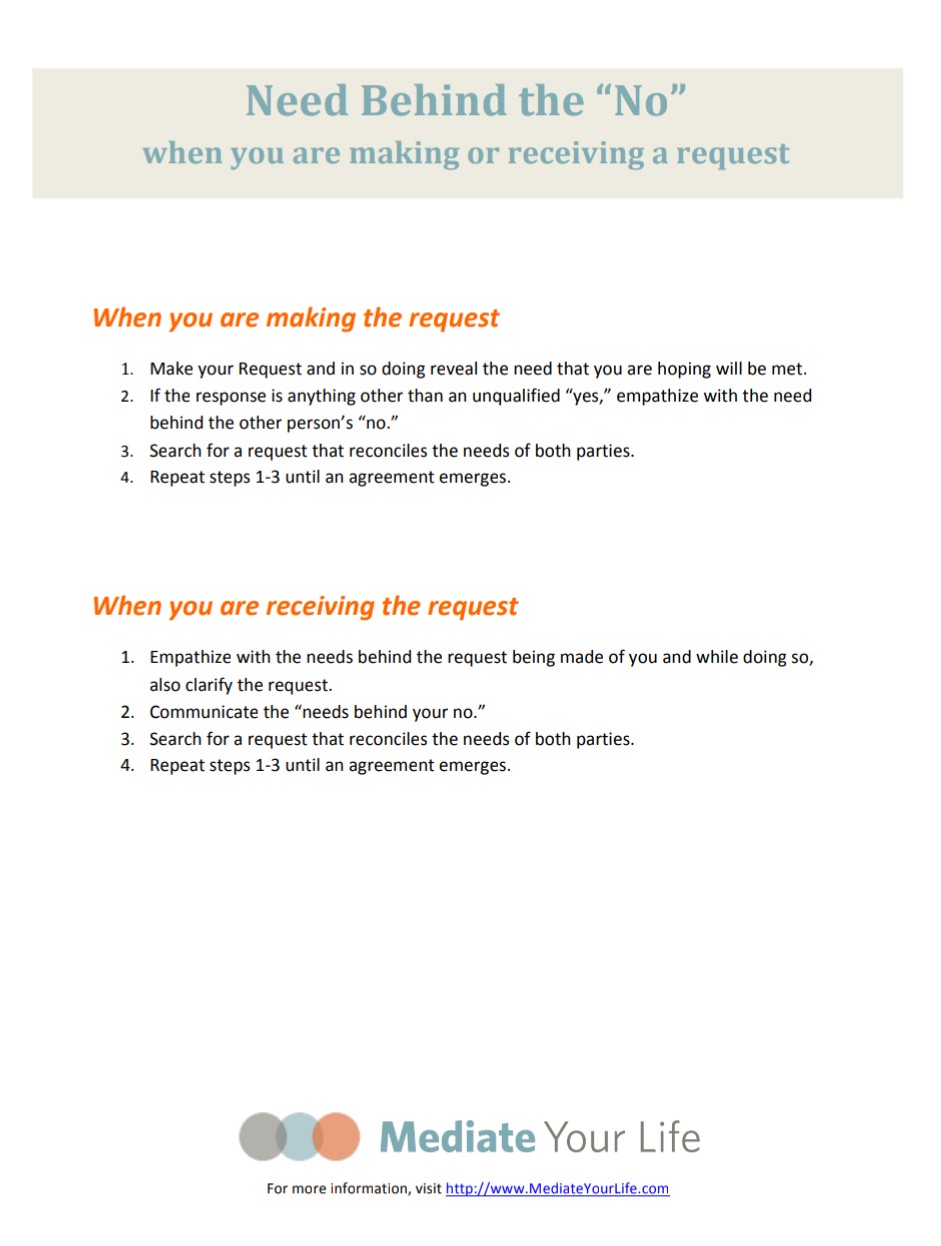
(See also OFNR: Observation, Feelings, Needs & Requests.)
Speak Peace in a World of Conflict
New to NVC?
“If I had just one book to recommend about interpersonal communication, it would be this one.” ~ Rick Hanson
"Reflect: Identify situations where your communication aligned with NVC principles, and others where you feel that you could have improved. Taking a step back can be crucial to acknowledging your progress and identifying where you want to grow." ~ Barbara Robles-Ramamurthy, MD
'You don't have to be brilliant. It's enough to become progressively less stupid." ~ Marshall B. Rosenberg
"As NVC replaces our old patterns of defending, withdrawing or attacking in the face of judgment and criticism. We come to perceive ourselves and others, as well as our intentions and relationships, in a new light. Resistance, defensiveness, and violent reactions are minimized." ~ Marshall Rosenberg
"I would like us to create peace at three levels and have each of us to know how to do it. First, within ourselves. That is to know how we can be peaceful with ourselves when we’re less than perfect, for example. How we can learn from our limitations without blaming and punishing our self. If we can’t do that, I’m not too optimistic how we’re going to relate peacefully out in the world. Second, between people. Nonviolent Communication training shows people how to create peace within themselves and at the same time how to create connections with other people that allows compassionate giving to take place naturally. And third, in our social systems. To look out at the structures that we’ve created, the governmental structures and other structures, and to look at whether they support peaceful connections between us and if not, to transform those structures." ~ Marshall Rosenberg





















































 By Vincent van Gogh – The Yorck Project:
 François Barraud – La Tailleuse de Soupe







































































































 Street Giraffes
.png)


I am lnterested
LikeLike