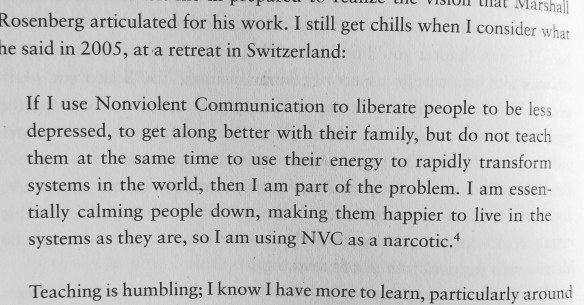
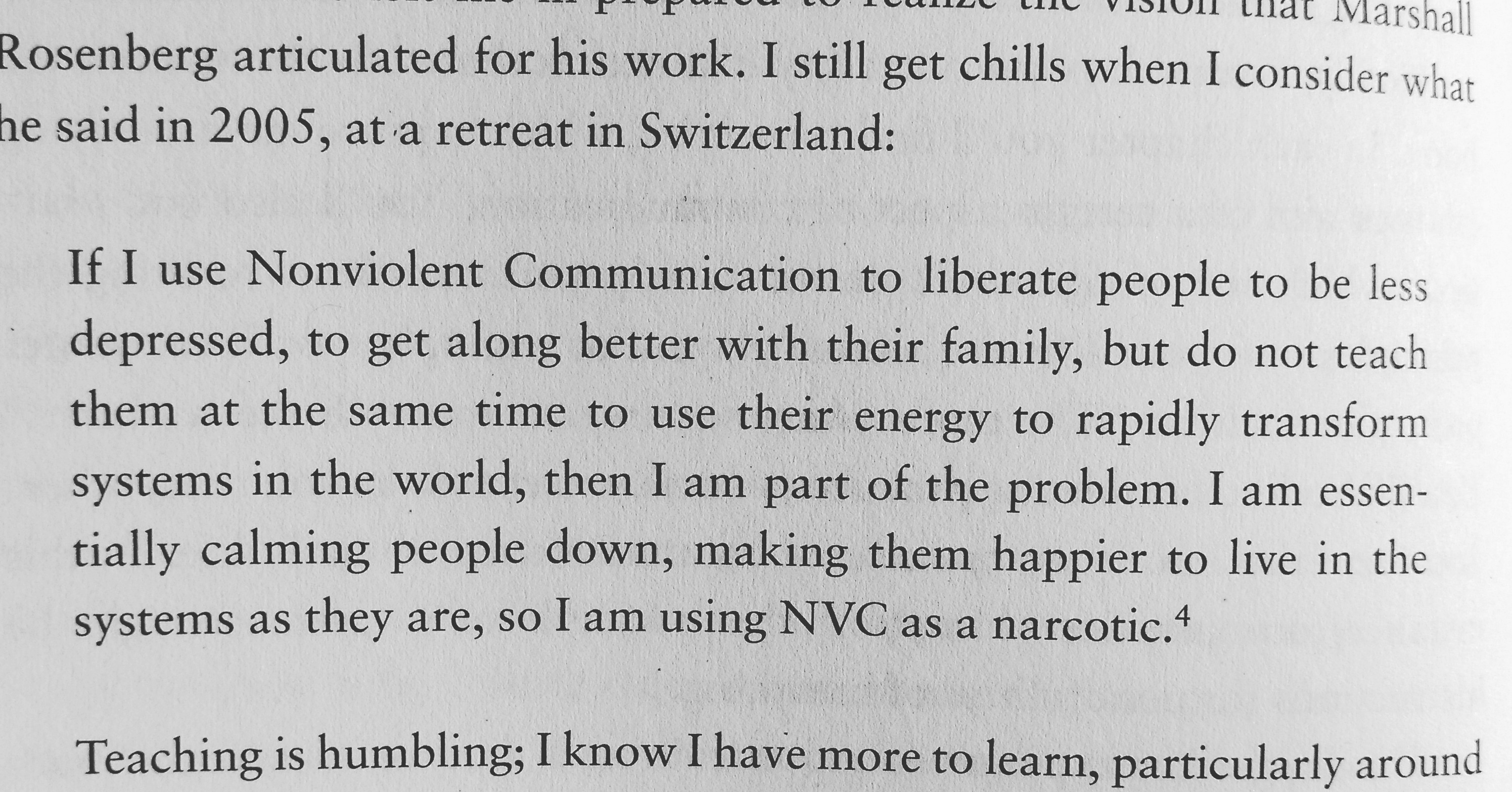
“If I use Nonviolent Communication to liberate people to be less depressed, to get along better with their family, but do not teach them at the same time to use their energy to rapidly transform systems in the world, then I am part of the problem. I am essentially calming people down, making them happier to live in the systems as they are, so I am using NVC as a narcotic.”
“In domination systems you have to train people to think in ways that support the system, so they fit the system.” – Marshall Rosenberg
“Nonviolent Communication is not just a technique; it’s a way of life that can transform relationships, communities, and the world.” ~ Marshall Rosenberg
“I’m not sure that the benefit – as a writer and as a citizen – that I would get from reading at least the front page of the Times every day or every other day would outweigh the depression.”
My late father, also a scientist, yet not of the same notoriety as Carl Sagan, used to repeat certain phrases, one of which was, “it’s better to learn from the mistakes of others” (which gave me a chance to see how the gears shifted in his mind). It didn’t dawn on me at the time that as someone working in the field of health, he used data as a way of assessing how to have such discernment.
Beneath is truly a kind of scribbling on the back of a napkin, perhaps moreso than any other page — an intermingling of the personal and the political.
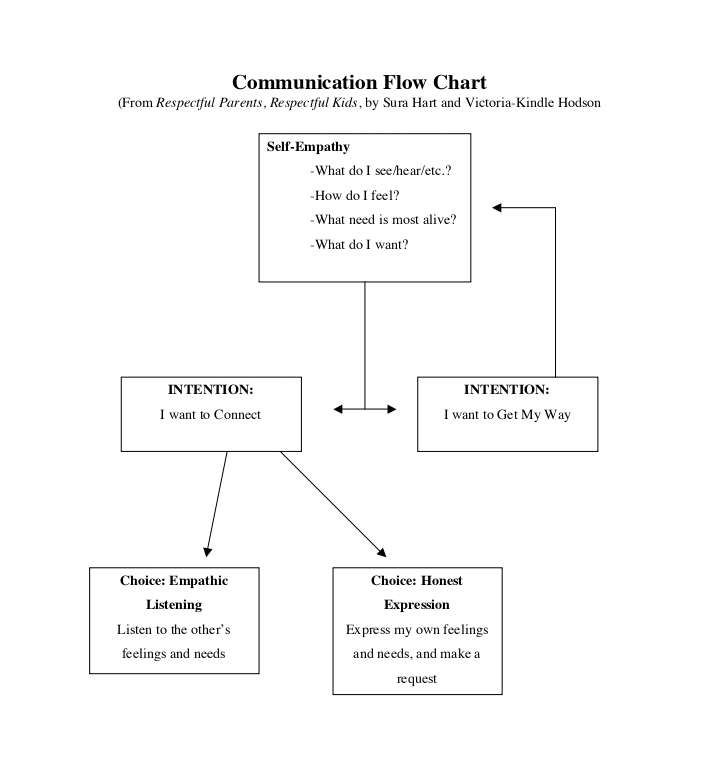
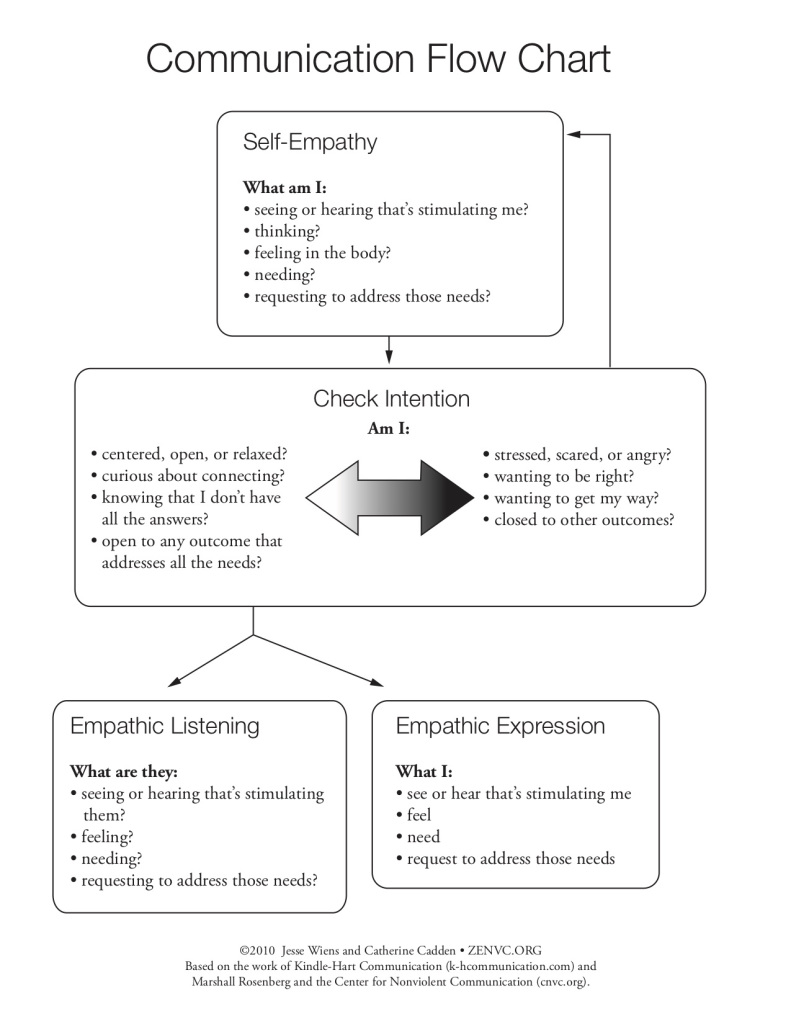
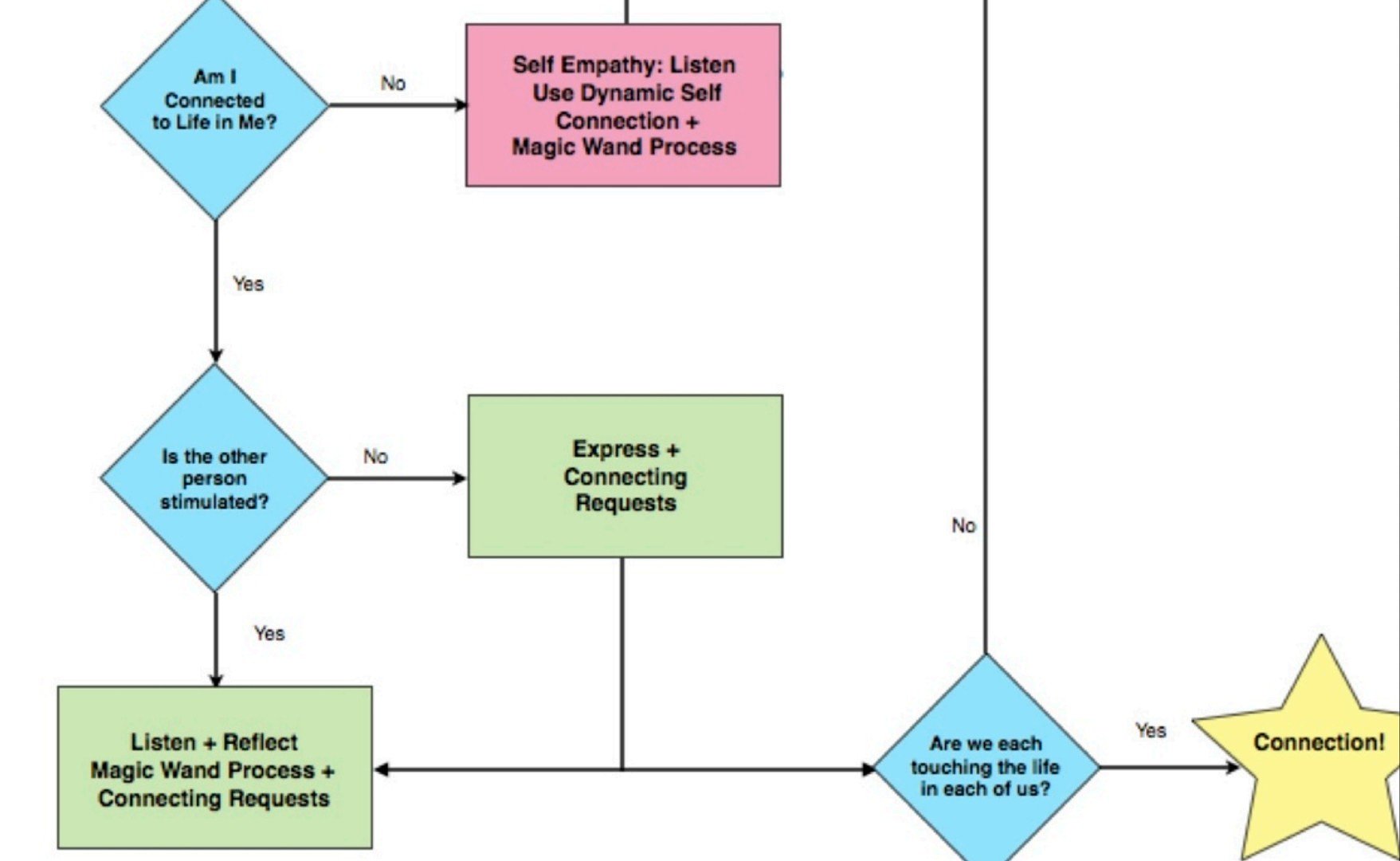
Just a few “back of the napkin” options to employ NVC choice-points amidst political differences:
Reframe what is expressed as a more neutral observation and/or preface with underscoring that it’s their understanding:
Empathize by bypassing differences of opinions (thoughts) while mirroring back feelings/needs towards connecting, then take turns in an exchange of ideas;
Express by offering one’s own transparency as to the impediments one is experiencing in being receptive to another’s point-of-view;
Silent empathy interpersonally while self-connecting within
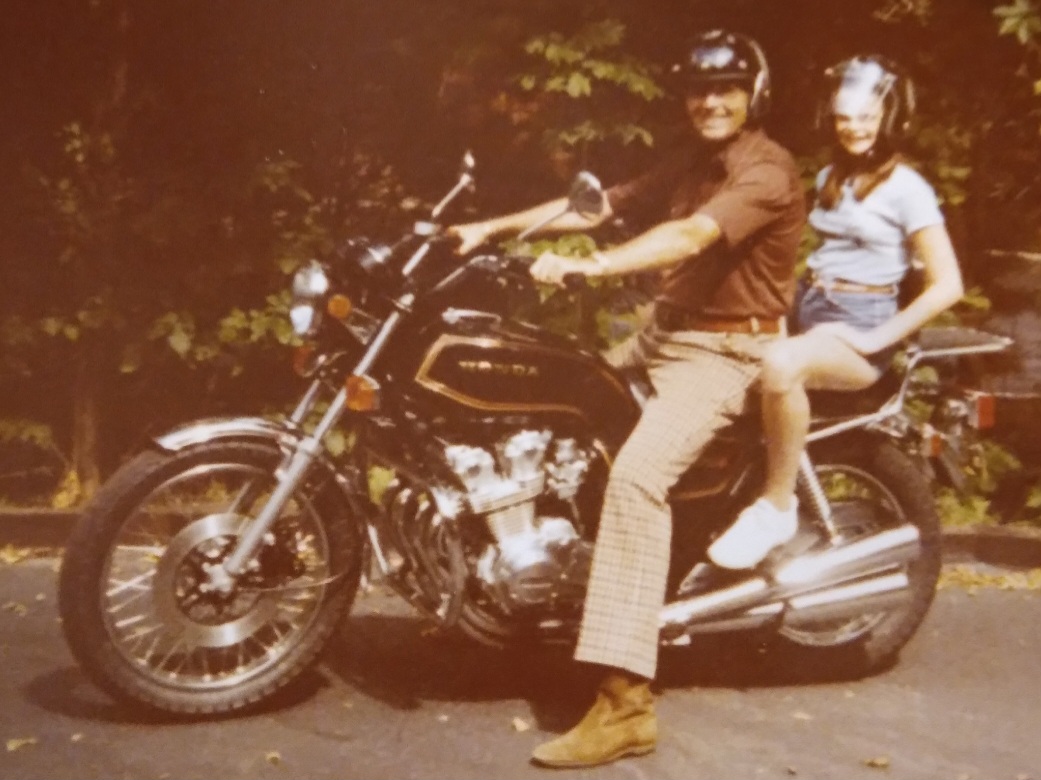
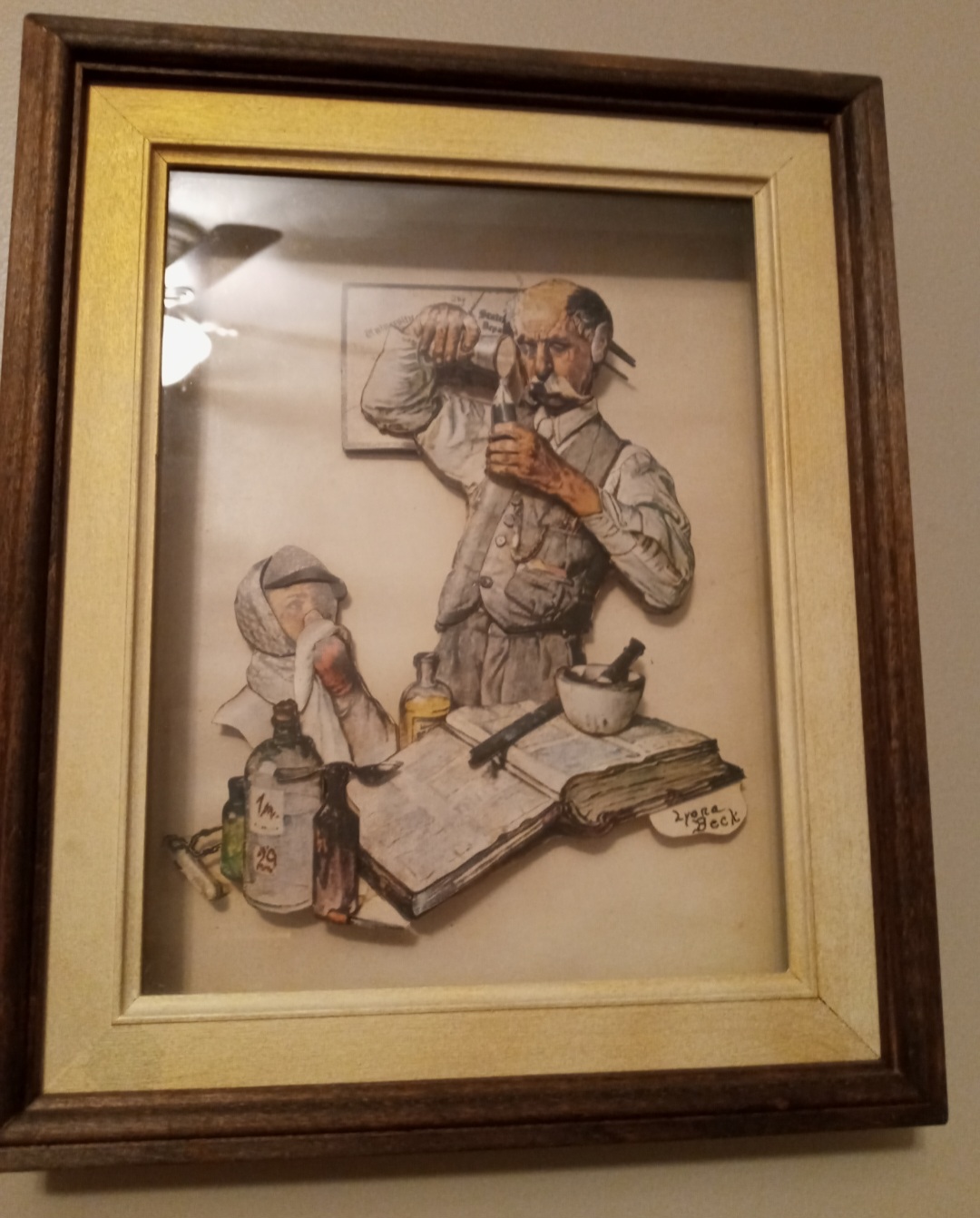
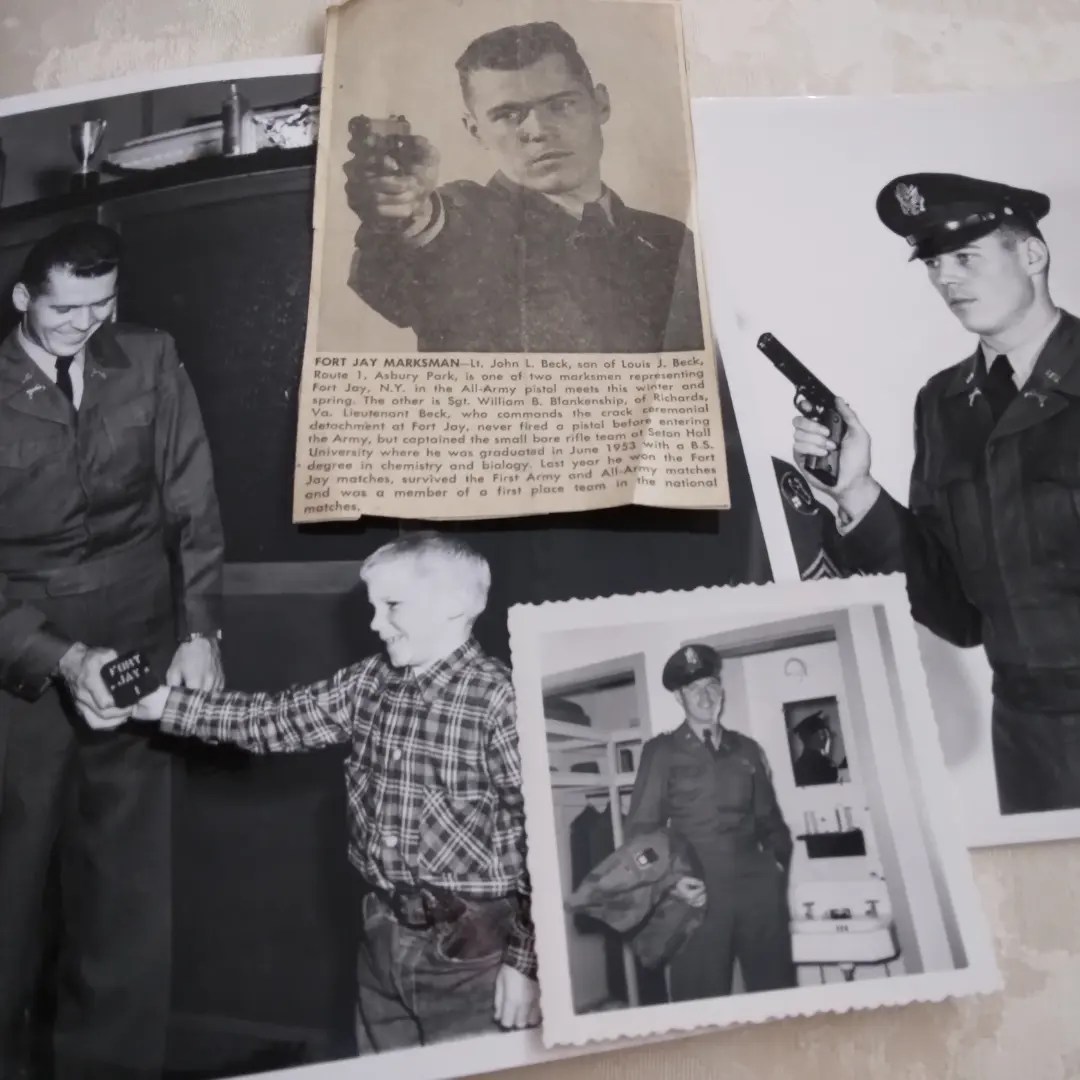
I’ve also opted to write just a bit as to how my [chemist] father’s influence has woven its way as to how I view current events, e.g. MAHA, etc.
(scroll further down — just below the heart-centered magnifying glass & above the mortar & pestle…)
"NVC can be effectively applied at all levels of communication & in diverse situations: intimate relationships, families, schools, organizations & institutions, therapy & counseling, diplomatic & business negotiations, disputes & conflicts of any nature." #MarshallRosenberg
— Mediate One's Life 🌻 (@MediateOnesLife) April 28, 2024
Excerpt: “Aya has been sharing the work of NVC internationally via online classes and in-person retreats. She continually grapples with the joys and challenges of being raised in Israel and finds deep open hope in applying NVC to the context of the Israeli-Palestinian conflict.”
My [nowadays “MAGA”] brother and me in Washington, D.C. during another era
— file under, ‘teaching what I most need to learn’
“When a man unprincipled in private life desperate in his fortune, bold in his temper, possessed of considerable talents, having the advantage of military habits—despotic in his ordinary demeanour—known to have scoffed in private at the principles of liberty—when such a man is seen to mount the hobby horse of popularity—to join in the cry of danger to liberty—to take every opportunity of embarrassing the General Government & bringing it under suspicion—to flatter and fall in with all the non sense of the zealots of the day—It may justly be suspected that his object is to throw things into confusion that he may ‘ride the storm and direct the whirlwind.”
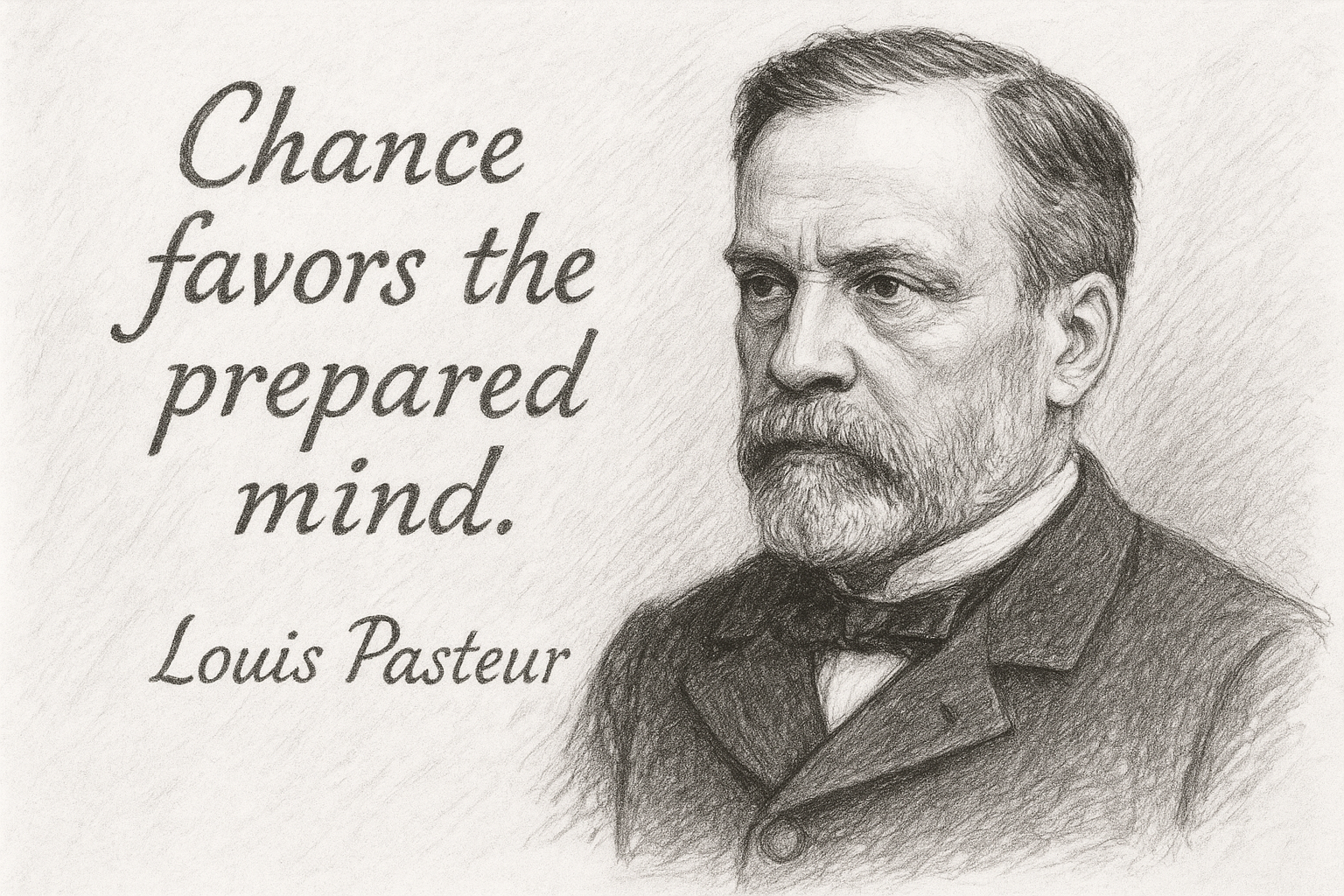
“During an 1854 lecture at the University of Lille, French microbiologist and chemist Louis Pasteur said, “In the fields of observation chance favors only the prepared mind.” The history of science is characterized by an intriguing interplay between scientific acumen and serendipity that leads to innovative insights…”
A former conspiracy theorist turned scientist and sci comm influencer extraordinaire, Dr. Dan Wilson (drum roll please)…
Joe Rogan is repeating the same story told by RFK Jr. and other anti-vaxxers when he talks about why the Vaccine Injury Compensation Program was formed.
None of them ever talk about how these reasons were investigated and found to be false.
3/n the mRNA technology delivered with one estimate from @YaleSPH finding that mRNA vaccines saved 3.2 million American lives pic.twitter.com/qxtWwLKNe7
— Prof Peter Hotez MD PhD DSc(hon) (@PeterHotez) August 17, 2025
For those in your life who are Covid-19 minimizers:
— Prof Peter Hotez MD PhD DSc(hon) (@PeterHotez) August 5, 2025
No doubt that that the catalyst for this page, in its entirety, is rooted in the influence of my late father (who was of a similar age, build, tough urban upbringing and, eventually, educational level as Marshall).
Iwrote this, about my dad, on a more personal social media account and have since opted to post it, more publicly, as well:
While I miss my father-la, as I sometimes teasingly called him, there are days and weeks — such as now — that I am relieved he is not here to bear witness to what is transpiring to the health care system he so valiantly wielded his intellect and integrity to fortify.
As a young boy, he was aware of how his Aunt Marie suffered from polio that a vaccine could have, at a later point, prevented.
He was the first in his family to graduate from college and was accepted to medical school, as his mother had always wanted him to become a doctor, yet served during the Korean War instead.
During his young adulthood he witnessed his beloved wife die of multiple sclerosis, which has of late been traced to EBV, and spoke to me as a kid of STDs/AIDS. Always cognizant of how the invisible can destroy our quality of life, he often quoted fellow chemist and germ-theory originator Louis Pasteur, “chance favors the prepared mind.”
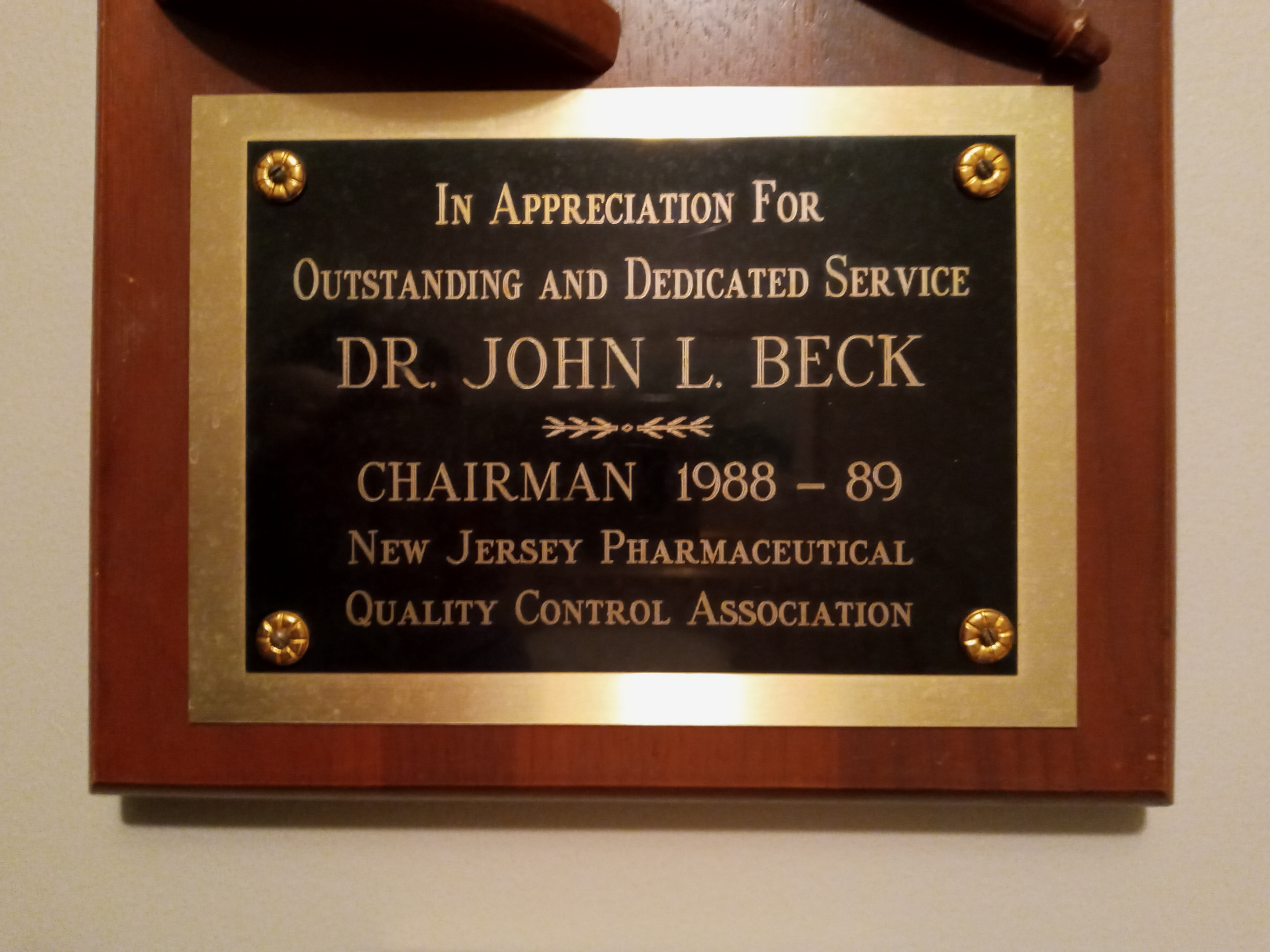
He earned a doctorate and shouldered the primary responsibility of safety protocols in some of the companies he worked.
At his eulogy I recounted a conflict he once had with a CEO in which he drew a line in the sand that might have cost him his job, for safety’s sake. I worked there on a summer break from college and we used to commute together, so I had a chance to grasp what he did for a living which seemed so mysterious to me as a kid. I cherish having had a glimpse into the inner workings not to mention the sweat, blood and tears that scientists put into keeping us healthy.
He consulted the Merck manual the way a preacher might consult a Bible and taught me to have respect for the always evolving, collective endeavor of the scientific method.
Despite his deep respect and affection for Susan Mullen, one of his most cherished friends (who was also a lawyer/judge/law-firm partner), he routinely spoke with a kind of bitter skepticism — that I am only now beginning to understand — about a certain kind of grifting attorney, devoid of objectivity.
I miss his wisdom, especially during this harrowing time when we have become unmoored from our enlightenment roots.
“I don’t think I’ve seen a more dangerous decision in public health in my 50 years in the business,” said Mike Osterholm, a University of Minnesota expert on infectious diseases and pandemic preparations.
AP: RFK Jr. cancels $500M in funding for mRNA vaccine development | AP News
More here & here (video interview with Rachel Maddow)
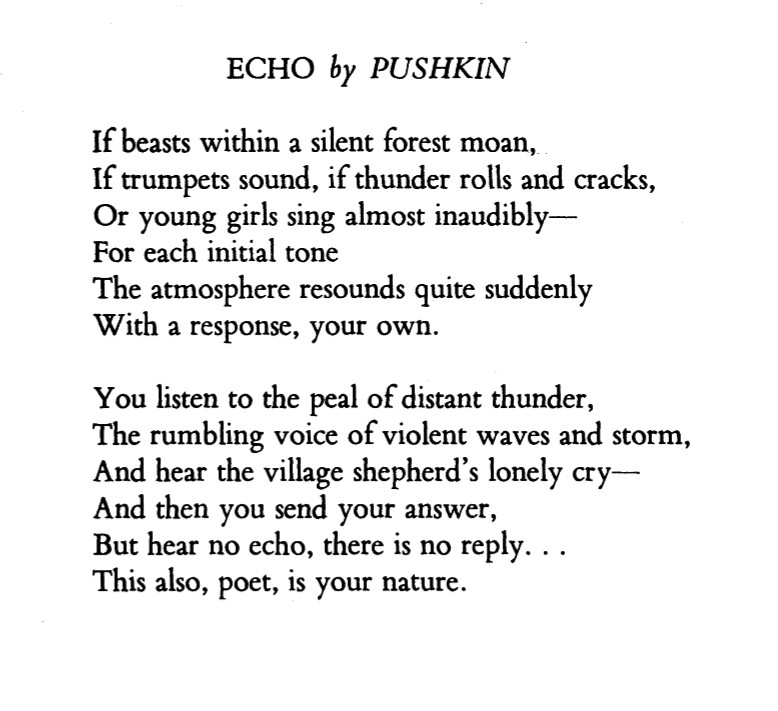
Pushkin: “Malcolm investigates the origins of what the U.S. Secretary of Health and Human Services believes (and doesn’t believe) about viruses.”
At just before the 26 minute mark:
RFK, Jr.
Louis Pasteur
Germ-Theory
This chart show the history of three infectious diseases – smallpox, polio, and measles – before and after a vaccine was available.
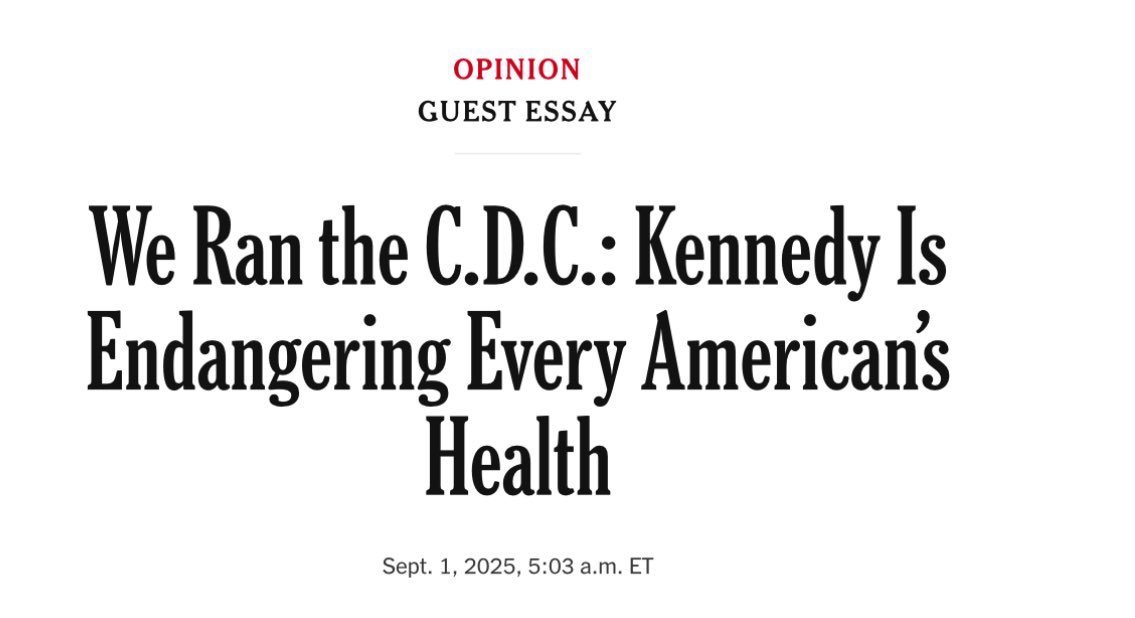
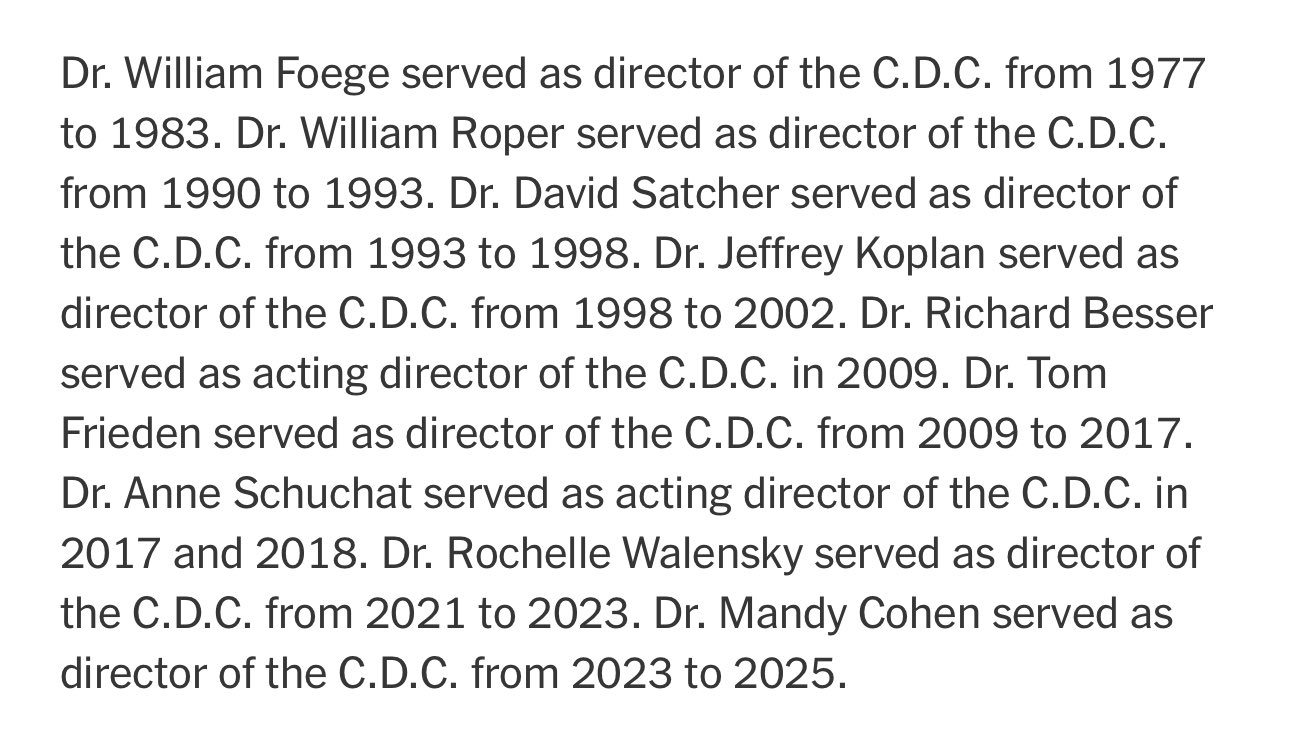
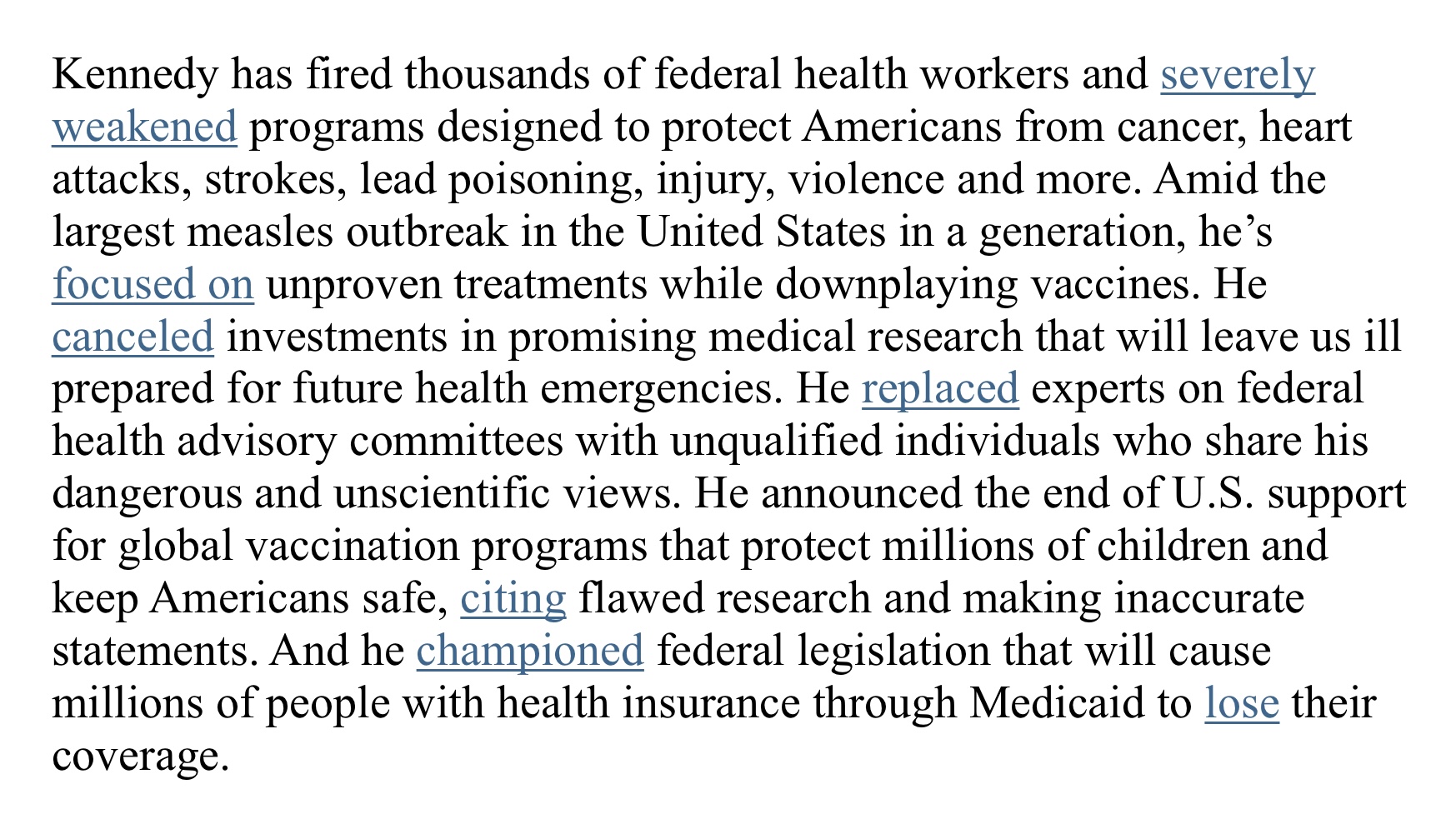
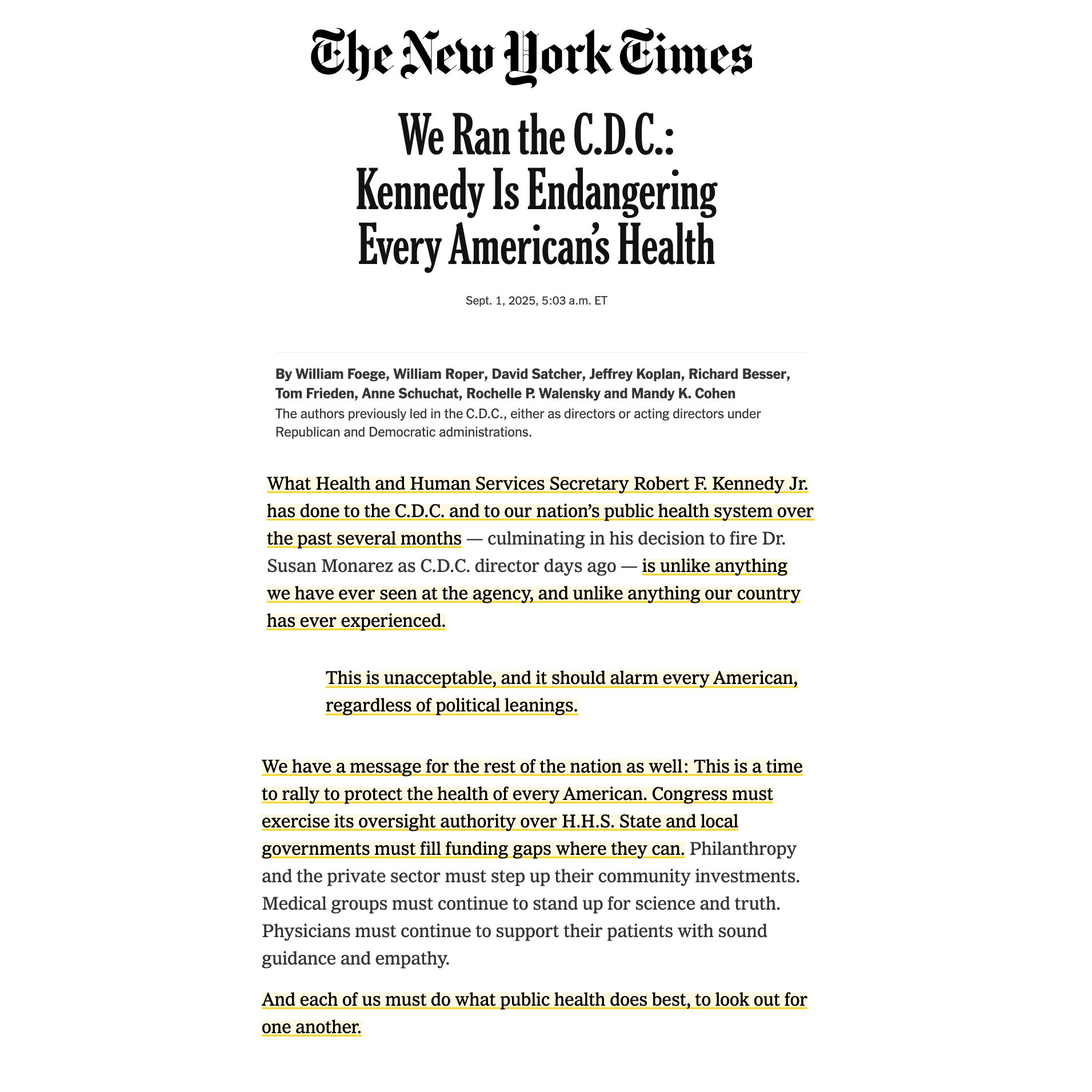
“It feels like the CDC is over.” Current and former CDC officials say that the departure of several top leaders will further undermine the agency’s ability to provide reliable guidance to Americans, Tom Bartlett reports.
How RFK Jr. alienated MAGA, MAHA and the White House in a single week. The botched announcement about mRNA vaccines reveals a health department full of dysfunction and infighting.
“There is no vaccine that is safe and effective.” – RFK, Jr ⤵️
Ainsley Earhardt insisted that RFK Jr. was not anti-vaccine. I've included excerpts from a segment on @PBS about RFK Jr.'s history of anti-vaccine statements. pic.twitter.com/WVZOzUaZpK
Two boys in this photograph from the early 1900s, taken by Dr. Allan Warner of the Isolation Hospital in Leicester, UK, had been exposed to the same source of smallpox. One of them had received the smallpox vaccine, while the other had not. Dr. Warner captured these images as… pic.twitter.com/D6cKouO6iW
“Go to an old cemetery. See all the baby graves from before the 1950s & 60s? After that, hardly any. That’s when people started vaccinating their children. If you’re unsure what to do to protect your kids, the answer is literally written in stone.” — Michael Okuda
The rapid decline of American science has few precedents in history, argues @andersen. We are witnessing an unparalleled act of self-sabotage: https://t.co/NtoFTWWdbA
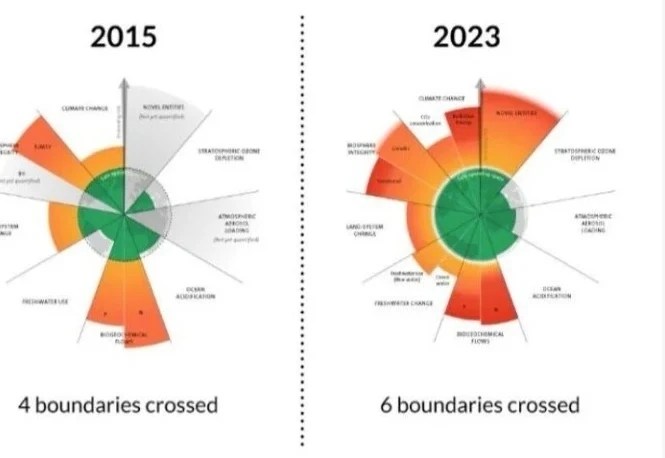
First complete ‘scientific health check’ shows most global systems beyond stable range in which modern civilisation emerged
Prof Katherine Richardson, from the University of Copenhagen who led the analysis, said: “We know for certain that humanity can thrive under the conditions that have been here for 10,000 years – we don’t know that we can thrive under major, dramatic alterations [and] humans impacts on the Earth system as a whole are increasing as we speak.”
She said the Earth could be thought of as a patient with very high blood pressure: “That does not indicate a certain heart attack, but it does greatly raise the risk.”
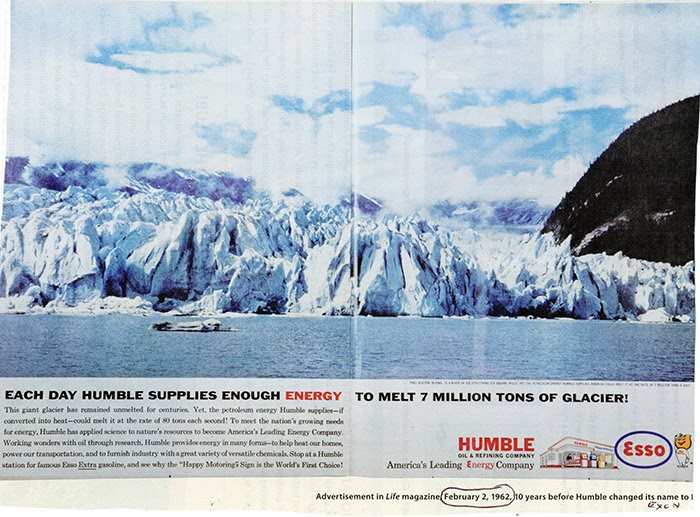
The warning is clear and dire — and the source unexpected. “This report unquestionably will fan emotions, raise fears, and bring demand for action,” the president of the American Petroleum Institute (API) told an oil industry conference, as he described research into climate change caused by fossil fuels.
“The substance of the report is that there is still time to save the world’s peoples from the catastrophic consequence of pollution, but time is running out.”
The speaker wasn’t Mike Sommers, who was named to helm API this past May. Nor was it Jack Gerard, who served as API’s president for roughly a decade starting in 2008.
The API president speaking those words was named Frank Ikard — and the year was 1965, over a half-century ago…
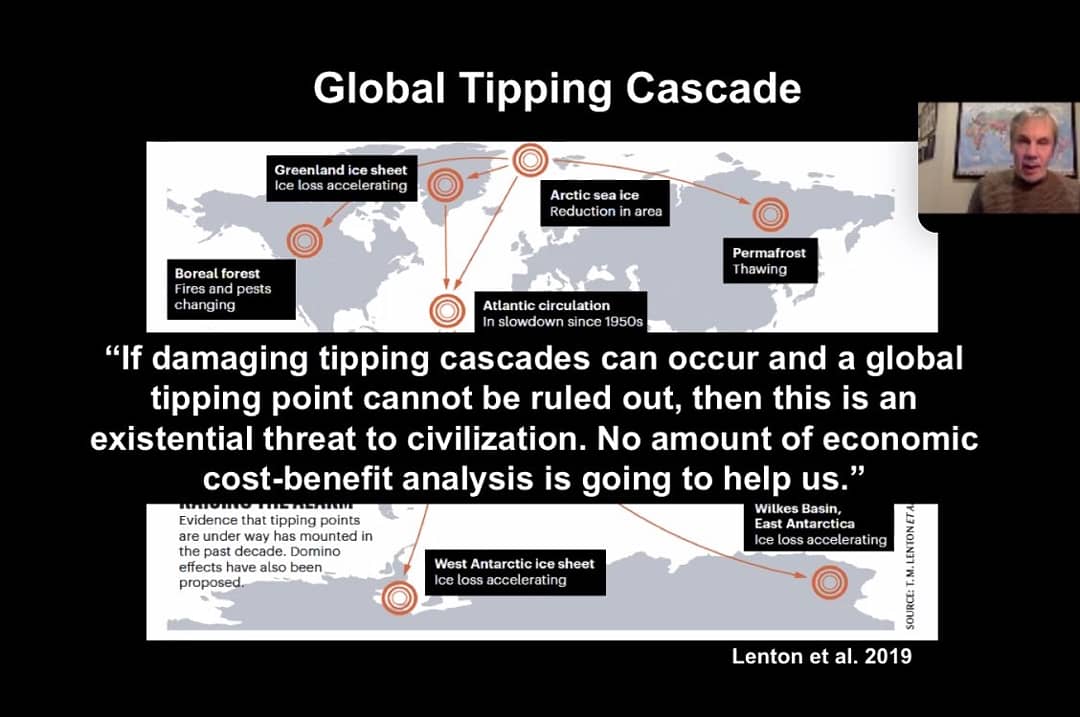
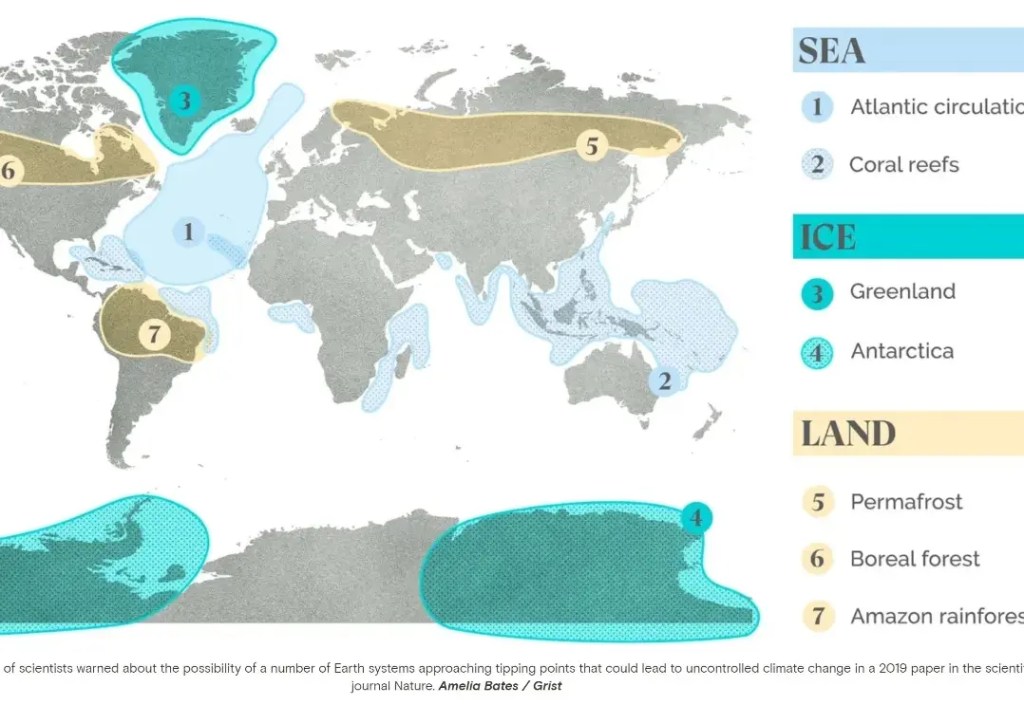
Scientists think at least 25 parts of the Earth’s climate system are in danger of irreversible change: from the breakdown of the Greenland Ice Sheet to the collapse of Atlantic ocean currents. The consequences could be devastating https://t.co/xgqyy9aqeb
Good luck explaining to your grandchildren why we crossed known climate tipping points. “Oh, we wanted to let big companies pollute for free,” won’t have much appeal.
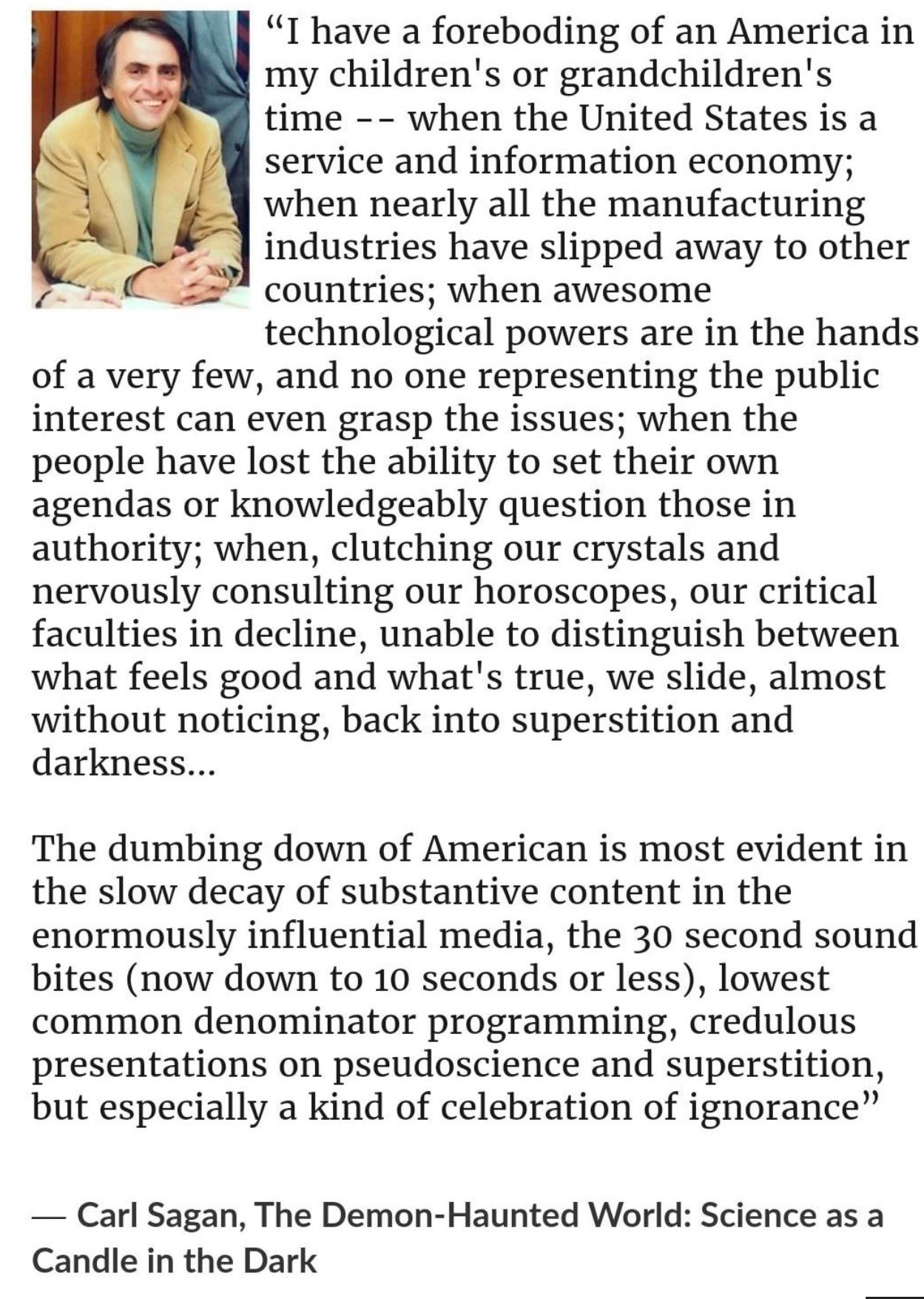
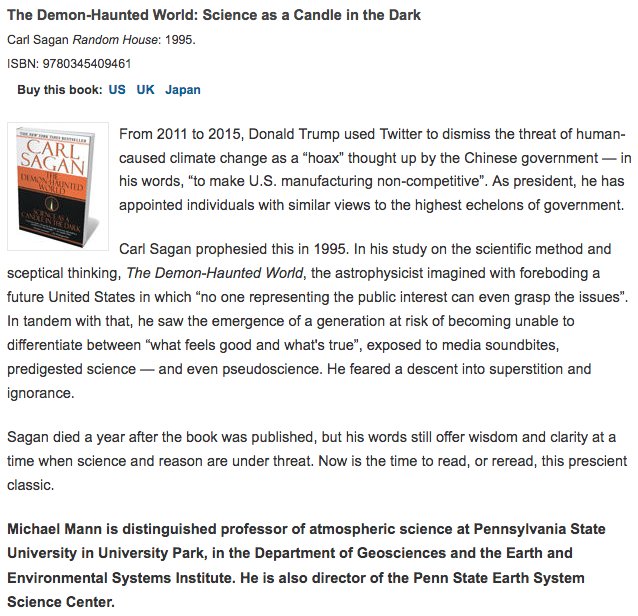
I do wonder if Carl foresaw how readily this "celebration of ignorance" would be weaponized by bad actors and facilitated by an incompetent-at-best and complicit-at-worst mass media? pic.twitter.com/z8YRPSBvuE
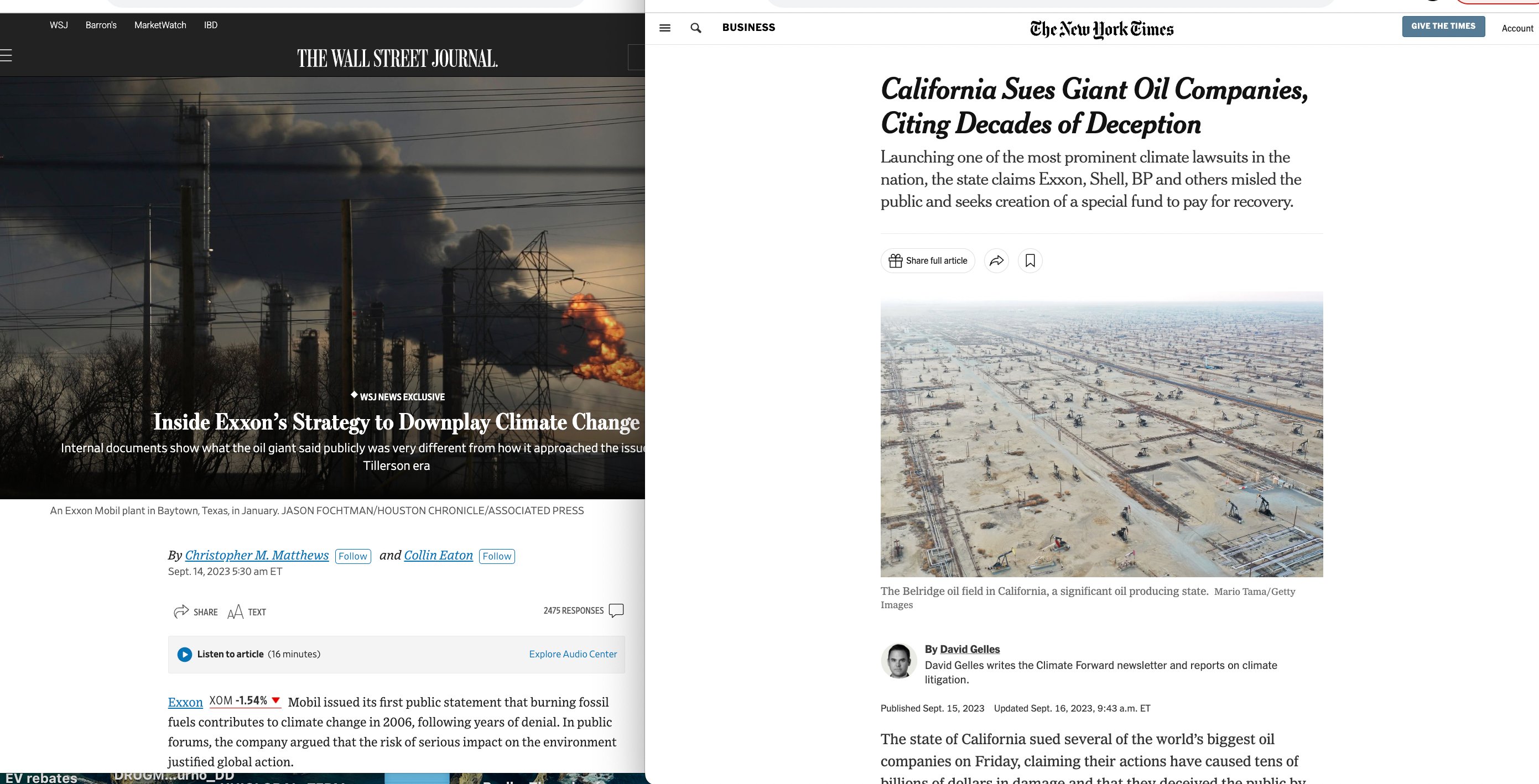
Launching one of the most prominent climate lawsuits in the nation, the state claims Exxon, Shell, BP and others misled the public and seeks creation of a special fund to pay for recovery.
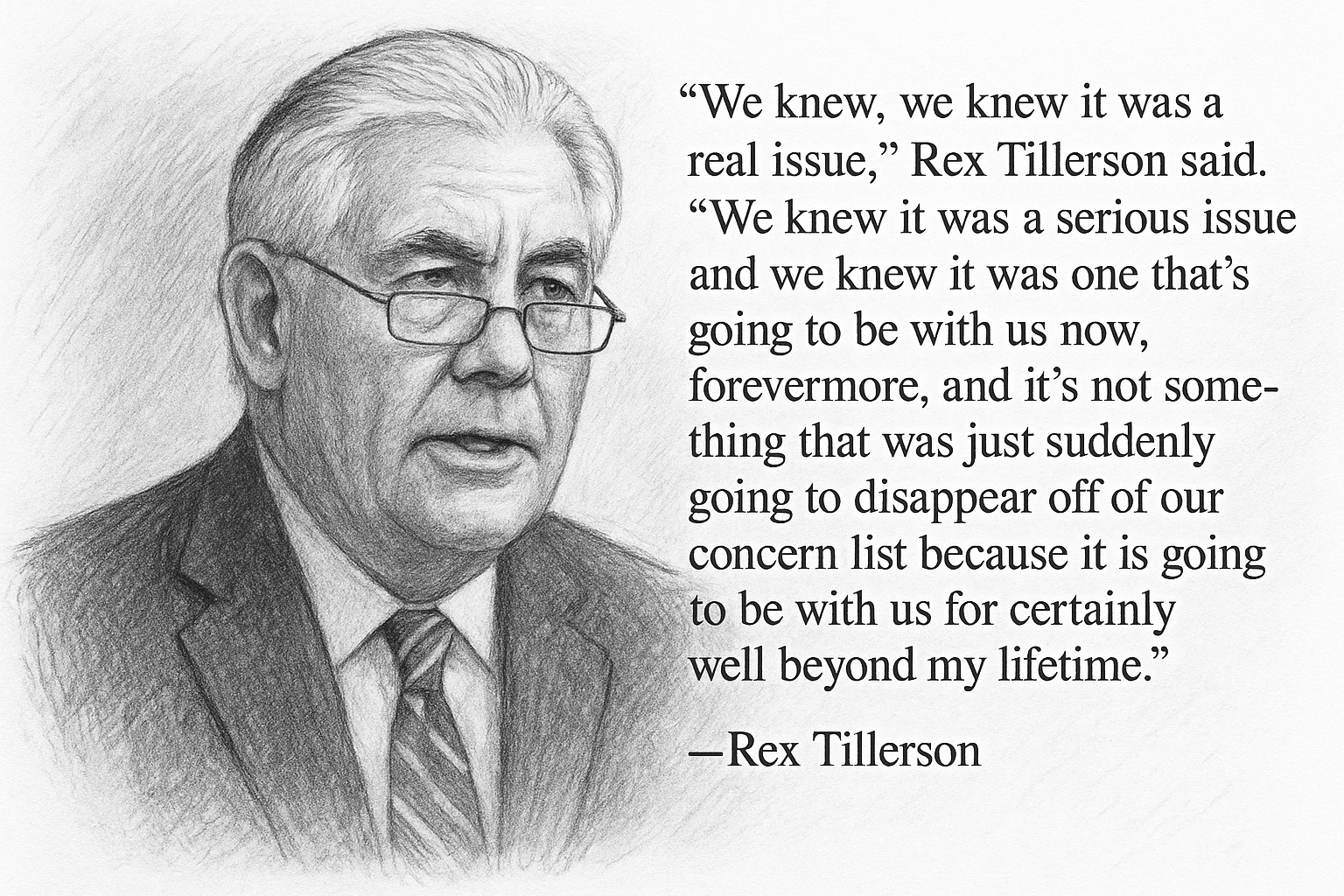
It’s rare for a current or former leader of one of the world’s largest energy producers to testify under oath about climate change. That’s why a New York courtroom was packed on Wednesday to see ex-Exxon Mobil Corp. Chief Executive Officer Rex Tillerson take the witness stand and explain that the company knew for years how it was a significant threat to the world.
“We knew, we knew it was a real issue,” Tillerson said. “We knew it was a serious issue and we knew it was one that’s going to be with us now, forevermore, and it’s not something that was just suddenly going to disappear off of our concern list because it is going to be with us for certainly well beyond my lifetime.”
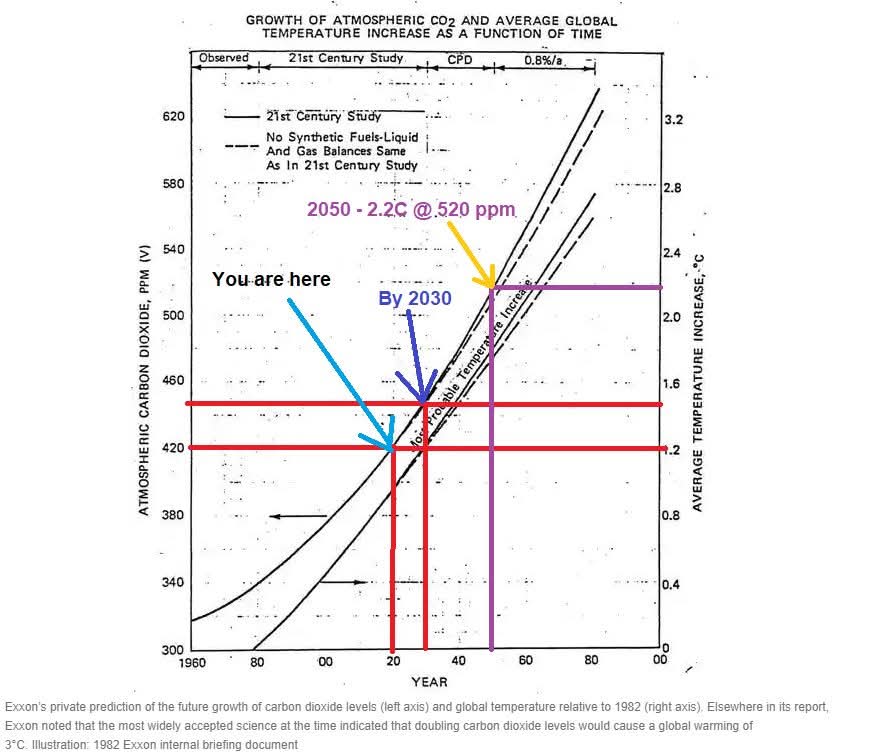
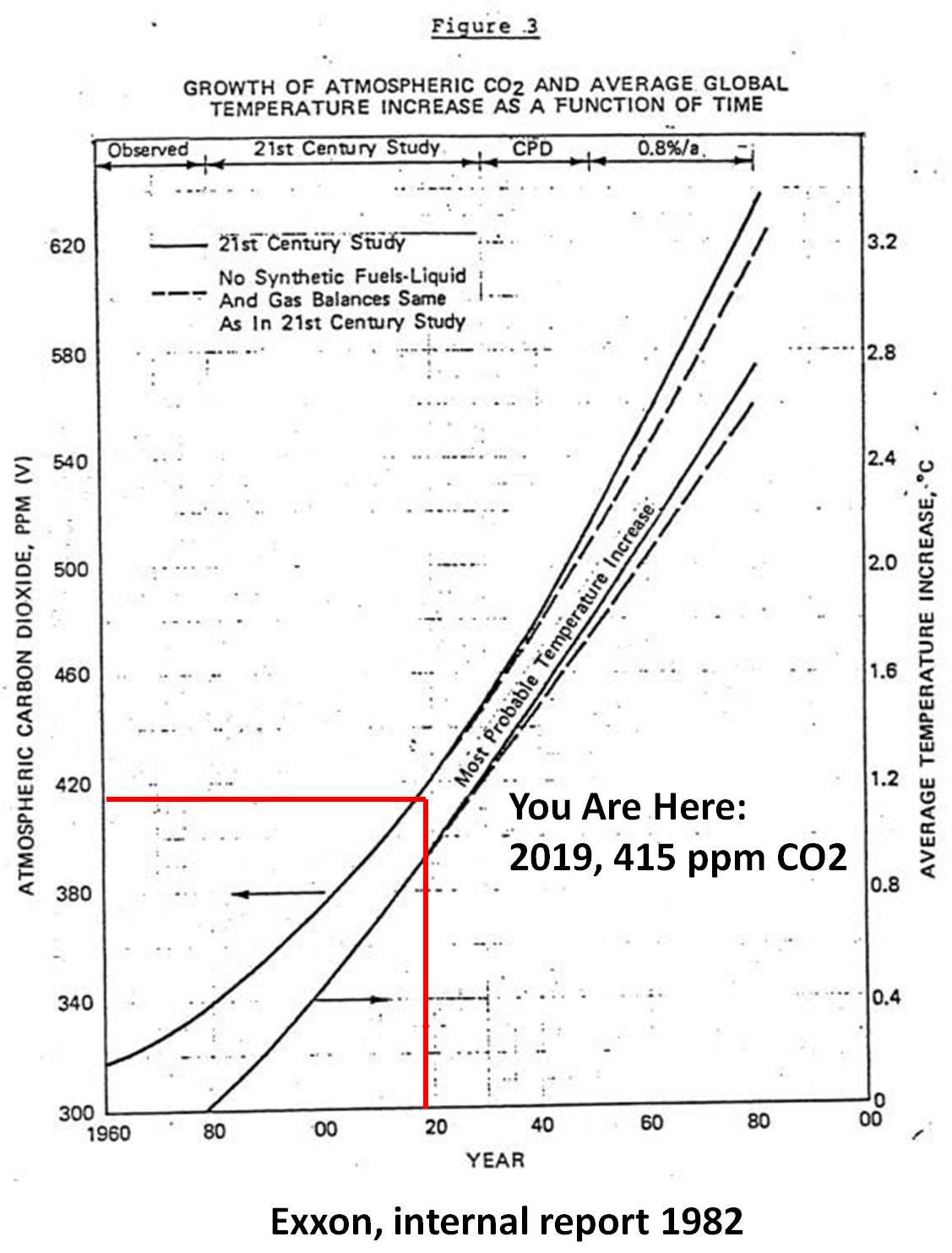
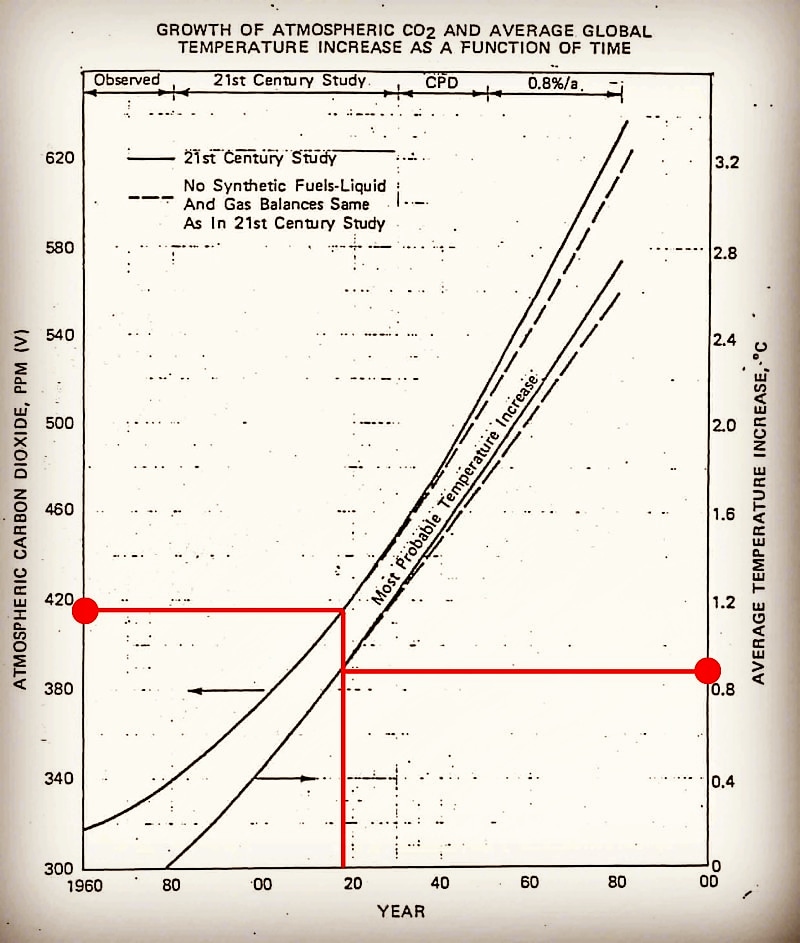
.@AOC: In 1982, seven years before I was even born, Exxon accurately predicted that by this year the earth would hit a carbon dioxide concentration of 415 parts per million and a temperature increase of one degree Celsius. pic.twitter.com/Y45jsib0JT
“In fact, there seems to be an inverse relationship between the amount of evidence for genuine conspiracies and the degree of interest people take in them. The ones that they’re interested in are the ones for which there are no evidence.” @GeorgeMonbiot
(insightful discussion of conspiracies at 25 minute mark)
Podcast synopsis: “The global pandemic response is a microcosm of the global climate collapse response. In both we get to see what’s really under the hood when the pressure is on. In the face of endless and relentless odds and near-constant demoralization, what stories do we turn to, what bonds do we form, and who do they help? Climate journalist emeritus George Monbiot joins Matthew to discuss the never-ending road of empathy and activism, and what happens on that road when otherwise brilliant and sensitive people ‘lose their mirror,’ or sense of responsibility to the commons. What happens when they aestheticize grief. What happens when they have enough privilege to fetishize renunciation… (continues)”
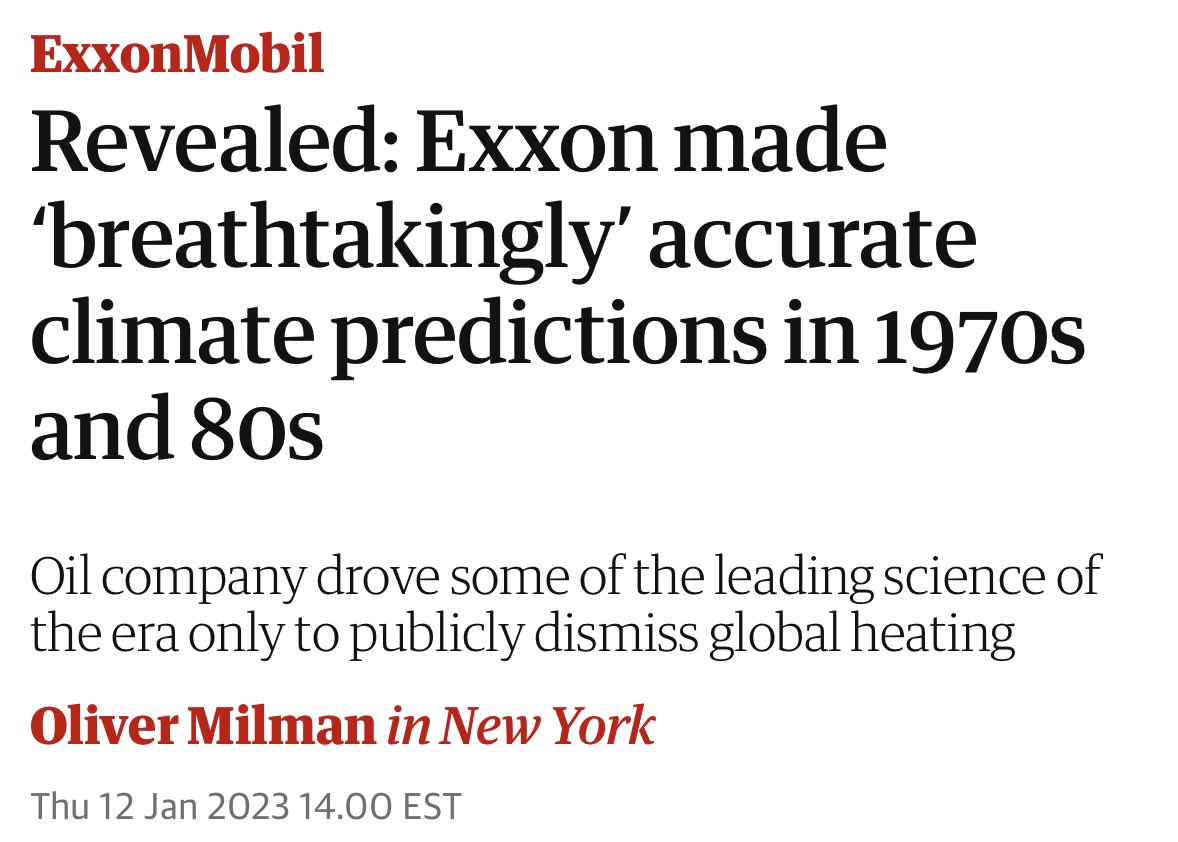
"What those papers revealed is now changing our understanding of how climate change became a crisis. The industry’s own words, as my research found, show companies knew about the risk long before most of the rest of the world." https://t.co/DZlKTfUFLj
Exxon "knew all they needed to know [about global warming] more than a decade before I was even born, only to then spend almost my entire lifetime attacking that very climate science."
Bill McKibben (circa 2015): Now, on the eve of the next global gathering in Paris this December, there’s a new scandal. But this one doesn’t come from an anonymous hacker taking a few sentences out of context. This one comes from months of careful reporting by two separate teams, one at the Pulitzer Prize–winning website InsideClimate News, and other at the Los Angeles Times (with an assist from the Columbia Journalism School). Following separate lines of evidence and document trails, they’ve reached the same bombshell conclusion: ExxonMobil, the world’s largest and most powerful oil company, knew everything there was to know about climate change by the mid-1980s, and then spent the next few decades systematically funding climate denial and lying about the state of the science.
This scandal — traveling under the hashtag #exxonknew — is just beginning to build…
NASA is making plans to shut down two Earth observing satellites that provide key data to climate scientists and farmers, despite lawmakers telling them it’s illegal to do it. Story by @astrokimcartier.bsky.social eos.org/research-and…
Take a long hard look at this graphic, the longest continuous direct measurement of atmospheric carbon dioxide. This is the famous Keeling Curve from the station atop Mauna Loa, Hawaii.Trump and the GOP are closing the observatory.scripps.ucsd.edu/bluemoon/co2…
“I came away with enormous regard for many of the Exxon scientists who researched climate change and for the managers and executives who gave them the resources and latitude to freely investigate a problem their own company was contributing to.” (via It’s not just what #ExxonKnew, it’s what #ExxonDid next)
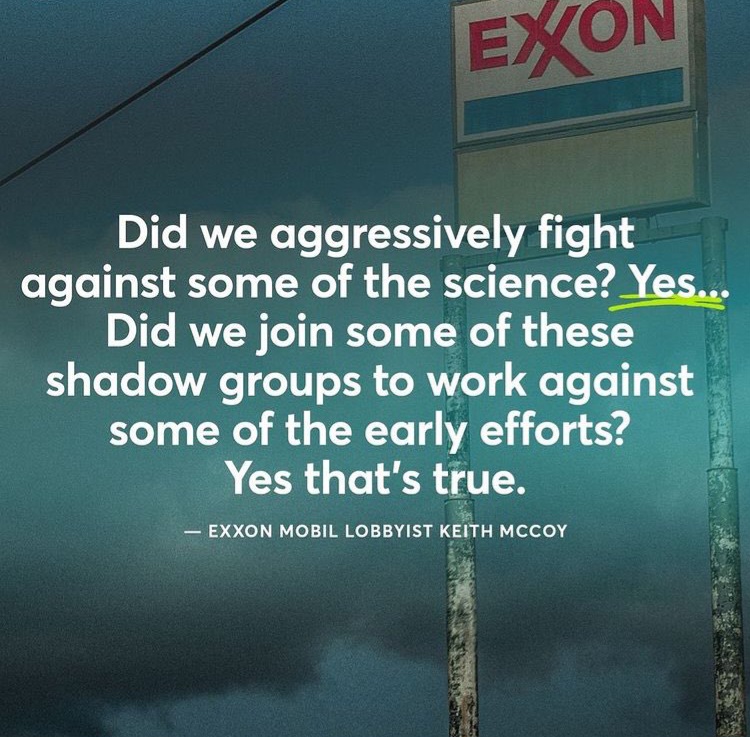
In a meeting over Zoom, McCoy admitted that Exxon funded “shadow groups” that worked to misrepresent and deny climate science in order to sow doubt and stall regulation.
“Did we aggressively fight against some of the science? Yes,” he said. “Did we join some of these shadow groups to work against some of the early efforts? Yes that’s true. But there’s nothing illegal about that. We were looking out for our investments, we were looking out for shareholders.”
This article has been in the works consciously for at least three years, and, implicitly, since 1995, when I first heard Marshall Rosenberg speak of the protective use of force. Here’s one way he described it in a video interview: “The protective use of force is necessary when another person for whatever reason is not willing to communicate and meanwhile their actions are threatening our needs. So we need to take whatever action can be made to protect against that happening but we can do that without violence.” In that same interview he also said: “Use force to prevent violence.”
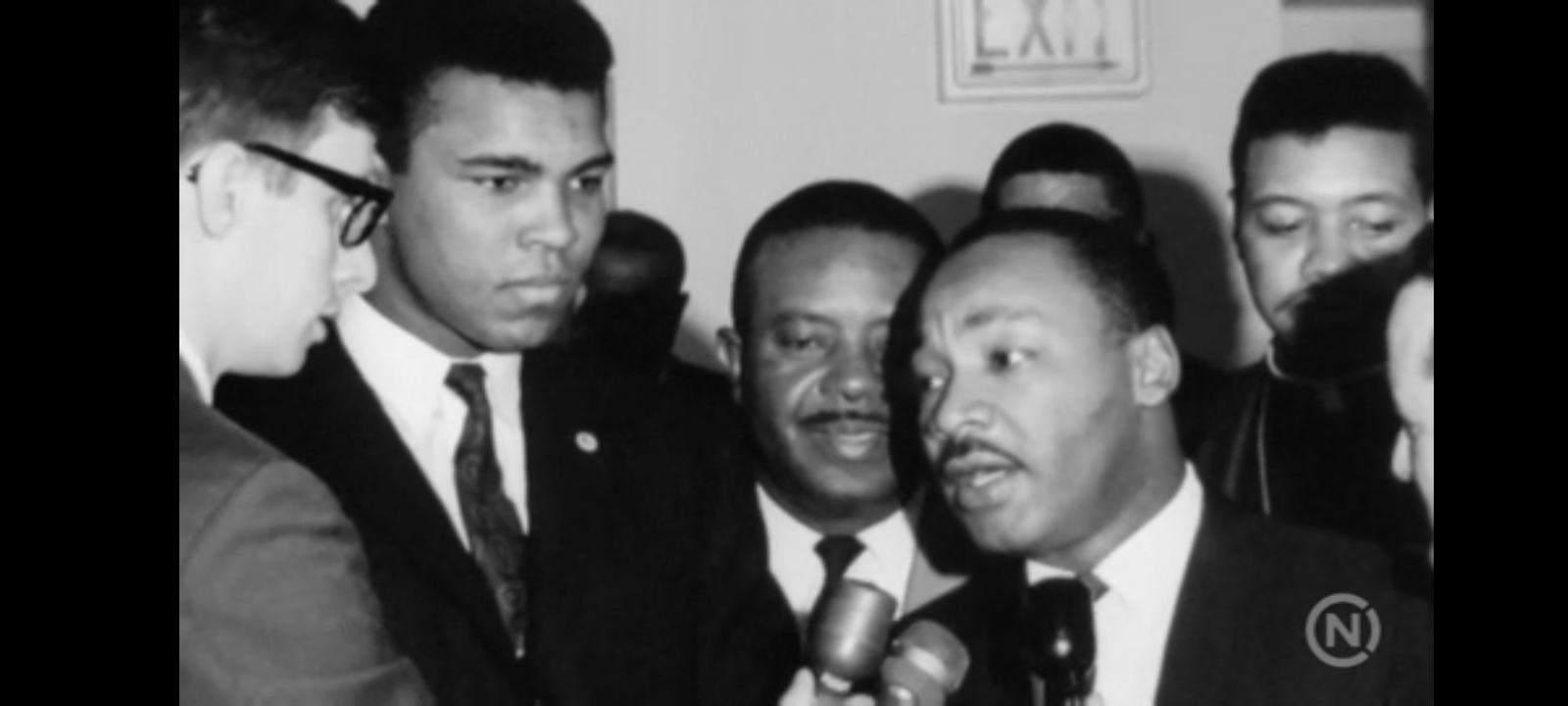
Writing from the Birmingham jail in 1963, MLK said, “I have been so greatly disappointed with the white church and its leadership.” pic.twitter.com/YbEHZRBy7c
This clip evokes my experience of where we’re currently at (even if it doesn’t specifically reference our climate crisis, the theme nevertheless translates, and eerily so)
Excerpt: “Two of the sub’s senior officers wanted to launch the nuclear torpedo. That included its captain, Valentin Savitsky, who according to a report from the US National Security Archive, exclaimed: “We’re gonna blast them now! We will die, but we will sink them all — we will not become the shame of the fleet.”
Thankfully, the captain didn’t have sole discretion over the launch. All three senior officers had to agree, and Vasili Arkhipov, the 36-year-old second captain and brigade chief of staff, refused to give his assent…
For his courage, Arkhipov was the first person to be given the Future of Life award by the Cambridge-based existential risk nonprofit the Future of Life Institute (FLI), in 2017.”
Thomas Friedman: As Rob Watson, one of my favorite environmental teachers, likes to remind people: “Mother Nature is just chemistry, biology and physics. That’s all she is.”
You cannot sweet-talk her. You cannot spin her. You cannot manipulate her. And you certainly cannot tell her, “Mother Nature, stop ruining my beautiful stock market.”
No, no, no. Mother Nature will always and only do whatever chemistry, biology and physics dictate, and “Mother Nature always bats last,” says Watson, “and she always bats 1.000.” Do not mess with Mother Nature.
“In a real sense all life is inter-related. All men are caught in an inescapable network of mutuality, tied in a single garment of destiny… This is the inter-related structure of reality.”
Q:from your blog it’s clear that you see a connection between mindfulness, empathy, and politics. it’s reminiscent of the idea that what is personal is also political. how might the practice of mindfulness and nonviolent communication shape someone’s political identity?
A: The aim of mindfulness is to develop wisdom — to awaken to what’s happening within and around us and then to respond as skillfully as possible. Nonviolent Communication provides additional frameworks for both the inner investigation and its outer expression.
I can’t say how these practices might shape someone’s political identity, because I think there are so many other factors that would influence that — particularly one’s life experiences. However, there are a few things one can would expect in exploring these practices sincerely.
Mindfulness and NVC both reveal our vulnerability and interdependence as human beings. This gives rise to ethical sensitivity and a strong commitment to non-harming. Similarly, both practices and their underlying principles share values of harmony, peace, and understanding. This often translates to a willingness, even a preference, for dialogue and collaboration over the kind of divisiveness and polarization we see in mainstream society. Last, these practices put us in touch with our values and give us tools to manifest them in our lives. So, I would expect those following these paths to be actively engaged in their communities, expressing their values and working with others to improve things. (continues here)
Many of us who practice nonviolence carry a vision of a world that works for all, where everyone’s needs matter and people and the planet are cared for. None of us know what will or could bring about our vision… (continues)
Beyond Personal Growth
On the personal level, the practice of NVC supports the inner work necessary to maintain a stance of nonviolence even in difficult circumstances. However, personal growth, “being the change,” is only one aspect of the work. How do we work towards creating change at the structural level? However we conceive of leverage points for structural change, we would need to organize and act with others to create shifts. For that, we need concrete practices to bring our consciousness and practice of nonviolence to go beyond the personal, inner work… (continues)
“If I use Nonviolent Communication to liberate people to be less depressed, to get along better with their family, but do not teach them at the same time to use their energy to rapidly transform systems in the world, then I am part of the problem. I am essentially calming people down, making them happier to live in the systems as they are, so I am using NVC as a narcotic.” ~ Marshall Rosenberg
Marshall Rosenberg’s “Nonviolent Communication: A Language of Life” at the United Nations (beneath). Watch the actual U.N. presentation given by NVC certified trainer Alan Seid here.
See Alan Seid’s NVC/U.N. presentation referencing the power of EQ & unlocking emotions effectively to achieve sustainable development goals (via a Facebook post video embed) here.See more about Marshall Rosenberg here
“The mind can contradict itself; it can believe one thing one day and something else another day.” ~ Robert Jay Lifton
“So, the amount of carbon we’re burning per year at the moment is much higher than during the largest extinction. I mean, that’s incredible, right?” https://t.co/sC8bn3RjM9
"Predictions are hard. Especially about the future", Niels Bohr is reported to have said. Well back in '82 @ExxonMobil predicted the rise in CO2 & temperature we'd see by 2019 from ongoing fossil fuel burning. They nailed it. Via @kylamandel@ThinkProgresshttps://t.co/Zr8l2CGlCZ
— Prof Michael E. Mann (@MichaelEMann) May 14, 2019
I am so grateful for the work I got to do at/with @ProjectDrawdown — most recently creating The Drawdown Review, before that writing most of the book Drawdown, and LOTS of spreading the gospel of climate solutions. https://t.co/KHoqplWyUq
It is revelatory reporting like this that makes me so proud to be part of the NYT's Climate team, working with thoughtful journalists to cover the biggest story, period.
“…But while that splashy fight is drawing the attention of pundits, there’s another subtler communications question that has to get worked out: How do different parts of the Democratic coalition get across the things that really matter to them, like climate change, in a way that makes the point crystal clear but doesn’t cut off the chance of future dialogue?” ~ Bill McKibben
(so-called #ClimateTwitter is a valuable place to connect with climate scientists/writers both to become more informed while also ‘coming to voice’ as to this still too often taboo topic)
Dr. Michael Mann attending to my need for “shared reality” and “to be seen for my intentions” as breaking geopoltical news seems to indicate that world leaders continue their well trodden tendency towards #airbrushingclimate (think, Sting’s Russians retrofitted for the Anthropocene).
@GretaThunberg via Twitter (Credit: Anders Hellberg of Effekt magazine)
The greatest activists of today are the ones who are actively – or passively – supporting the status quo by avoiding real and meaningful climate action. The struggle to maintain business as usual is probably the most successful and powerful activist movement ever.
It becomes clearer and clearer that it doesn’t seem to end with giving up on empathy, equality, facts and science. It appears after that follows diminishing or denying democracy itself. A global phenomenon – all for greed and power.
A concise explanatory as to our climate crisis by @drvox
One of the keys to understanding the appeal of "both sides" claims, in all their many guises, is that every single one includes the implicit claim that the speaker/writer is more clever than the sides in question, able to take a broader, wiser, more comprehensive view.
“You can put rules back in place that clean up the air and water. But climate change doesn’t work like that.” President Trump's environmental policies can be reversed, but the damage done to Earth's climate will be a lasting legacy. https://t.co/aDQKFpi9UA
"By 2075 the world will be powered by solar panels & windmills – free energy is a hard business proposition to beat. But on current trajectories, they'll light up a busted planet."
Marshall Rosenberg quote referencing NVC & social change:
“If I use Nonviolent Communication to liberate people to be less depressed, to get along better with their family, but do not teach them at the same time to use their energy to rapidly transform systems in the world, then I am part of the problem. I am essentially calming people down, making them happier to live in the systems as they are, so I am using NVC as a narcotic.”
NVC certified trainer Oren Jay Sofer on election eve 2020 in the U.S.
“We’re voting for a chance at something that should be the bare minimum: a livable future. The bar has never been lower and the stakes have never been higher… I’ll take a shot in hell over a shot to the head any day.” My latest in @newrepublichttps://t.co/awxrKOh8nO
Eight of the nation’s 20 largest metropolitan areas — Miami, New York and Boston among them — will be profoundly altered, indirectly affecting 50 million people. https://t.co/LxuexgIyj7pic.twitter.com/frTLGQmp3s
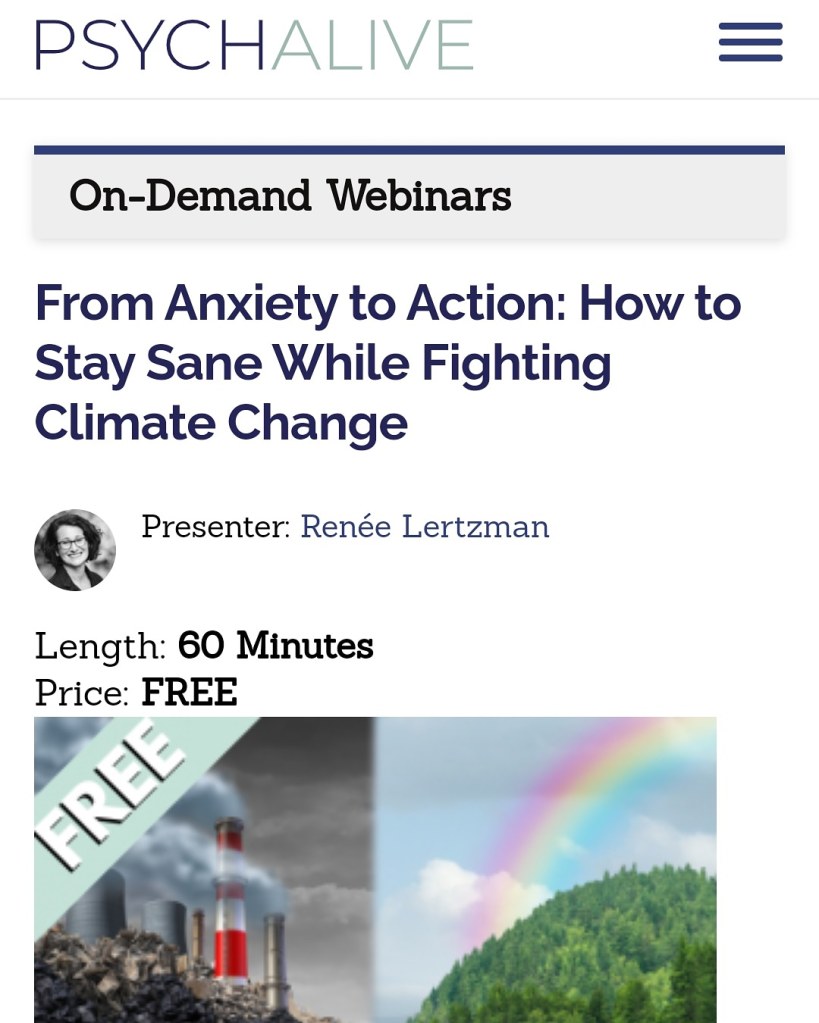
Renee Lertzman, Ph.D.: “I think it’s extremely important that we have perspective on what’s happening through the lens of an individual and collective traumatic experience. It’s not really about either-or. We’re part of a collective, we’re going through a collective experience, and individually we’re experiencing that in our own particular ways. There’s no big leveling message.
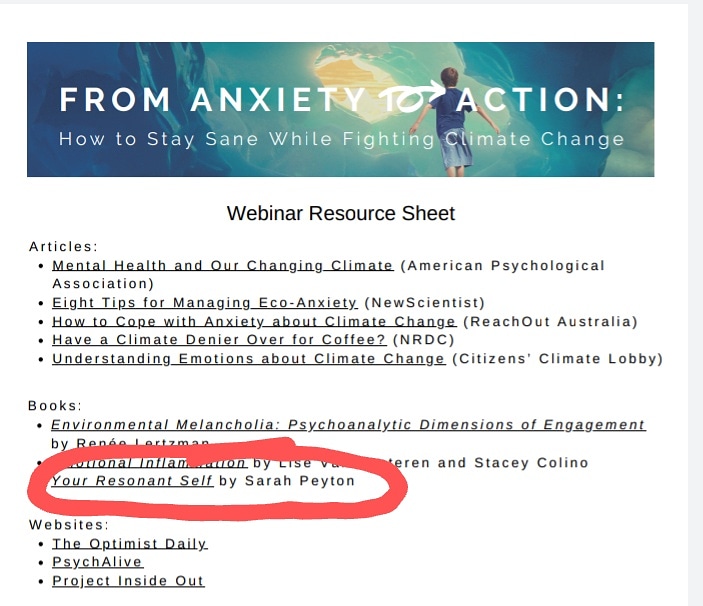
When we look at it through the lens of trauma it helps us make sense of our experience. One of the first things that we want to do is to acknowledge and normalize our experience and our feelings. To just name what’s going on — which these questions are doing. It starts with actually relating to ourselves from a place of total compassion. Really directing whatever empathy we have access to towards ourselves first. We need to actually show up for ourselves and accompany ourselves. This idea is inspired by the work of a trauma therapist [& NVC certified trainer] named Sarah Peyton who does a lot on trauma and self-regulation. Our ability to regulate our nervous system, our brains’ neural response to stress and trauma.” (via Dame Magazine‘s How a Traumatized Nation Can Cope)
“Injustice anywhere is a threat to justice everywhere. We are caught in an inescapable network of mutuality, tied in a single garment of destiny. Whatever affects one directly, affects all indirectly.” Dr. Martin Luther King Jr.
Putin: "I’m sure that Greta is a kind & very sincere girl. But adults must do everything not to bring teenagers & children into some extreme situations.” @GretaThunberg: To those who question my so called “opinions”, I would once again want to refer…" https://t.co/5MDWQvVFH9
Scientific uncertainty is not ignorance. We don't know everything! But we don't know nothing. Thank you for coming to my TED talk.https://t.co/lolnxImRr6
We've been tracking attempts by the Trump administration to roll back environmental regulations for a long time now. Even though Donald Trump lost the race for president, efforts to dismantle these rules continue. The current count is up to 104.https://t.co/I8d4Es58Bm
On the personal level, the practice of NVC supports the inner work necessary to maintain a stance of nonviolence even in difficult circumstances. However, personal growth, “being the change,” is only one aspect of the work. How do we work towards creating change at the structural level? However we conceive of leverage points for structural change, we would need to organize and act with others to create shifts. For that, we need concrete practices to bring our consciousness and practice of nonviolence to go beyond the personal, inner work. Their absence results in at least three interrelated phenomena:
Organizations made up of people with a high degree of personal capacity are nonetheless mired in conflict, mistrust, and inefficiency.
People with an understanding of and a commitment to interdependence are nonetheless operating as collections of individuals instead of a community of mutual support and effective feedback loops.
Individuals committed to a vision of care, inclusion, and distributed power form and run organizations based on command and control practices, and others are unable to stand up to their leaders with love and clarity.
In my next post I address how the practice of NVC can address all of the above phenomena as well as offer a perspective that allows for envisioning, and eventually designing, social systems based on attention to human needs, care for nature, stewardship of resources, and respect for the interconnected web of all life on this one planet we all share.
AP:The head of Russia’s meteorological service says he sees global climate change as a factor behind the wildfires blazing throughout Siberia…Meteorological service head Yakovenko:"The cause lies above. It’s the climate change that has already occurred.” https://t.co/0iSUHMkyWk
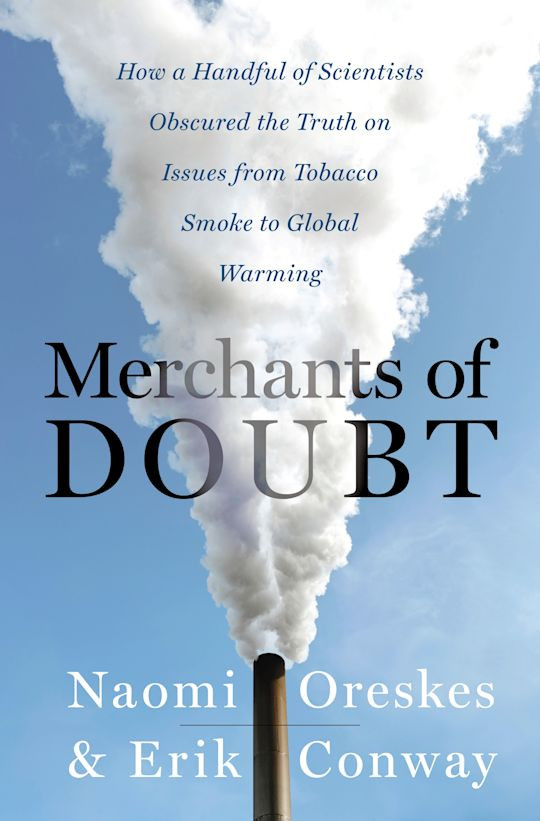
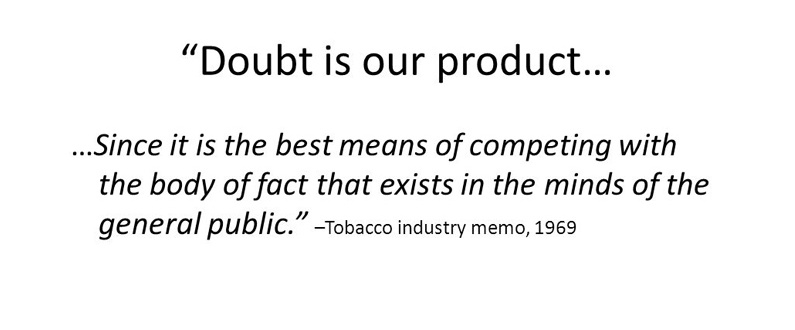
1. Doubt the science 2. Question scientists’ motives and integrity 3. Magnify disagreements among scientists and cite gadflies as authorities 4. Exaggerate potential harm 5. Appeal to personal freedom 6. Reject whatever would repudiate a key philosophy
"But when someone uses children…in their own interests, it ought only to be condemned." #Putin@AlexSteffen: "Just the occasional reminder that Trump treason, Russian interference, far-right resurgence, & oil/climate are all parts of the same story." https://t.co/mKLDI4iusCpic.twitter.com/A690nhswnZ
Many of us who practice nonviolence carry a vision of a world that works for all, where everyone’s needs matter and people and the planet are cared for. None of us know what will or could bring about our vision. Will it be a miracle of a single leader transforming the cultural assumptions and practices? Will it be a world collapse which will create a void and an opportunity to restructure society? Will it be a critical mass of people who inhabit different forms of human relationship? Will it be a nonviolent revolution? Will it be alternative structures that gradually attract more and more resources and people to them? Or will it be something else none of us can imagine?
Is “Being the Change” Enough?
Not knowing, how can we predict what actions that we engage in could potentially lead to social change? Here’s how one reader has expressed this challenge: “I don’t have the clarity I would like about your distinction between personal growth and social change work. Particularly within the NVC framework, where we intend to create change without coercion. We can model the values we want to see; we can invite, request, even try to persuade or instruct when the occasion seems appropriate, but we’re not forcing change on anyone. And so a big part of the force for social change that I am imagining comes from being the change that you want to see in the world, which to me sounds like personal development.”
“War is a moral contest, and they’re won in the temples before they’re ever fought… This moral contest requires courage to confront ideas, actions, and behaviors that violate ethical standards that we use to govern our life.” ~ Sun Tzu
Or, as Kishore Mahbubani, the Singaporean academic, former diplomat and author of the forthcoming book “Has China Won?” said to me: “I wonder if one day future historians will look back at this contest between Americans and Chinese and compare them to two families of apes fighting with each other while the forest around them is burning.” ~ Thomas Friedman
Drawdown: The Most Comprehensive Plan Ever Proposed to Reverse Global Warming
Excerpt from Miki Kashtan’s “Taking on the World”
(2011 teleseminar/course)
“The path of vulnerability includes understanding what generates so much fear about stepping into more vulnerability in our lives: learning to sit with the discomfort to create more self-connection; finding ways of redefining vulnerability as strength; discovering an inner sense of safety; and securing support in inhabiting more authenticity. More than anything, though, the path of vulnerability is about choice: How can we muster inner strength to understand, face, and transform our fears so we can have the aliveness and authenticity that come from the willingness to share our truth?” ~ Miki Kashtan of thefearlessheart.org
Personal Practice: Self-Connection/Fear
Keys:
A. Fear results from thoughts about the past or the future.
B. We can transform our relationship to fear by shifting from focusing on a future over which we have no control or a past we can no longer change to being with our needs in the present.
1. Please be ready with a situation in which you have experienced fear. Describe the situation or the inner experience using pure observation language, without any interpretations or ideas.
2. Write down your thoughts you have about this situation.
3. For each of the thoughts you identified in the previous step, identify a need that is giving rise to the thought.
4. Shift your attention back and forth between the observation, a thought, and a need you have connected with. When you focus your attention in each area, bring all of your attention to that aspect. Notice what happens to your emotions as you shift your focus. When do you experience more or less fear? When do you experience other emotions.
5. Bring your attention back to the situation in which you felt fear. How are you feeling now? If there is still significant fear, check to see if there are any other thoughts you haven’t worked with.
6. If you have gone back more than once, ask yourself what needs of yours are leading you to choose to respond with fear. Another way of thinking about it: what is the significance of this fear? To what essential needs of yours is the fear designed to bring into awareness?
7. As you reflect on all the needs you have uncovered, are you able to bring compassion and tenderness towards yourself? If not, what are the obstacles? Can you connect with the needs that may be keeping you from softening your heart towards your fear and your choices.
(Beneath references Nonviolent Communication in the context of the climate crisis.)
Most often I almost forget that NVC is an acronym that contains the word “communication.” Instead I tend to think of NVC as a set of principles and practices to integrate the consciousness of nonviolence into all levels of living:
Personally, practicing NVC offers one way of accepting Gandhi’s invitation to bring nonviolence to one’s thought, word, and action.
Interpersonally, NVC conflict resolution and dialogue tools can contribute to the conversations, negotiations, coalition building, and other organizing efforts which are indispensable for any attempt of working with other people towards structural or systemic goals.
On the group level, using NVC for facilitation and decision making can contribute to effective functioning for groups and organizations working for social change.
On an organizational level, NVC provides a framework and offers concrete steps for transforming use of power in ways that attend to everyone’s needs.
Finally, on the systemic level, an NVC perspective allows for envisioning and creating structures, policies, procedures, and hopefully some day even laws that make for a world that works for all.
The Inner Work of Nonviolence
Embodying nonviolence in a world that for several millennia has been structured around separation, scarcity, and mistrust requires considerable commitment, courage, and love. As it applies to being part of groups and organizations of human beings attempting to create change, accepting the call to principled nonviolence entails at least the following aspects of consciousness transformation:
Working towards vision rather than against “what’s wrong.” Even when the actions themselves are obstructive in nature, such as acts of civil disobedience, Gandhi’s and Milk’s examples suggest a focus on civil disobedience that models the world being created rather than being entirely an act of protest.
Seeing the humanity of everyone, including people engaging in behaviors that appear harmful. Jesus was talking about loving one’s enemies, and Gandhi was talking about finding love for those who hate us. In either case, the fundamental principle is of sufficiency inclusivity that even working to stop people from inflicting harm is done with love and respect for the person.
Engaging in the ongoing and demanding work of opening fully to despair, dread, and other emotional responses that arise in response to what is happening in the world. In the absence of doing this work, many people, including those working for social change, tend to numb out or suppress the depth of their feelings and find it hard to operate based on passion rather than anger and urgency.
Interpersonal Practices for Change Agents
Every attempt to create structural change entails being in relationship and dialogue with other people. Working with others to create change means learning to collaborate across different understandings of how to create change; across differences of working styles and personalities; and across differences such as class and race. Beyond the immediate group of people working together, becoming visible and effective when working for change also involves building alliances with other groups and organizations, as well as connecting with people who may be skeptical about or not already in alignment with the goals or strategies of the group. Lastly, creating change ultimately necessitates supporting people, especially those with power, in shifting their views and making different choices than the ones they are used to. Once again, NVC practice supports connection in these various different situations. Here are some of the principles and practices that can support conflict resolution and even prevention…
U.N. Secretary-General Antonio Guterres said Sunday that the world’s efforts to stop climate change have been “utterly inadequate” so far and there is a danger global warming could pass the “point of no return.”
Next month, @timdugganbooks will publish my big climate book, The Uninhabitable Earth, in which I try to take a very broad, and very long, view of the state of the climate crisis and all the ways it promises to transform how we live on this planet—all of us. (1/x) https://t.co/ZPVgIdT5S6
New York Times: Four years after countries struck a landmark deal in Paris to rein in greenhouse gas emissions in an effort to avert the worst effects of global warming, humanity is headed toward those very climate catastrophes, according to a United Nations report issued Tuesday, with China and the United States, the two biggest polluters, having expanded their carbon footprints last year.
“The summary findings are bleak,” the report said, because countries have failed to halt the rise of greenhouse gas emissions even after repeated warnings from scientists. The result, the authors added, is that “deeper and faster cuts are now required.”
The world’s 20 richest countries, responsible for more than three-fourths of emissions, must take the biggest, swiftest steps to move away from fossil fuels, the report emphasized. The richest country of all, the United States, however, has formally begun to pull out of the Paris accord altogether.
Global greenhouse gas emissions have grown by 1.5 percent every year over the last decade…”
“Now, you and I look around at current politics, particularly U.S. politics, and massive, coordinated, intelligent, ambitious action does not strike us as particularly plausible. In fact, it might strike us as impossible. But that is where we are: stuck between the impossible & the unthinkable. So, your job — anyone who hears this — your job is to make the impossible possible.”
Fascinating look at climate views in swing states by @PopovichN & @bradplumer. 51% of even Trump voters in Fla. care at least somewhat about the impact of climate change. Could the arguments Trump is making to win Pennsylvania hurt him in Florida?https://t.co/7zWfl1GvD6
“Chris Evans, a Hollywood star and lifelong Democrat, helped launch “A Starting Point,” an online political platform, as a response to America’s deeply polarized political climate.”
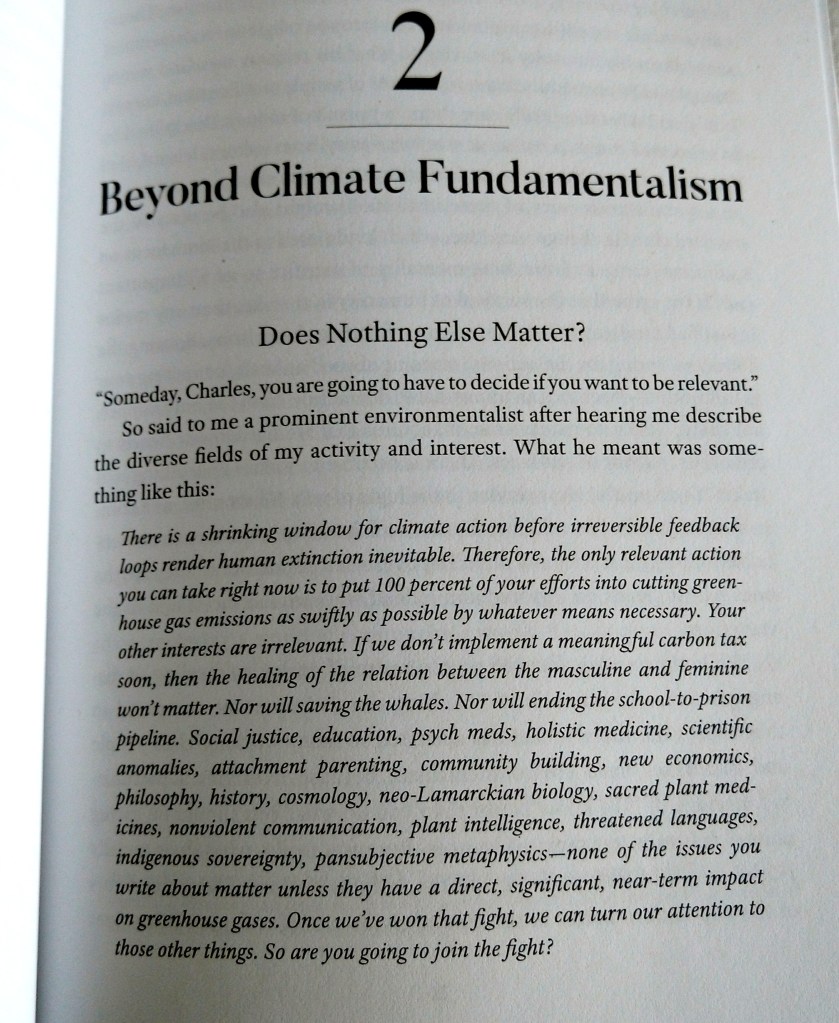
For a long time now I have been troubled by the way Nonviolent Communication (NVC) is often presented and perceived. In our culture, and in several other industrialized, modernized countries I have been to, it is typically seen as a path to personal growth, such as an alternative to therapy, or a way to resolve relationship issues. For me, this focus has been limited. Instead, more and more I think of NVC as a path to personal liberation, and of the two paths as distinct from each other. The former is about enabling us to function, even live well individually in society as it exists, while the latter is about freeing ourselves from the ideas, norms, and roles we have internalized from living in this society. The more free we become, the more we can find a ground to stand on to challenge the system to be much more responsive to all people’s needs, not only some needs of the few.
I often heard from Marshall Rosenberg, the founder of NVC, that a similar concern led to his own decision as a psychologist to leave behind clinical work and private practice in his search for the largest contribution he could make. The issue hinges on the question of what is being served when we attend to the individual effects of a system that fundamentally doesn’t support human needs and life as a whole. I’ve been haunted by this question in multiple ways…. (continues)
“Predictions are hard, especially about the future.” Niels Bohr reportedly said. In 1982, Exxon scientists “nailed it” charting an atmospheric rise in carbon emissions to 415 ppm by 2019.
Trump Administration Uses Inevitability of Climate Change To Burn More Fossil Fuels:
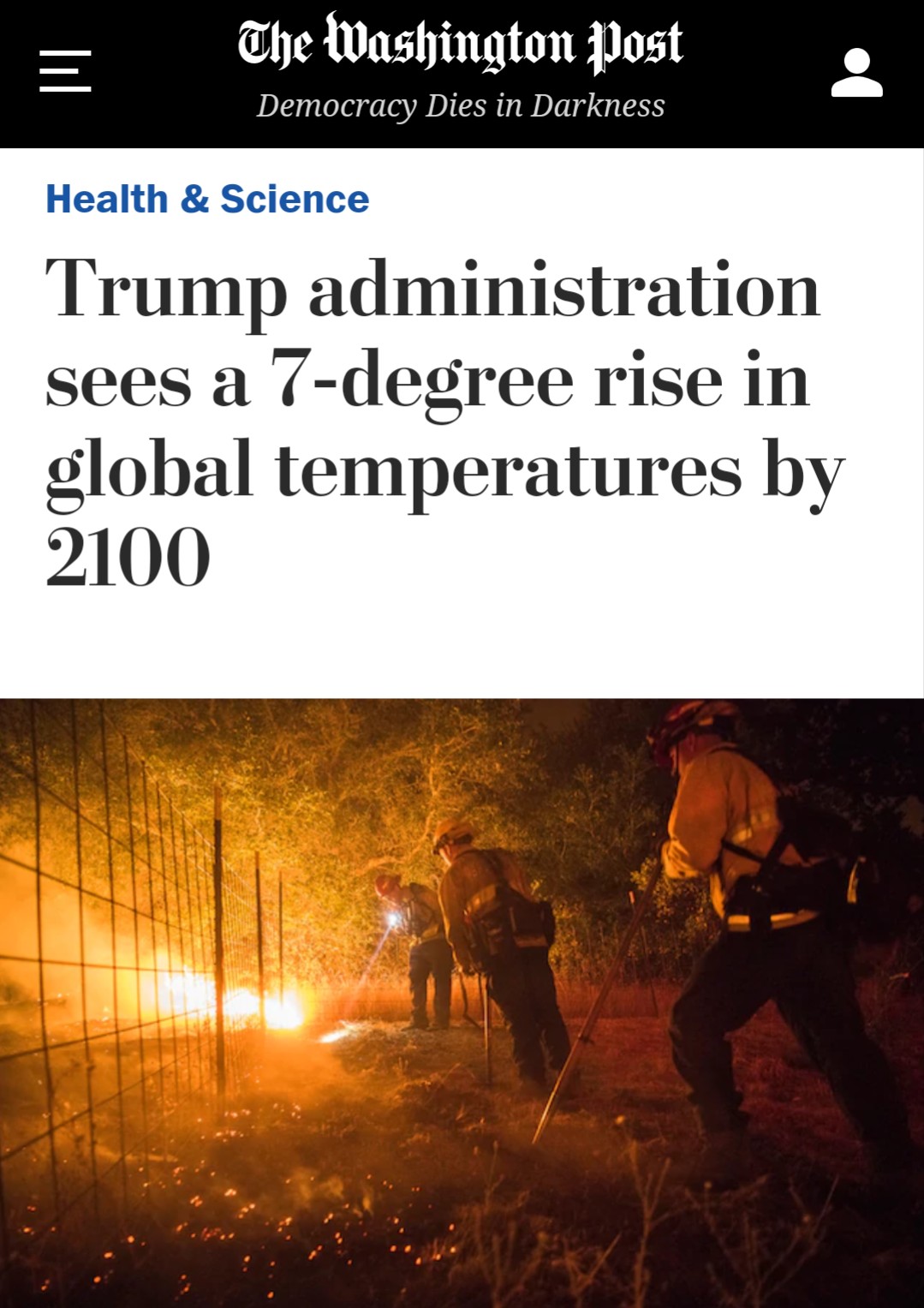
Washington Post
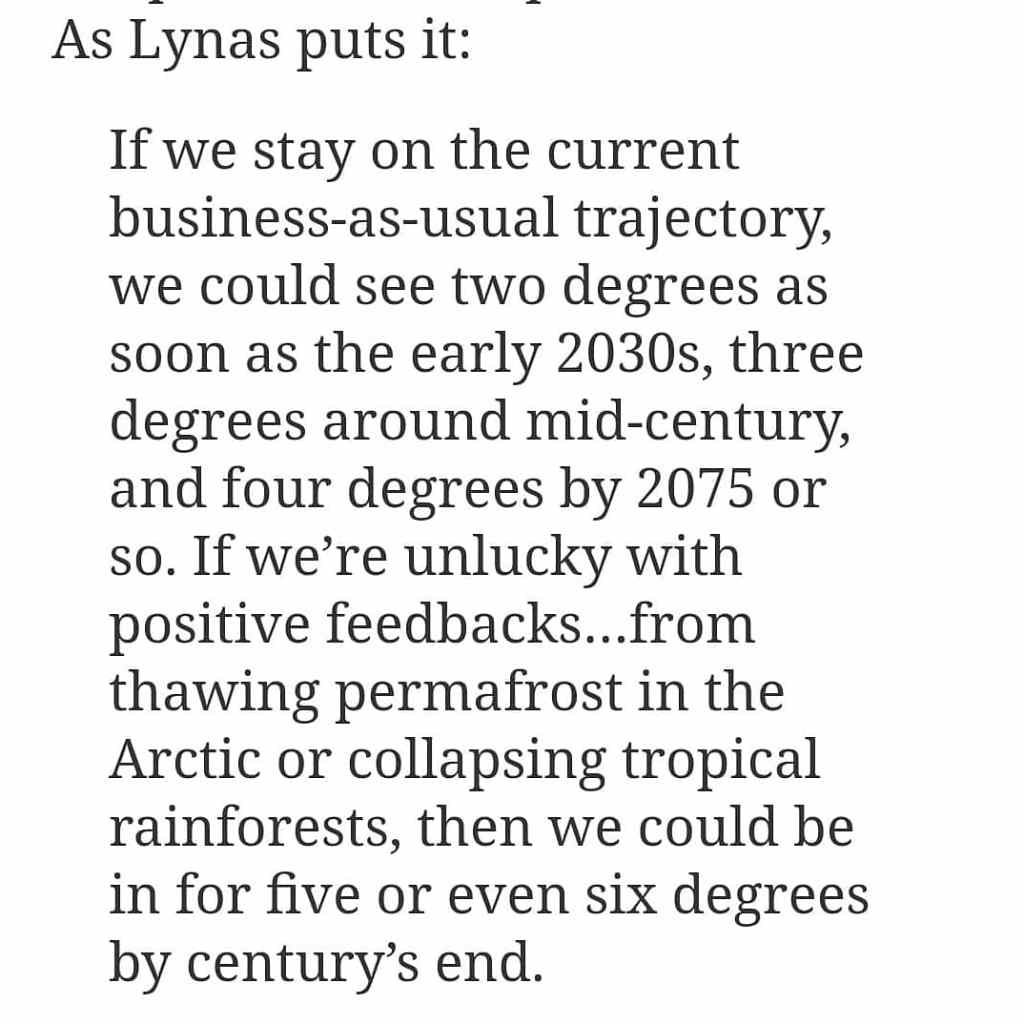
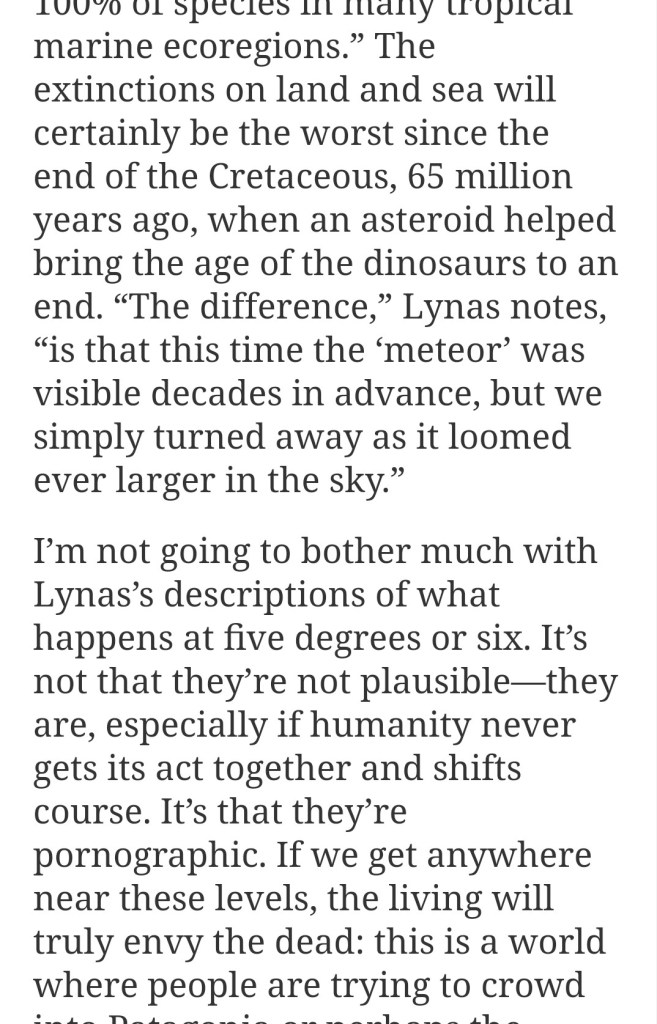
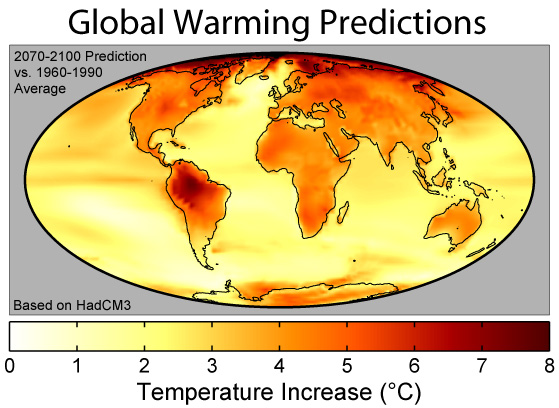
Trump administration sees a 7-degree rise in global temperatures by 2100
The draft statement, issued by the National Highway Traffic Safety Administration (NHTSA), was written to justify President Trump’s decision to freeze federal fuel-efficiency standards for cars and light trucks built after 2020. While the proposal would increase greenhouse gas emissions, the impact statement says, that policy would add just a very small drop to a very big, hot bucket.
“The amazing thing they’re saying is human activities are going to lead to this rise of carbon dioxide that is disastrous for the environment and society. And then they’re saying they’re not going to do anything about it,” said Michael MacCracken, who served as a senior scientist at the U.S. Global Change Research Program from 1993 to 2002.
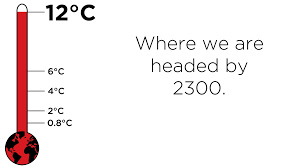
The document projects that global temperature will rise by nearly 3.5 degrees Celsius above the average temperature between 1986 and 2005 regardless of whether Obama-era tailpipe standards take effect or are frozen for six years, as the Trump administration has proposed. The global average temperature rose more than 0.5 degrees Celsius between 1880, the start of industrialization, and 1986, so the analysis assumes a roughly four degree Celsius or seven degree Fahrenheit increase from preindustrial levels…
Noam Chomsky: The current moment, not just political, is the most grim moment in human history. We are now in a situation where this generation, in fact, in the next few years, is going to have to make a decision of cosmic significance which has never arisen before: Will organized human society survive? And there are two enormous threats. The threat of environmental catastrophe, which at least is getting some attention, not enough. The other is the threat of nuclear war, which is increasing sharply by the Trump administration, in fact. These have to be dealt with quickly. Otherwise, there’s nothing to talk about.
And notice that the wrecking ball in the White House just doesn’t give a damn. He’s having fun. He’s serving his rich constituency. So what the hell, let’s destroy the world. And it’s not that they don’t know it. Some months ago, maybe a year ago by now, one of the Trump bureaucracies the National Transportation Administration came out with what I think is the most astonishing document in the entire history of the human species. It got almost no attention. It was a long 500-page environmental assessment in which they tried to determine what the environment would be like at the end of the century. And they concluded, by the end of the century, temperatures will have risen seven degrees Fahrenheit, that’s about twice the level that scientists regard as feasible for organized human life. The World Bank describes it as cataclysmic. So what’s their conclusion? Conclusion is we should have no more constraints on automotive emissions. The reasoning is very solid. We’re going off the cliff anyway. So why not have fun? Has anything like that ever appeared in human history? There’s nothing like it. (continues)
Miki Kashtan (excerpt): “…Without the tools to keep our hearts open, many of us do, indeed, shut down and tune out the plight of the children so that we can even manage to continue with our own personal lives.
If, however, we remain open to the possibility that no solution will arise and at the same time continue to bring our heart and attention and action to working toward a solution, our work takes on an entirely different flavor. We work toward our dreams, we embrace the vision and our needs in full, and we remain open in the face of what is happening. In doing so, whether or not we have external success (and so far as I know, none of us knows how to move the world from here to where we want it to be), our work itself becomes a modeling of what the world could… (continues here)
NYT interview with David Roberts — a.k.a. @drvox (June 2012)
Watching David Roberts distill how climate change is simple: we do something or we’re screwed (in a TEDx-Ed talk that then inspired this remix, also directly beneath, some things are worth watching twice), perhaps especially amidst the broader context of tracking the mind-numbing and bone-chilling data from the 2013/2014 IPCC Fifth Assessment Report, was a paradigmatic-shifting even life-altering experience. I took his final statement, transcribed beneath, as a [high-threshold] request:
At 17 minute mark:
“Now, you and I look around at current politics, particularly U.S. politics, and massive, coordinated, intelligent, ambitious action does not strike us as particularly plausible. In fact, it might strike us as impossible. But that is where we are: stuck between the impossible & the unthinkable. So, your job — anyone who hears this — your job is to make the impossible possible.”
Perhaps an even more crucial climate presentation by Climatologist Will Steffen:
At the 48 minute mark, Professor Will Steffen discusses a planetary carrying capacity of approximately one billion, if we continue on the 4°C trajectory by century’s end (noting that it will not be a gentle decline).
More and more these days I find myself dreading looking at the news or the notifications on my phone. Whether it’s a domestic shooting, a tropical storm, or the rainforest in flames, it can feel overwhelming to stay abreast of what’s happening yet impossible to… (continues)
Excerpt: “…But we’ve been here before, according to the late psychologist Marshall Rosenberg. As a communications coach and mediator for civil rights and student activists during the US civil rights era, Rosenberg developed a practical strategy for peaceful conflict resolution called non-violent communication. By focusing on language and process, the theory goes, injured parties can shift the tone of their communication and spur collaboration…” (continues)
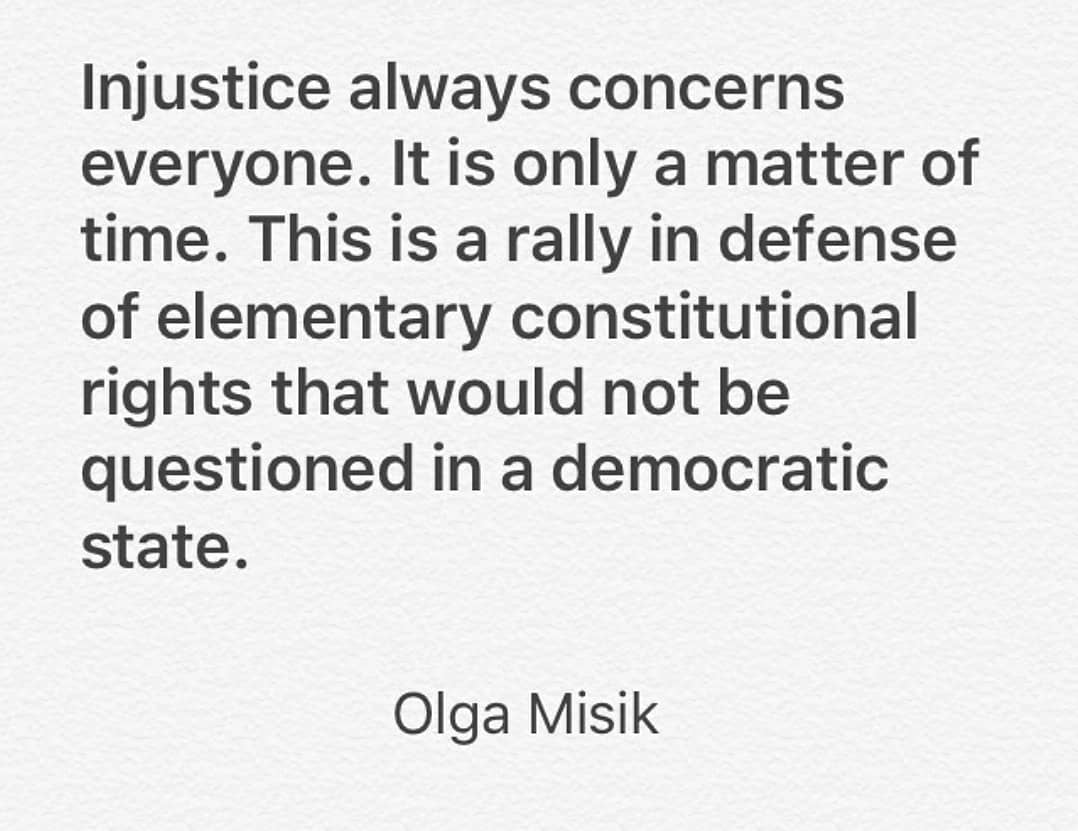
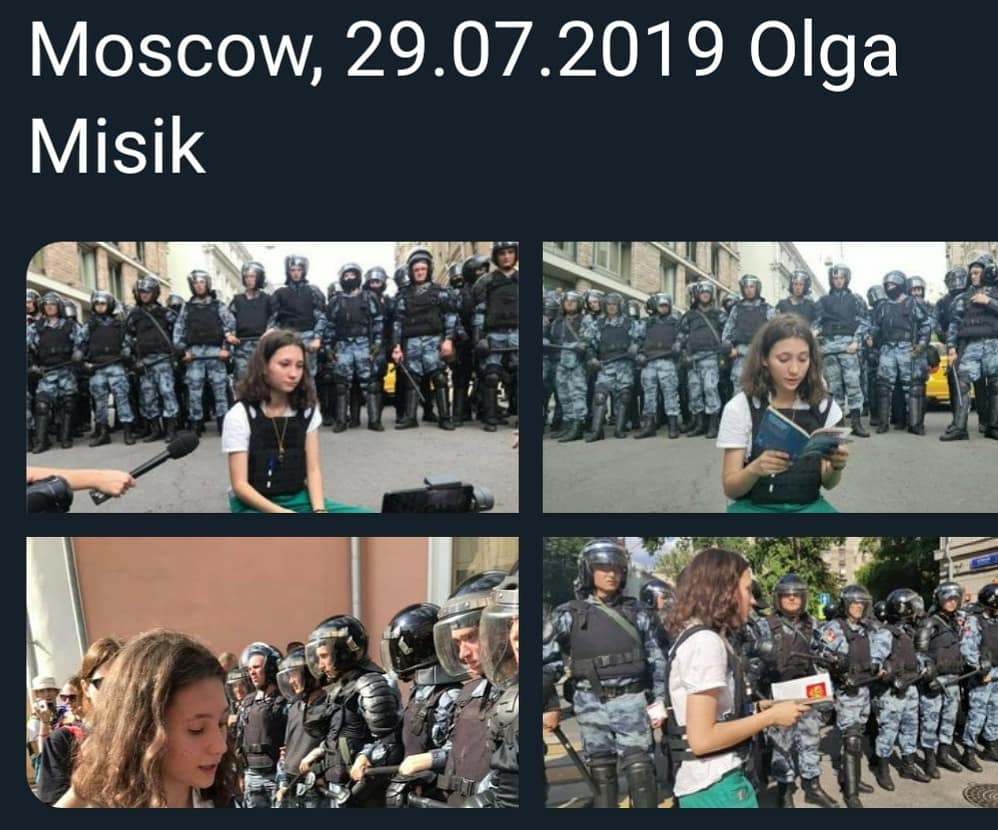
Olga Misik: Russia’s ‘Tiananmen teen’ protester on front line
BBC: Wearing a protective vest, a young woman sat in front of Russia’s riot police.
On her lap was a copy of the Russian constitution, which she began reading to the heavily armoured police around her. Behind them was a demonstration calling for transparent Moscow elections, in which several people were injured.
The photo went viral within minutes and Olga Misik, 17, became a symbol of Russia’s pro-democracy movement. Some compared the image to Tiananmen Square’s Tank Man, who stood in a tank’s path in Beijing in 1989.
“The situation in Russia is currently extremely unstable,” Olga told the BBC.
“The authorities are clearly getting very scared if they are consolidating armed forces from different parts of the country to chase peaceful protesters. And people’s mentality has changed, as I can see.”
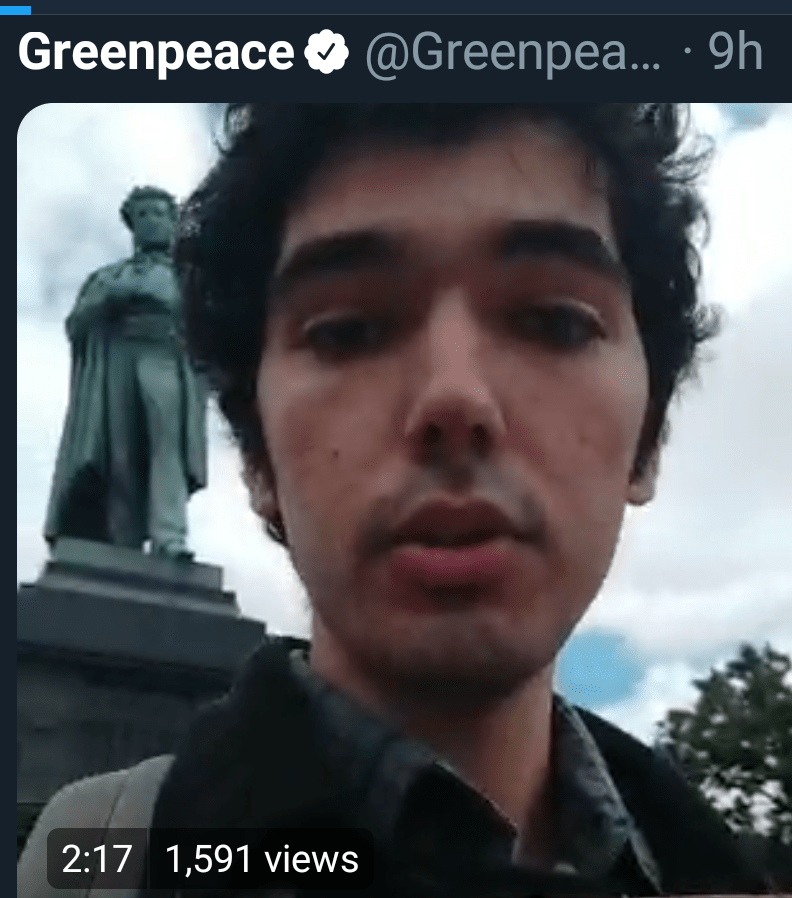
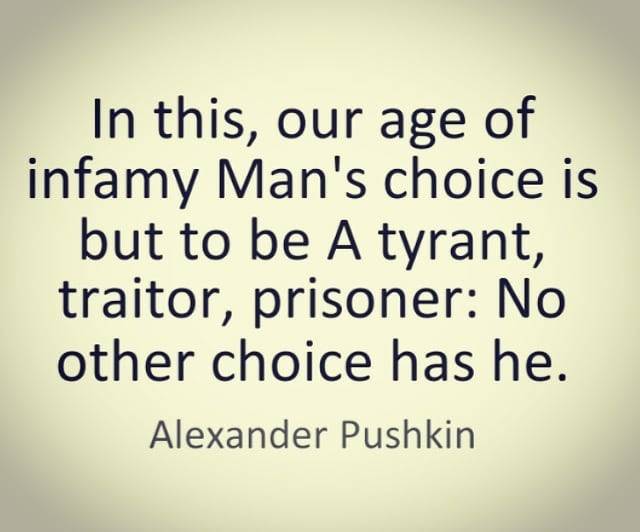
Follow Pushkin Square climate striker via @MakichyanA
BBC: For 30 Fridays on the trot, a young Russian violinist has stood in central Moscow in a one-person protest.
Arshak Makichyan is not picketing about free elections, police violence or political prisoners. His big concern is the planet and his inspiration is Swedish climate activist Greta Thunberg.
“This is about our future,” the 24-year-old explains, echoing the teenage campaigner. He says he began to read about climate change after seeing her protests, and realised the threat.
“Russia is the world’s fourth biggest emitter of greenhouse gases and our government won’t act without pressure. So it’s important to strike for the climate.”
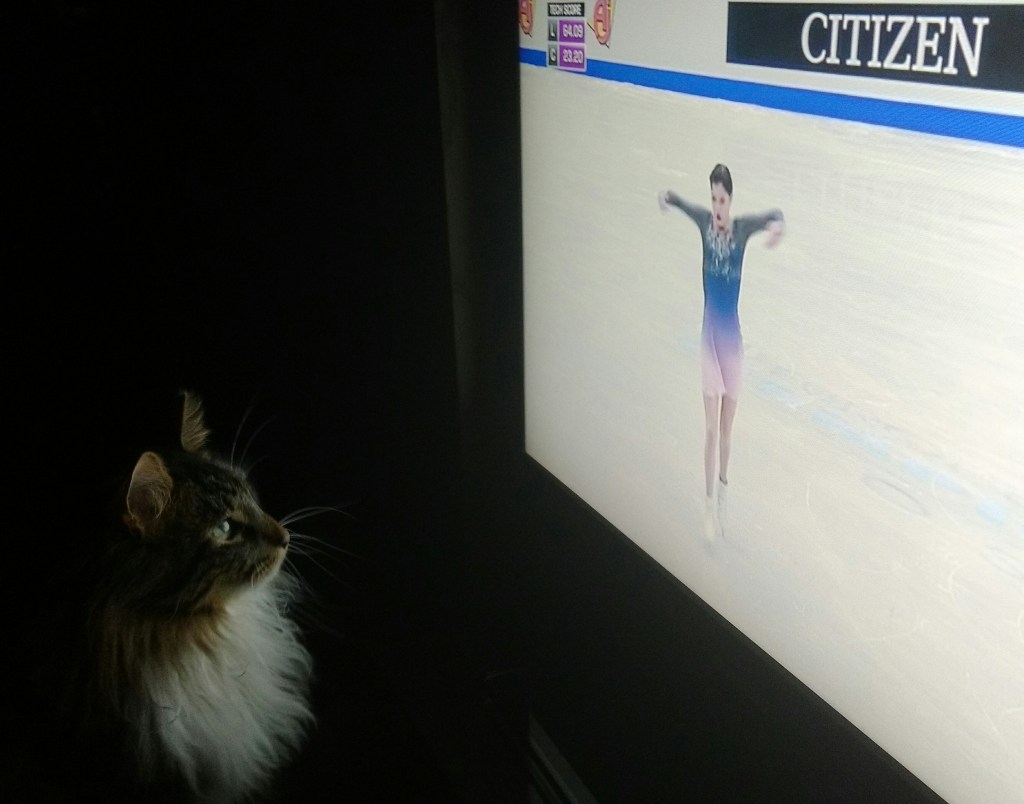
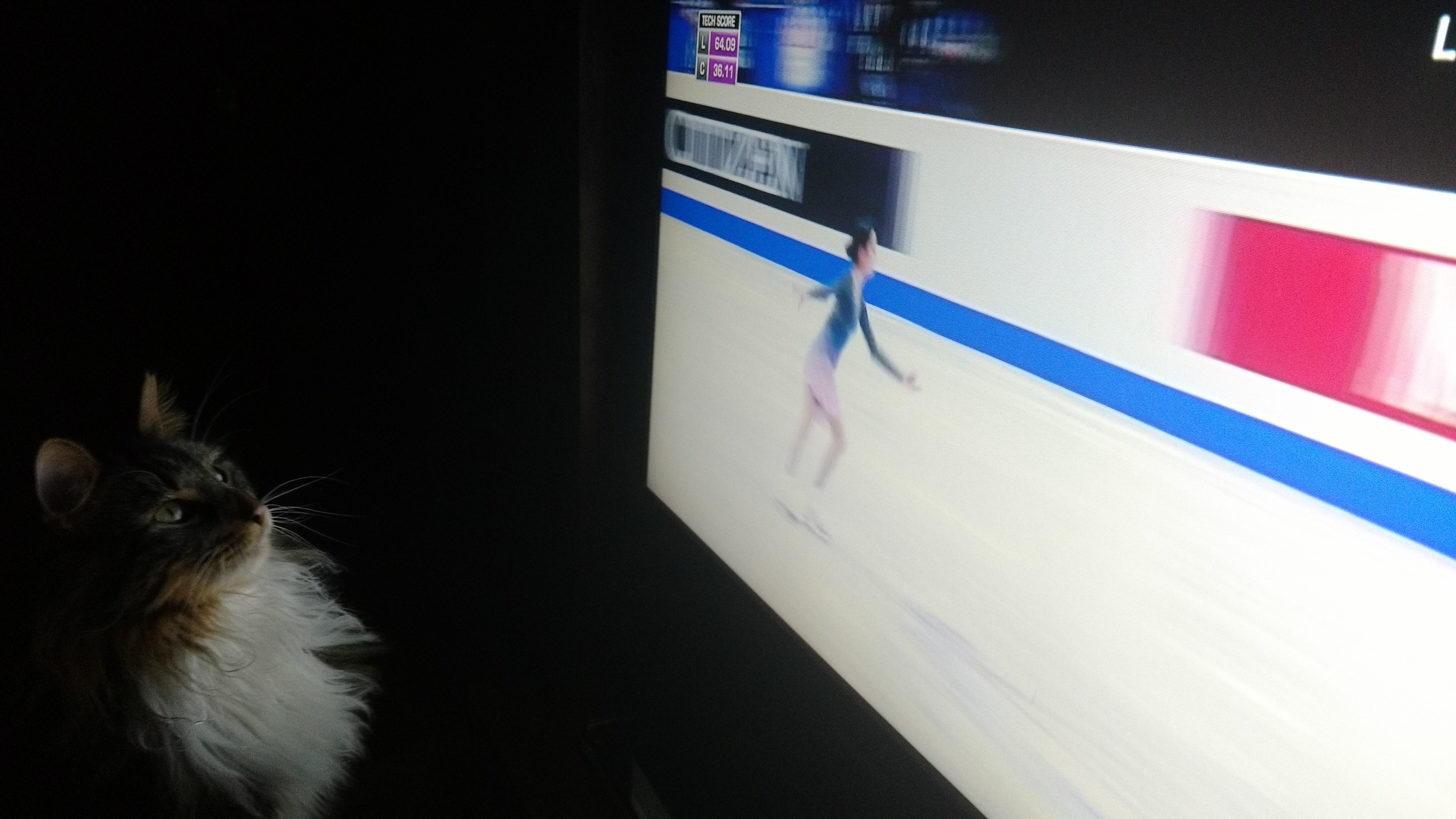
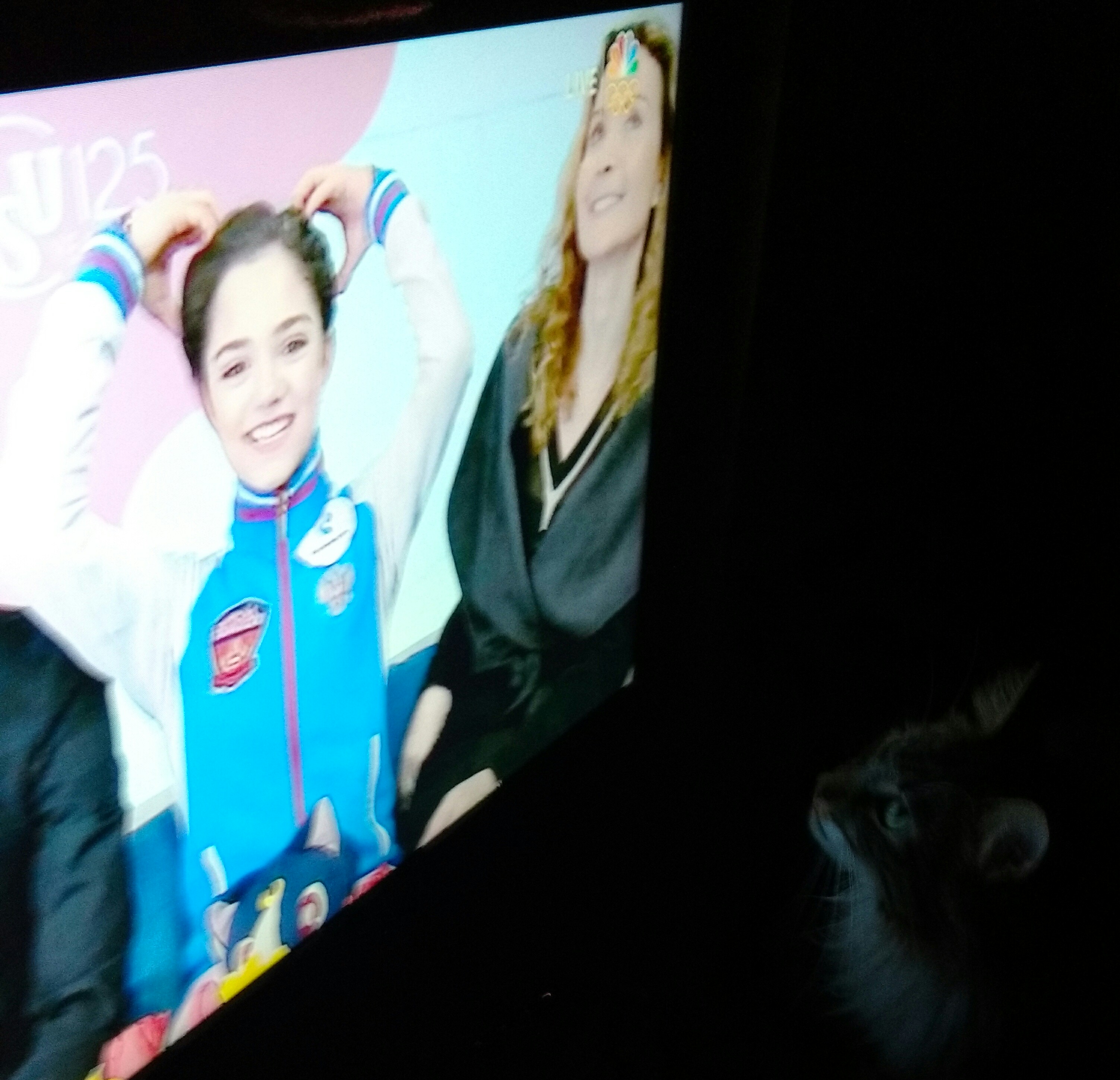
Russian citizen/ice-skater Evgenia Medvedeva during 2017
“A jest’s prosperity lies in the ear Of him that hears it, never in the tongue Of him that makes it.” ― William Shakespeare, Love’s Labour’s Lost
Think Progress (circa 2017): Putin downplayed the need to act on climate, saying, through a translator, that people like Pruitt “who are not in agreement with opponents may not be at all silly.”
The question “isn’t about preventing global warming. I agree with those people who believe it is impossible. It may be related to some global cycles or some greater outer space cycles. It’s about how to adjust ourselves to it,” Putin said. “The local communities will get adjusted,” he added…
Critics have suggested Russia’s meddling in the U.S. election could have been related to oil reserves.
Host Timothy Regan takes us into baseball practice to help us strengthen our catcher’s mitt to respond to intensity from other people around the topic of Climate and Extinction Emergency.
We detail some powerful choices that we all have in responding to whatever people express: anger, shame, denial, and more.
Kristin Masters joins us with her warm, authentic guidance to help us practice. She is also a Certified Trainer of Nonviolent Communication, a leader of “The Work That Reconnects” by local elder Joanna Macy, and a powerful force against oppression of all kinds.
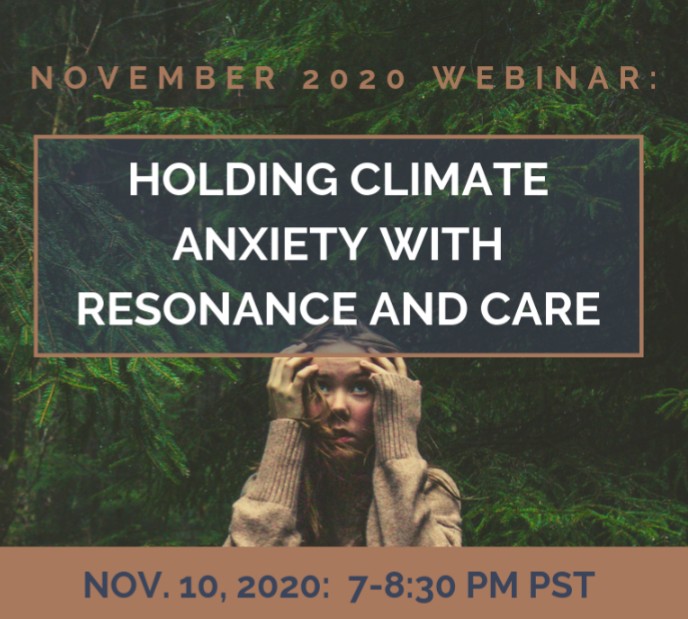
These calls are an opportunity for anyone to come engage with others who are, also, grappling with the overwhelming information and grim prospects that humanity is currently facing, most specifically with climate change, as well as a host of other severe crises…
Miki Kashtan/Department of Peace Teleconference Training Call Notes:
A caller described a scenario is which he quarreled with a co-worker over a political issue. The caller was upset to suddenly find his co-worker passionately disagreeing with him. Later, when the co-worker apologized, he didn’t seem to know how to respond.
How to hear an opposing political position with compassion:
The first thing we’re likely to do is to depersonalize the other person, and make them a stand-in for a group.
‘He’s one of those ‘liberals’.”
‘She’s one of those ‘hawks.”
The first thing is to forget about all the other people that agree with that person, and think of this person as a full and rich person, 3-dimensional, just like me. (Have compassion.) Remember, another person may have a different opinion from me, but their core values may be no different from the core values that live in me.
Ask yourself, “Can I abstract the core value that they are expressing?” “What is their core value?” (A core human feeling and need.)
Take a breath. You are moving from the world of separation, to the world of connection.
As an exercise right now, think of the last political discussion in which you felt some discomfort. Notice the difference it makes in your emotions, to see the needs that you may have in common with your communications partner.
Go back and forth between these two thoughts.
§ when you think of them as a stand-in for what is wrong in the world, and
§ when you think of them as having the same value as you.
This opens your heart.
Feeling the connection with your conversational partner:
Pause before seeking to be heard, and really try to connect with what the other person is saying. After they feel heard, then you may choose to hear your truth.
Separate out:
§ Hearing the other person,
§ From what you want to say.
Because If I…
§ tell you that I feel connected to you because of our common feeling and need,
§ then, without any pause, tell you what I see as different from your view,
it tends to wipe out the connection.
Take a breath at the end of the connection. Check if you really got it. Mirror not only the thought they said, but mirror their emotional state.
Tips:
Do not bring any “buts” into the conversation this soon.
Now, after they say, “Yeah, you get me,” then ask,
Would you be willing to hear what this topic bring up for me?”
(They may not be willing to hear you.)
Speaking what is true for you:
If they are willing to hear you,
Make an “I statement”. Instead of saying what should happen in the political arena, take ownership, and say “what I want to see”. When we say what should happen, we are making it about being right and wrong.
When you say your truth, chunk it up into small bits. Check out each chunk for the other person’s understanding and reaction. This way, they won’t be as likely to feel overwhelmed with information they want to respond to.
If someone attacks you, judges you, or swears at you:
A caller related their sadness when they met with their Congressman, who said, “Your legislation has no chance in hell of passing.” The caller was shocked and left feeling upset, judgmental and resentfuIf this happens, you could say:
1) “I’m a bit shocked.
2) “I’m wondering if you might give me a moment to recover.”
Then, work as fast as you can within yourself to release the hold that this feeling of shock has on you:
1. How do you feel? Sad? Frustrated?
2. What do you imagine is causing the other person to express what they are saying (what human need of theirs is motivating them to say what they are saying). What matters to them? What is the underlying message that they want you to hear? What is motivating them to say something that you are interpreting it as an attack?
Then you might be able to ask of them:
“Are you feeling like it would be too difficult to sponsor this legislation, because you have a need to sponsor legislation that has a good shot at passing?” or “Are you saying, you want me to be realistic about whether or not this legislation could actually pass?”
Our goal in any given lobbying conversation:
If you go into a conversation with your congressman thinking you are going to change them, you may have a difficult conversation, and may end up feeling very disappointed.
If you:
§ connect, from a vantage of mutual understanding.
§ consider: what can I learn from this? OK, so you don’t think this is a good idea? Tell me why.
Keep the focus on what they are feeling and needing. If you can do this for a while, the opportunity to tell them your opinions (without creating more upset) may come up later because they felt that their feelings and needs have been heard by you.
We might have other goals as well, that could be accomplished from the interaction.
§ Connect: To make a human connect with the person we are lobbying
§ Model Peace: To experience a small bit of world peace during the conversation, thus modeling the peace we are seeking to realize globally
§ Expand our worldview: To learn from the person. Our perspective is parochial and limited if we only are capable of preaching to the choir of fellow believers in the peace movement.
§ Learn to respond to objections: Perhaps we can learn from Congress members how the legislation might generate objections in Congress. This way, we can start to learn to answer those objections.
NYT: In a 1936 essay, originally titled “Let Us Not Start Another Trojan War” but better known by the title of its English translation, “The Power of Words,” Weil drew a relationship between the increasing abstraction of words and the pretexts used for war. “In every sphere, we seem to have lost the very elements of intelligence: the ideas of limit, measure, degree, proportion, relation, comparison, contingency, interdependence, interrelation of means and ends,” she wrote. “Our political universe is peopled exclusively by myths and monsters; all it contains is absolutes and abstract entities.” (via NYT’s The Stone)
Dr. Marshall Rosenberg, “I developed NVC as a way to train my attention—to shine the light of consciousness on places that have the potential to yield what I am seeking. What I want in my life is compassion, a flow between myself and others based on a mutual giving of the heart.”
"Never question the beauty of what you are saying because someone reacts with pain, judgment, criticism. It just means they have not heard you." ~ Marshall Rosenberg
NVC is a tool, in our toolbox (akin to a paintbrush); how it is expressed, on the canvas of our lived existence, may be as varied as the fruits of each painter's artistic choices & creative risks.
Toolbox – Tools for Call
e.g.
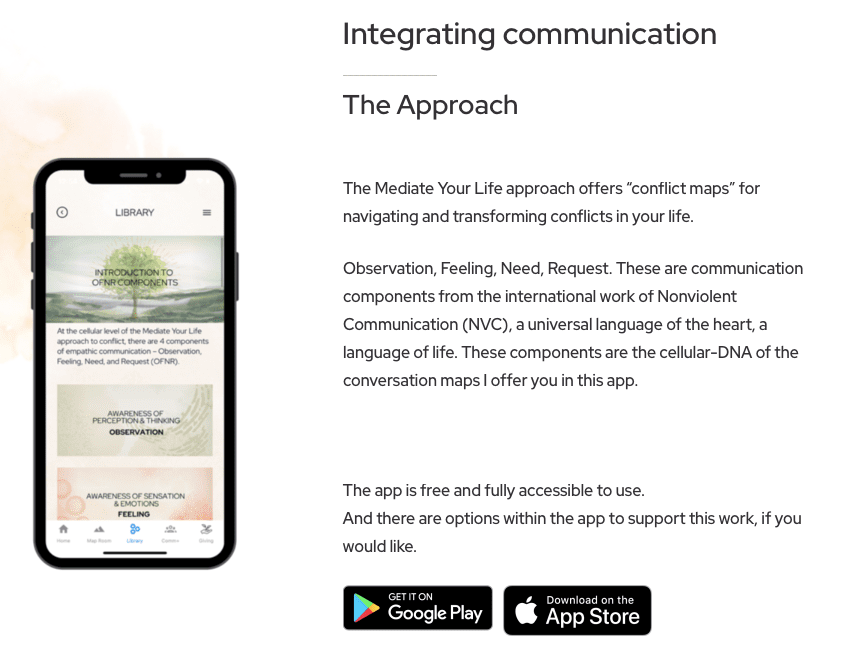
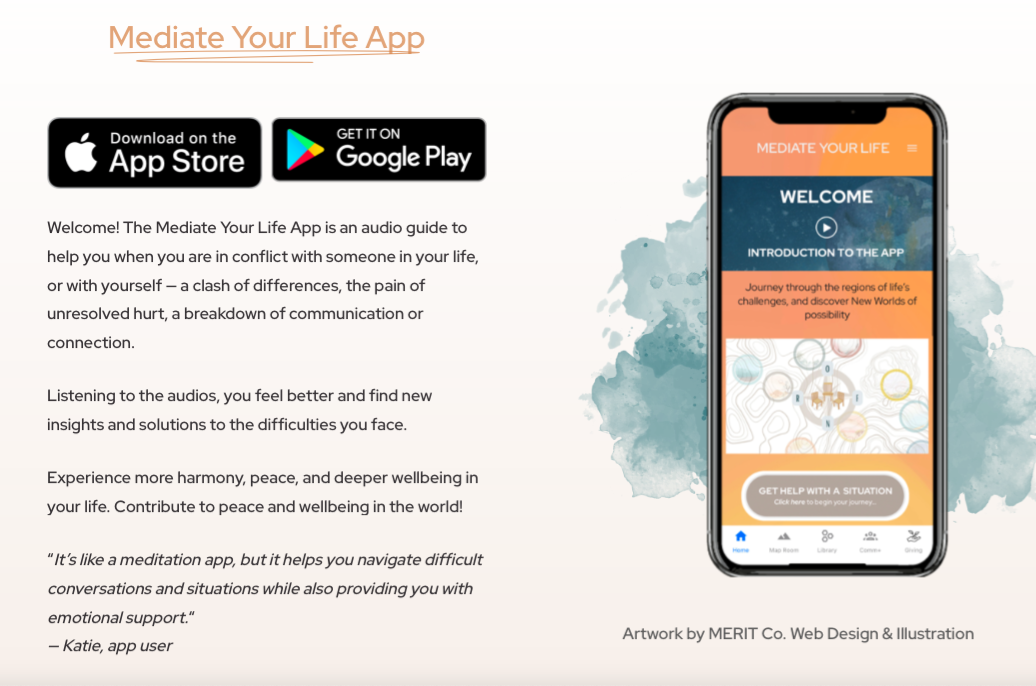
Recommended: Free NVC/MYLApp (as a composting/'posthersal' if/then)
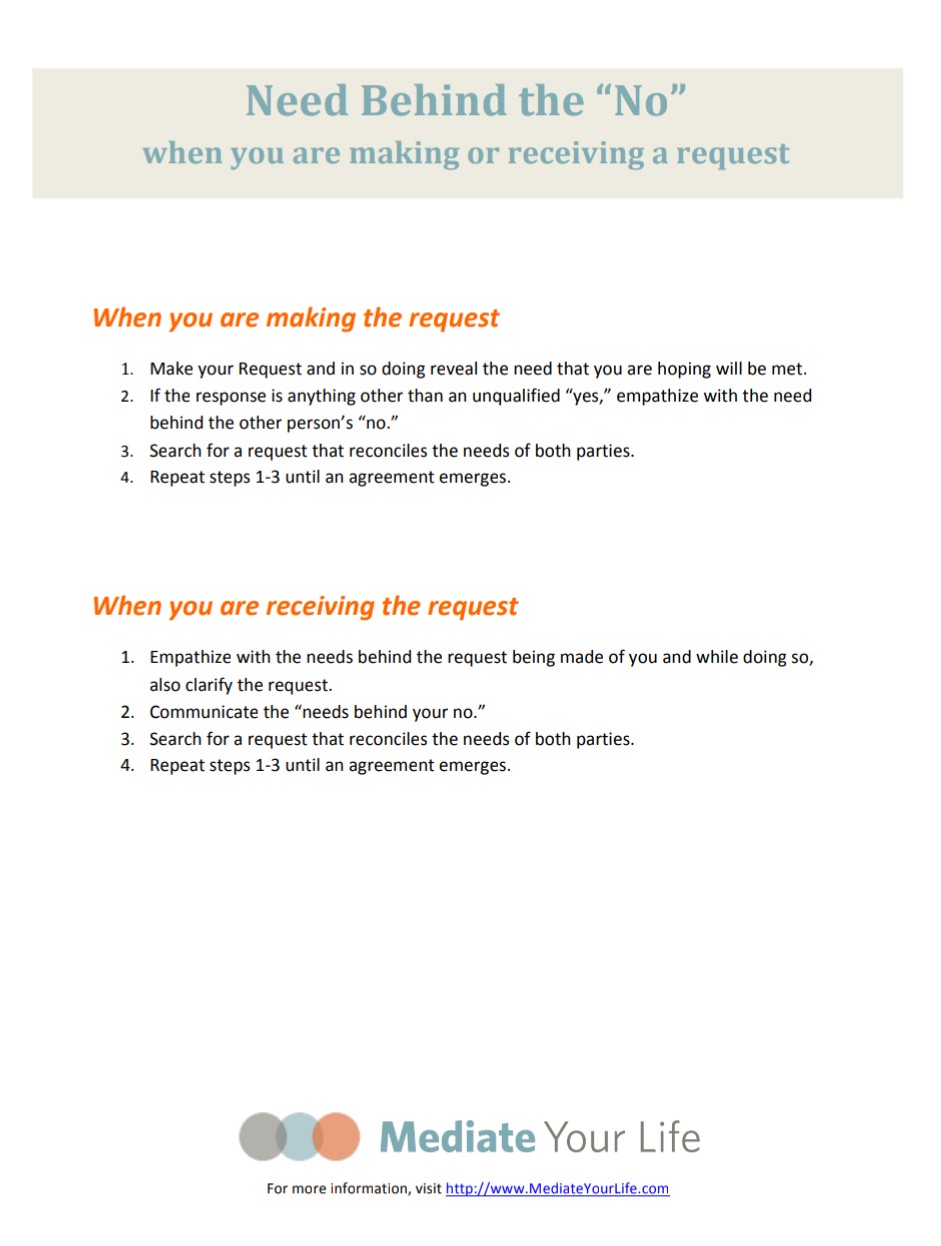
NVC handout from 1980s (note "dreams" - perhaps inspired by MLK)
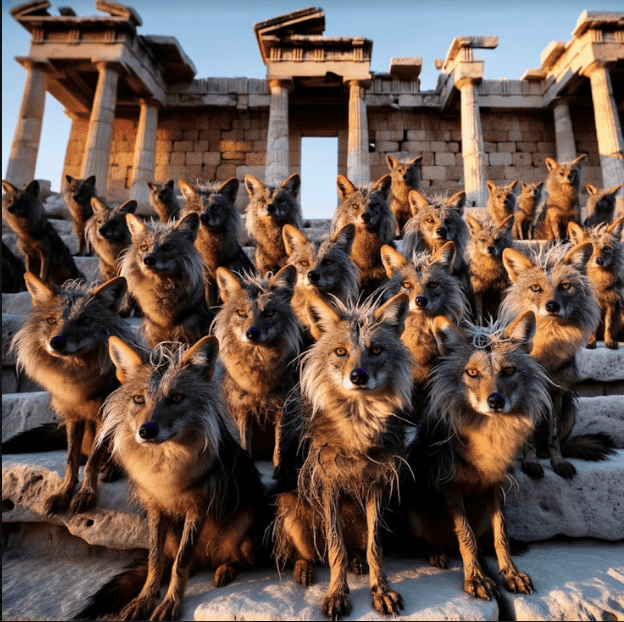
"Most of us live in a Jackal world where we take turns using the other person as a waste basket for our words." ~ Marshall B. Rosenberg
"From his work with civil rights activists in the '60s, Rosenberg came up with the precise language of Nonviolent Communication, designed to minimize defensive reactions and maximize cooperation." Katy Butler
When once asked about why he, Marshall Rosenberg, opted to shift from "dreams" (1.0) to "universal human needs" (2.0) he offered it was quicker, it simply took less time.
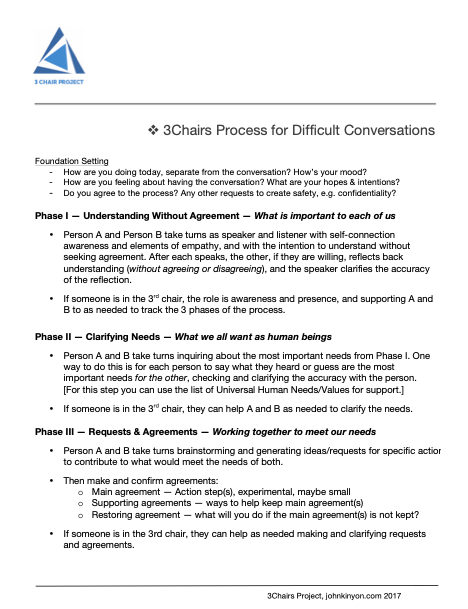
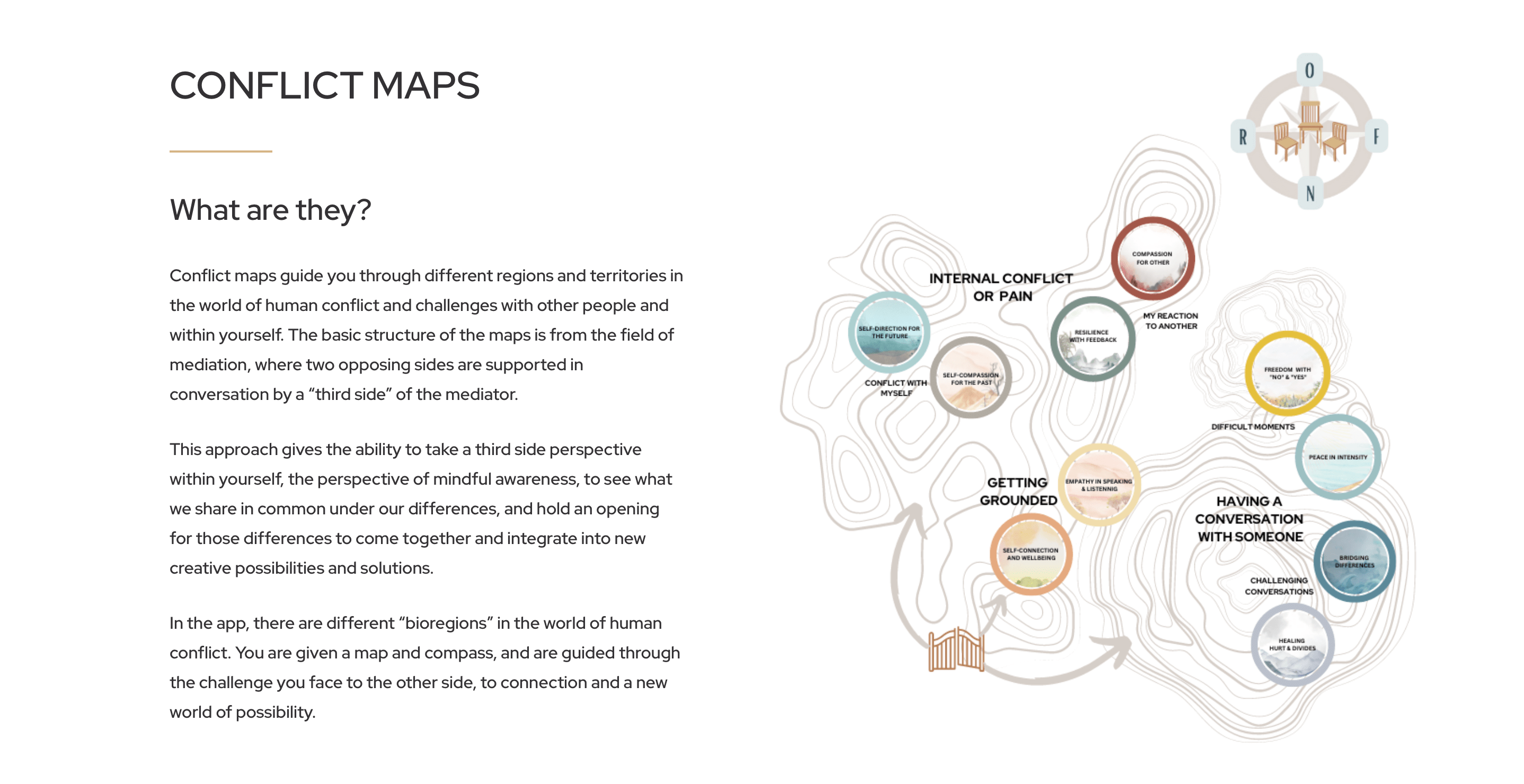
"It’s not about racing toward a resolution. The approach I offer holds empathy for both sides of a conflict. In my 3 Chair Model, being the mediator is to sit between the “two chairs” — the two sides of a conflict and the relationship between subconscious and conscious dimensions of our experience.
The third side perspective isn’t above or outside of the conflict— it’s a conduit for deeper connection within it that reconciles and heals.
Sitting in the third chair symbolizes the most evolved aspect of an individual's self-awareness... " (continues)
"...and for all his sweetness, he had the tiger and the jackal in his soul." ~ American feminist Voltairine de Cleyre via NYT (gift link)
“We don't rise to the level of our expectations, we fall to the level of our training.” ― Archilochos
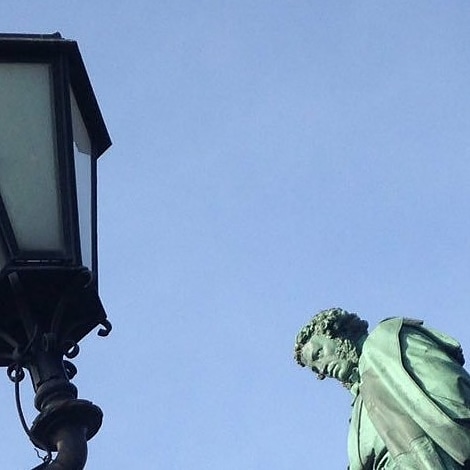
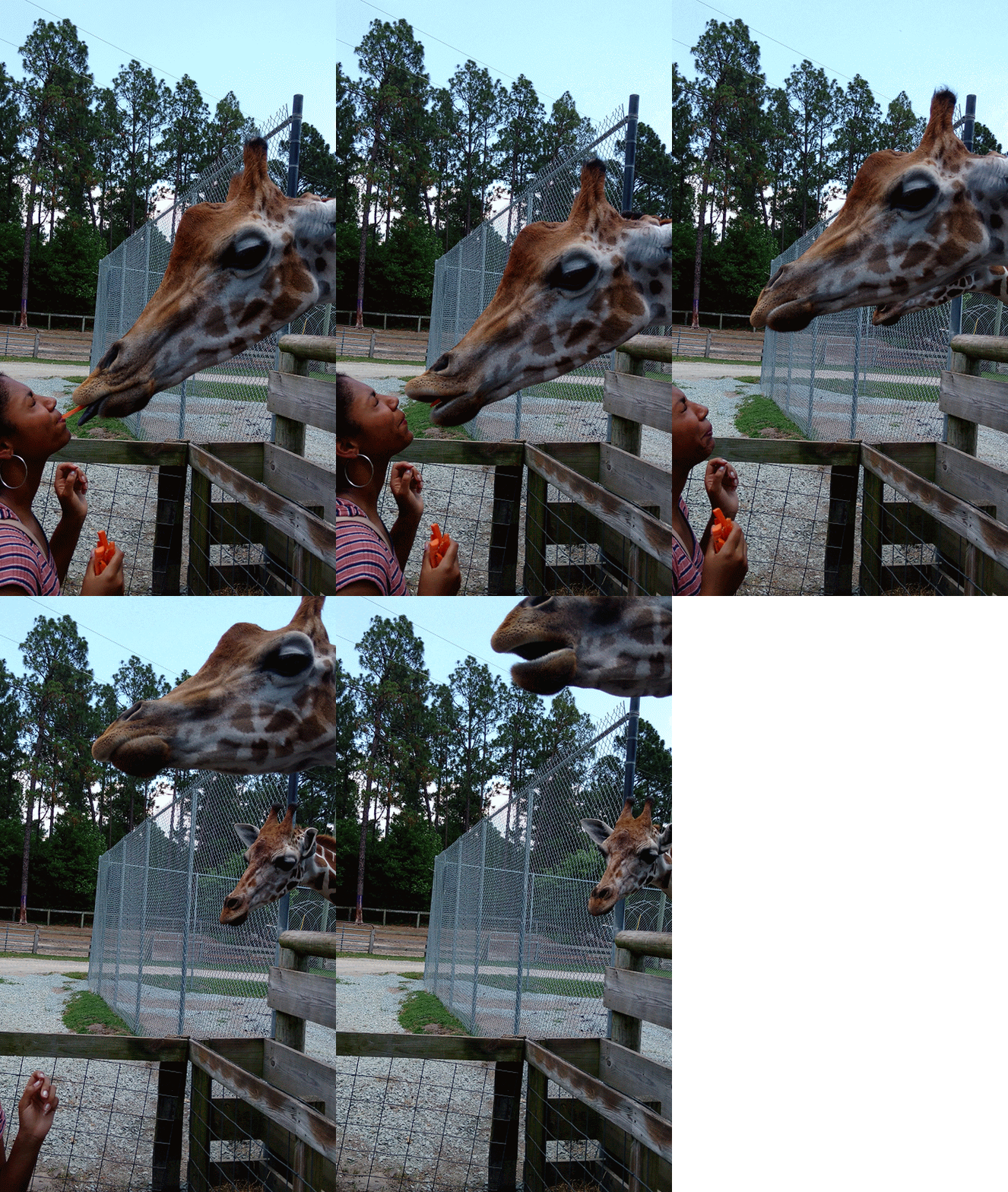
Visiting "street giraffes" from around the globe (all the countries, in green, that have visited this blog!)
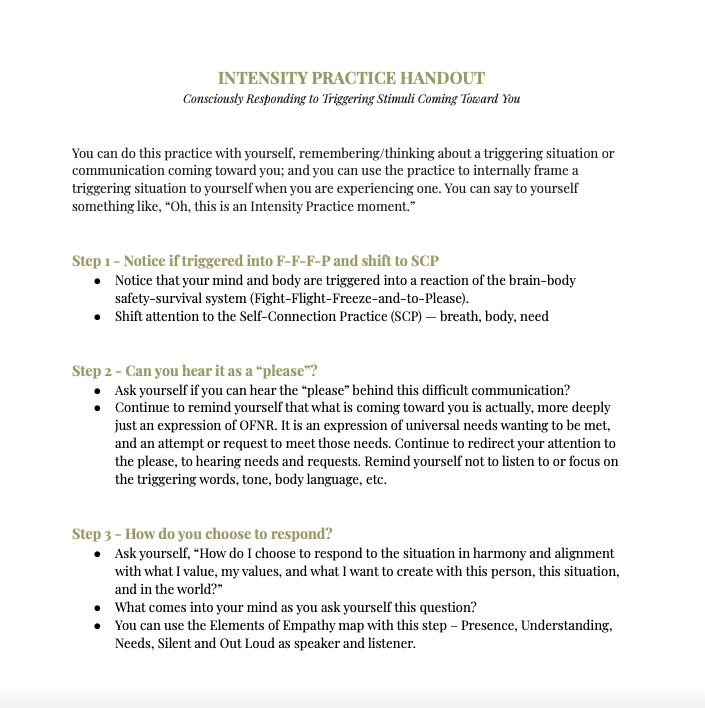
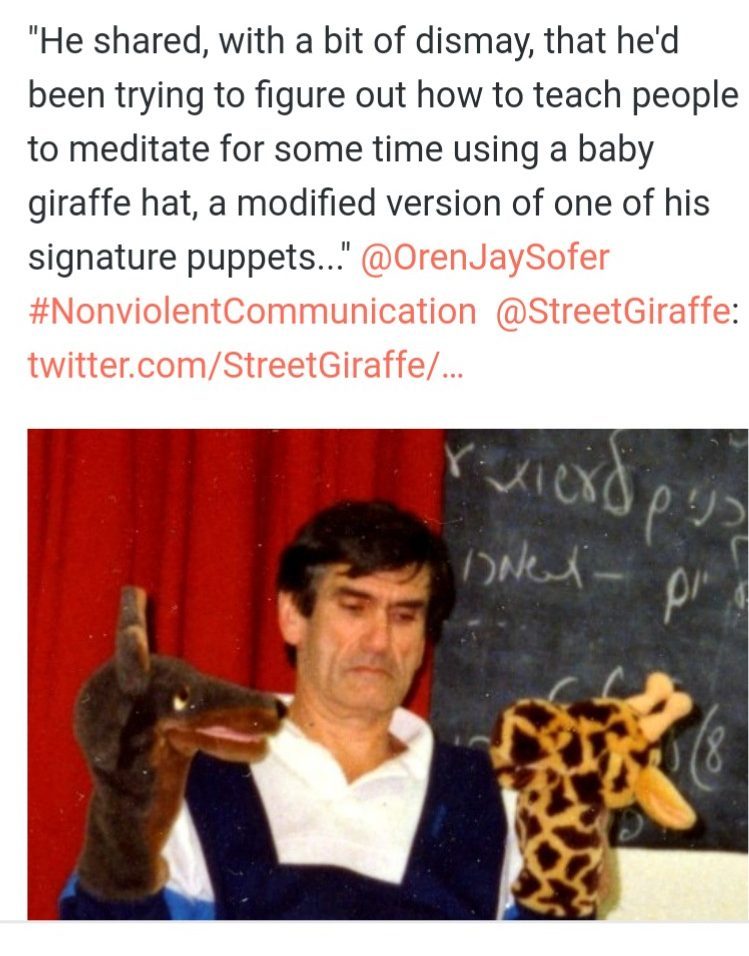
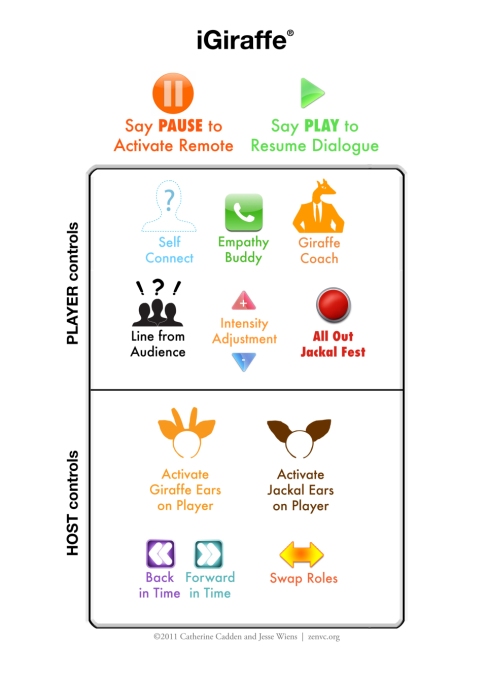
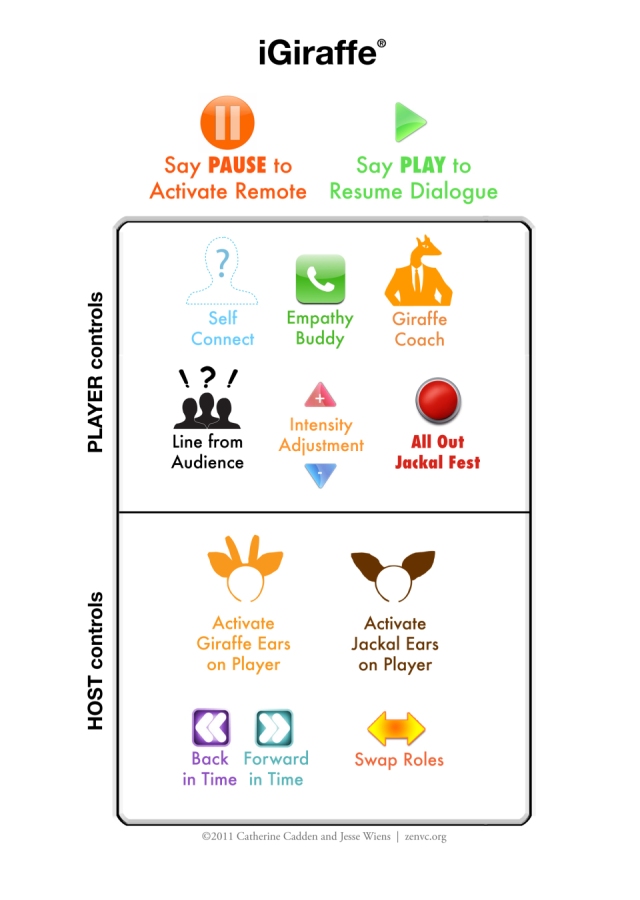
"I'm going to show you a technology today which takes insults and criticisms out of the airwaves. (Marshall puts on giraffe ears) With this technology, it will be impossible for you to hear criticisms, harsh remarks, or insults. All you can hear is what all people are ever saying, 'please' and 'thank you'. What used to sound like criticism, judgment, or blame, you will see, are really tragic, suicidal expressions of 'please'." ~ Marshall B. Rosenberg
Dialogue as a Mindfulness Practice
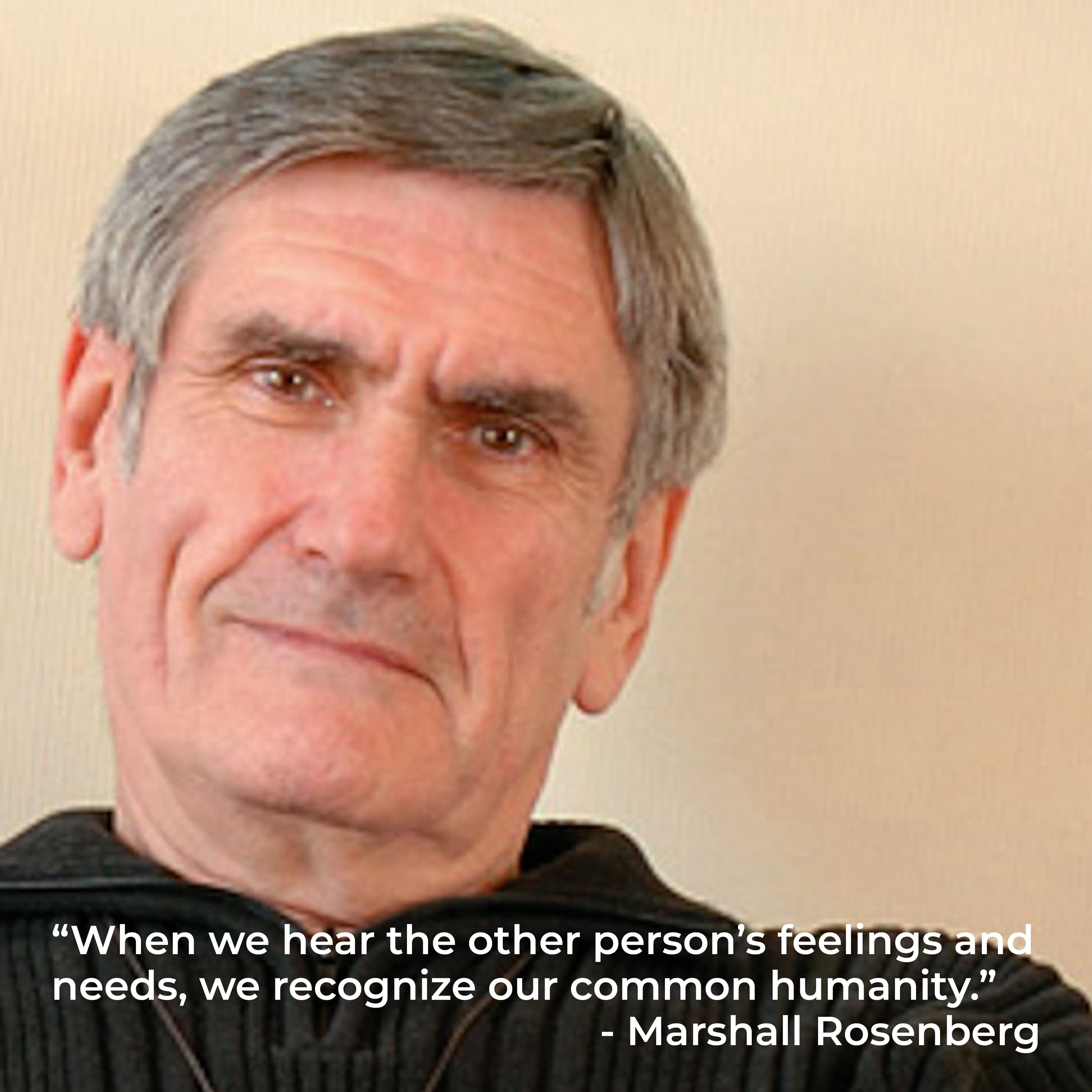
Marshall Rosenberg
"If you are a jackal, you will try to reassure. Jackals try to fix people in pain. They can't stand pain, but make matters worse by trying to get rid of it. Put on giraffe ears. Try to hear what they are feeling and needing." ~ Marshall B. Rosenberg, PhD
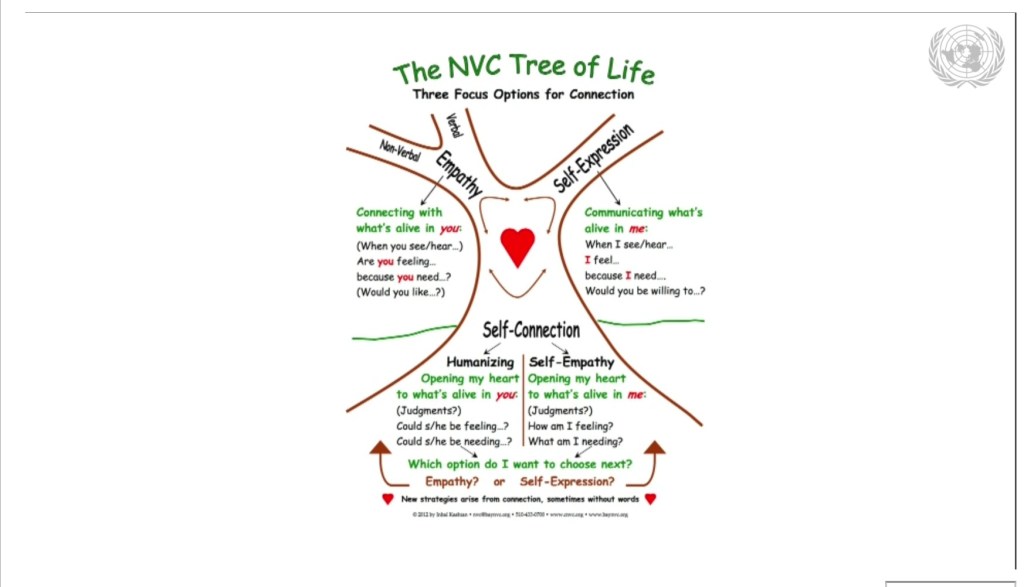
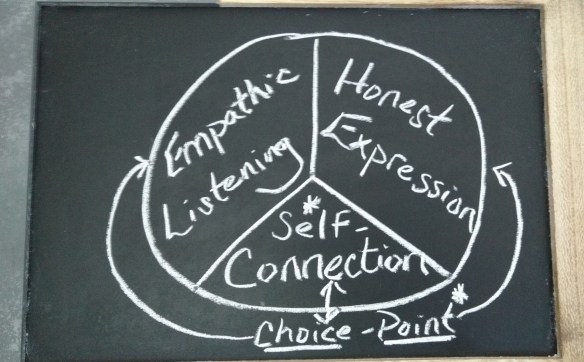
3 Dialogic Choice-Points
"If I could teach people only one tool for training in presence it would be to pause. The space of one pause can make a world of difference." p. 45 of Oren Jay Sofer's Say What You Mean
"When we are able to include our own needs in the equation fully, alongside, not instead of, others’ needs, we are more likely to experience the possibility of stepping beyond the either/or paradigm, and finding care for everyone." ~ Miki Kashtan
"There are two things that distinguish truly nonviolent actions from violent actions. First, there is no enemy in the nonviolent point of view. You don’t see an enemy. Your thinking is clearly focused on protecting your needs. Second, your intention is not to make the other side suffer." ~ Marshall Rosenberg
"The longer I live, the more deeply I learn that love — whether we call it friendship or family or romance — is the work of mirroring and magnifying each other’s light. Gentle work. Steadfast work. Life-saving work in those moments when life and shame and sorrow occlude our own light from our view, but there is still a clear-eyed loving person to beam it back. In our best moments, we are that person for another." ~ Maria Popova
On Listening
“A jest's prosperity lies in the ear
Of him that hears it, never in the tongue
Of him that makes it.” William Shakespeare, Love's Labour's Lost
"Nonviolent Communication is a way of keeping our consciousness tuned in moment by moment to that beauty within ourselves and others, and not saying anything that we think might in any way tarnish people's consciousness of their own beauty." ~ Marshall B. Rosenberg, PhD
"Anger is a signal that you’re distracted by judgmental or punitive thinking, and that some precious need of yours is being ignored." ~ Marshall Rosenberg
"When we are depressed, our thinking blocks us from being aware of our needs, and then being able to take action to meet our needs." ~ Marshall Rosenberg
"I wouldn’t expect someone who’s been injured to hear my side until they felt that I had fully understood the depth of their pain." ~ Marshall Rosenberg
"True forgiveness is not about condoning or forgetting; it's about releasing ourselves from the burden of resentment and finding peace within." ~ Marshall Rosenberg
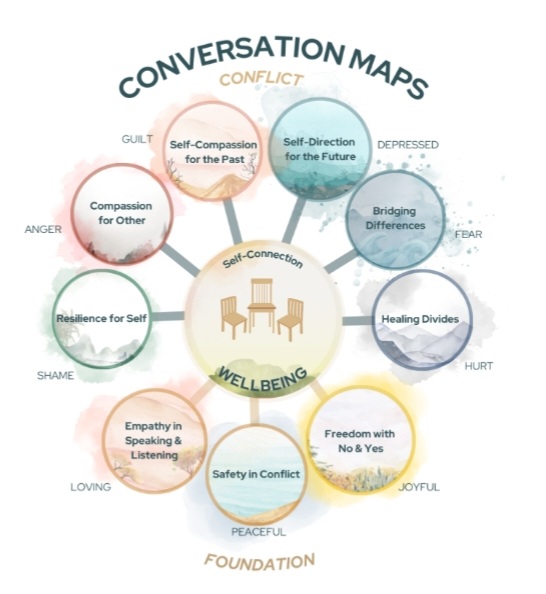
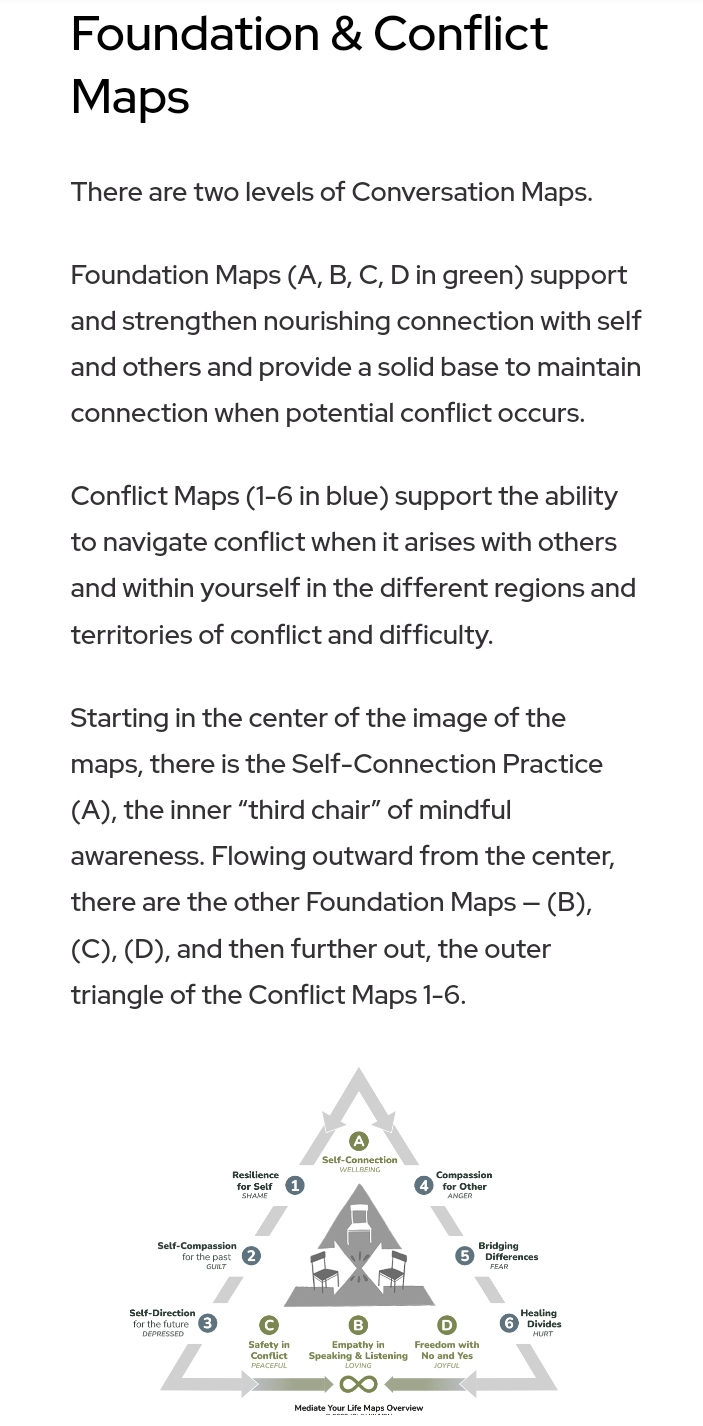
This blog/call grew out of a "Naturalizing NVC" class I took with Miki Kashtan through NVC Academy in 2011 during which I made a request of my fellow classmates that we might practice together outside of the call. It was mostly just about my wanting to gain "street giraffe" fluency by way of practice and then also cataloguing the seeds of my learning. As I say here, it's likely been sustained by way of "structured procrastination" and lots of tinkering while multi-tasking. As Peggy Smith once put it, NVC is but one fruit amidst a more plentiful fruit bowl offering of the healing powers of resonant language, which animates the arc of my life's journey and is something I hope to write about eventually. Bottom line, I'm merely a fellow practitioner/traveler yet invite any inquiries that this blog may have sparked for you.
What is Conscious Communication? (a.k.a. Nonviolent Communication or NVC)
The Chopra Center: Conscious Communication is the ability to clearly communicate what you want in life, which directly relates to your emotional well-being. The key principles of conscious communication can help you do just that… (continues)
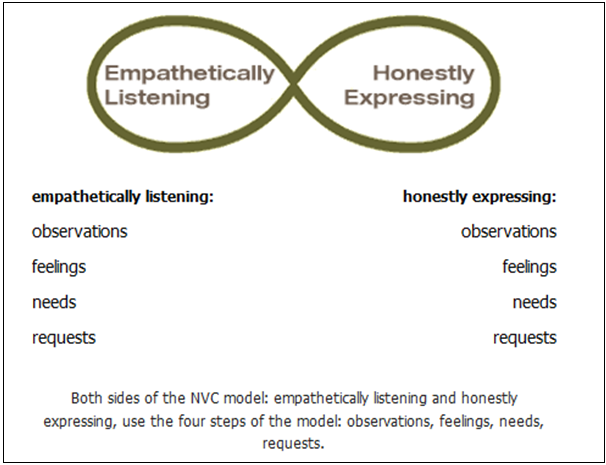
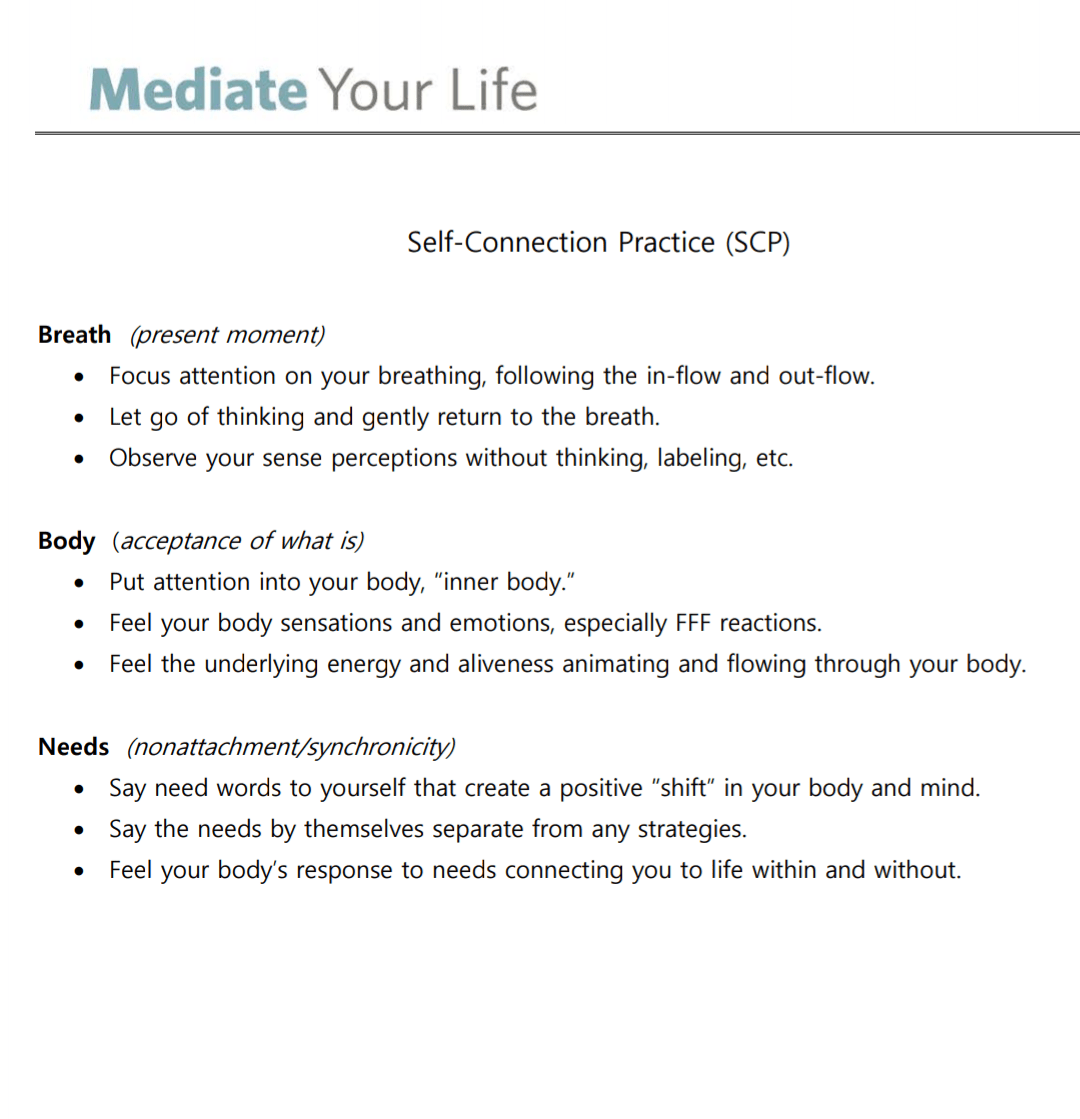
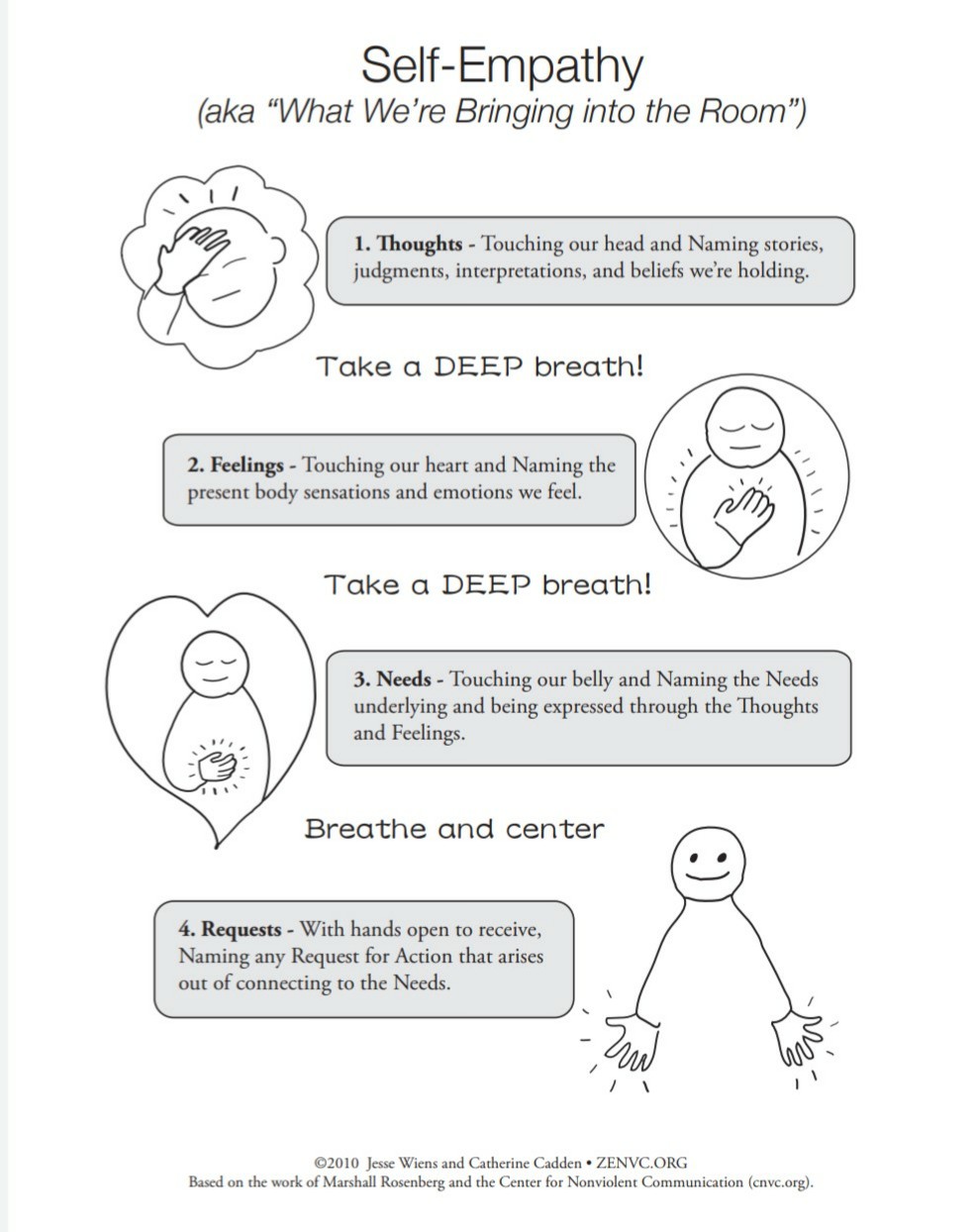
(See also OFNR: Observation, Feelings, Needs & Requests.)
Speak Peace in a World of Conflict
New to NVC?
“If I had just one book to recommend about interpersonal communication, it would be this one.” ~ Rick Hanson
"Reflect: Identify situations where your communication aligned with NVC principles, and others where you feel that you could have improved. Taking a step back can be crucial to acknowledging your progress and identifying where you want to grow." ~ Barbara Robles-Ramamurthy, MD
'You don't have to be brilliant. It's enough to become progressively less stupid." ~ Marshall B. Rosenberg
"As NVC replaces our old patterns of defending, withdrawing or attacking in the face of judgment and criticism. We come to perceive ourselves and others, as well as our intentions and relationships, in a new light. Resistance, defensiveness, and violent reactions are minimized." ~ Marshall Rosenberg
"I would like us to create peace at three levels and have each of us to know how to do it. First, within ourselves. That is to know how we can be peaceful with ourselves when we’re less than perfect, for example. How we can learn from our limitations without blaming and punishing our self. If we can’t do that, I’m not too optimistic how we’re going to relate peacefully out in the world. Second, between people. Nonviolent Communication training shows people how to create peace within themselves and at the same time how to create connections with other people that allows compassionate giving to take place naturally. And third, in our social systems. To look out at the structures that we’ve created, the governmental structures and other structures, and to look at whether they support peaceful connections between us and if not, to transform those structures." ~ Marshall Rosenberg























































































































































 Street Giraffes

